The war and ceasefire are Trump's, but Iran owns the Hormuz agenda
Battered militarily but strategically adroit, Iran has used the ceasefire to place Hormuz governance at the centre of any lasting peace, on its own terms

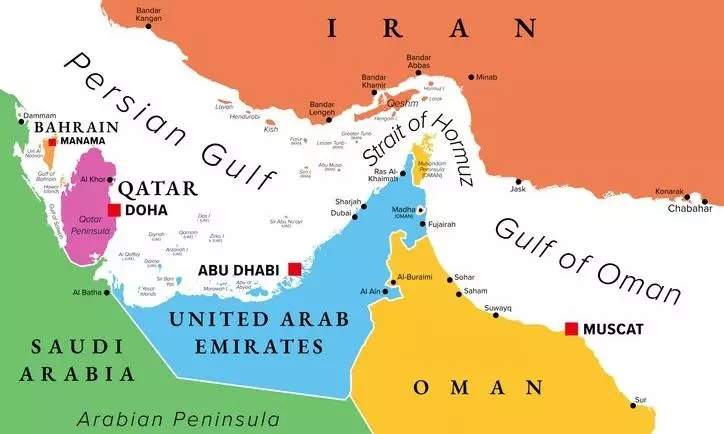
The last-minute halt to hostilities called by US President Donald Trump marks a stunning reversal of the war-agenda of the US and Israel against Iran.
The most striking aspect of the two-week ceasefire is the tacit admission that neither Iran’s enriched uranium nor regime change in that country, both ostensibly the reasons for the war, now figure prominently on the table. Instead, Iran has successfully placed the fate of the Strait of Hormuz at the centre of any potential lasting peace in West Asia.
Watch/Read: Trump blinks, ceasefire is brokered, but Iran has a warning; what next?
Trump’s own admission that Iran’s 10-point plan, which he had dismissed just a couple of days earlier as “not good enough”, can now serve as the starting point for discussions during the ceasefire, confirms how Iran has converted a war of attrition into a victory of sorts. Trump revised his position on the plan, saying it is “workable.”
Strait as focal point
Iran has now placed an agenda for the regulation of the Strait of Hormuz as a key issue in the deliberations during the lull in hostilities. It is significant that its 10-point plan incorporates in one way or another its plans for Hormuz, one that may lay the basis for cooperation among the countries of the region, especially the Persian Gulf.
How Iran flipped the script on the war
♦ Trump calls Iran's 10-point plan "not good enough", then accepts it
♦ Vessel transits via Hormuz collapse in March
♦ Brent crude rises ~55% since beginning of war
♦ Amid ceasefire talks, Iran secures recognition of Oman's territorial rights
♦ Tehran thus cements a regional framework over a US-led one
The Hormuz has been at the centre of the world’s attention because it is the passageway through which about one-fifth of the world’s oil and natural gas traverse. The choking of the strait, about 30 km at its narrowest point, has sent oil prices skyrocketing since the war began in February.
The price of Brent crude, the key benchmark for international oil markets, touched $110.72 per barrel just before Trump’s deadline for the start of a massive bombing campaign on Iran’s infrastructure. In the five trading sessions before the war began, Brent averaged $71.27 per barrel, implying an increase of about 55 per cent since the war started.
Historical heights
Note that these prices are for 45-day deliveries, not for crude oil on a here-and-now basis. In reality, the premium for West Asian crude on immediate-basis deliveries has reached historical heights. The Financial Times reported on April 6 that European customers will need to pay a markup of $24-30 over Brent prices.
Also read | Doomsday averted, but can Iran war be settled across the table?
Asian economies, particularly the poorer ones in South and South East Asia, bore the brunt of the collapse of supplies from West Asia and the consequent price spiral. Contrary to popular perception, fuelled by Western media bias, Iran had not actively targeted shipping vessels in the area in order to deter shipping vessels.
The very fact of the strait being in a war zone was enough to scare away the global insurers from providing coverage. And, without coverage, no vessel, worth millions of dollars, would dare sail in the troubled waters of the Persian Gulf.
Traffic drops
As the charts below show, the number of vessels transiting the Strait of Hormuz plummeted immediately after hostilities began.
An average of 152 vessels traversed the channel every day in the two weeks before the war, of which 67 were tankers. In March, the average daily transit of ships through the channels plummeted to less than five per day; average daily tanker movements amounted to just one per day during the month.
In effect, the entire traffic in March was lower than the average daily traffic before the war. In fact, even this number is slightly misleading because 20 vessels went through the strait a day after the start of hostilities, perhaps of vessels that were already close to the channel. Most strikingly, not a single LNG carrier transited the strait in March.
Also read | Shades of violence: India, Western powers, and global conflicts
The average transit time for vessels from the Persian Gulf to markets in East and Southeast Asia is about 20 days; in comparison, the average transit time to a European destination such as Rotterdam is about 39 days, according to shipping experts. This explains why the crisis has hit Asian economies harder than those in Europe.
Ships that departed before the war for Asian destinations have already reached and fresh supplies are not available. Those that sailed for Europe before the war are still in transit, which explains why they have not been badly hit as yet.
War hits productive capacity
Moreover, the attacks and the consequent shutdown of oil refineries, liquified natural gas (LNG) terminals, and other downstream production facilities throughout the Gulf region mean that cargoes were not even being readied for departure.
Oil refineries in Saudi Arabia, Bahrain, the UAE, Kuwait and Iraq — apart from the big strike on the biggest gas terminal and facility in Qatar — have all reported significant outages.
Watch/read | Trump-Iran ceasefire raises doubts despite talks of peace in region
According to a bulletin issued by the US Energy Department on April 7, these countries “collectively shut” about 7.5 million barrels per day of supplies in March. It was estimated (before the ceasefire announcement) that this would rise to about 9.1 million barrels per day in April. What this means is that about 40-45 per cent of the capacities in the region have been off-market for more than a month.
This why the speculation about Saudi Arabia using the Red Sea route to compensate for the loss of the Hormuz route appears specious.
Iran’s agenda
The most significant outcome for Iran in its defensive battle has been in shifting the grounds of the conflict. It has managed to draw the world’s attention to the fact that any settlement would necessarily include a settlement on the protocol for the management of traffic through the Strait of Hormuz.
More importantly, it has insisted that this ought to be a regional framework, one in which the key stakeholders in the region — Iran and Oman, which have their territorial waters in the Strait of Hormuz — ought to be the ones determining the outlines of a new framework.
In doing this, Iran realised that the realities of history, geography and international law were unmistakably in its favour.
Oman's rights
In fact, early on, Iran made it quite clear that it recognises Oman’s territorial sovereignty over its share of the strait. It explicitly included this recognition of Oman’s status in the 10-point plan that has now formed the basis for the ceasefire.
Confirming this is its recognition of Oman’s right to a share of revenues gathered as “shipping fees” to be collected from vessels traversing through the strait.
Also read: After the Strait of Hormuz, the world's next chokepoint could be Gate of Tears
Incidentally, barring a strike in the early days of the war, Oman has not been attacked by Iranian missiles and drones. Also, recall that Oman was the key mediator in earlier rounds of negotiations between Iran and the US. Indeed, Oman has reason to be aggrieved: it believed, and actually announced that a deal on Iran’s nuclear enrichment programme was within reach, but which the US dumped and started the war.
Media commentaries dismissing Iran’s insistence on a levy as some kind of extortion at a toll booth reveal their utter ignorance of not just international law but international precedents and best practices. Instead, Iran has made clear that non-hostile countries will be allowed navigation through the channel.
Clearly, this is only fair in a situation in which a country is at war, one that was not of its choosing.
New governance architecture
In fact, the Strait of Hormuz is the most significant chokepoint among the waterways that remain unregulated and without international recognition of the rights of the littoral states (see chart below).
The Bab El-Mandab, the strait in the Red Sea, is its only other companion in suffering the same fate. A solution to the Hormuz issue may well pave the way for a settlement of this issue, too.
Watch/read | Trump’s ‘N-button’ threat: Bluff or breaking point in Iran war?
The choking of shipping traffic on the Hormuz has largely been seen as a means by which Iran has pressured the world at large to pay attention to this conflict. However, there is another important dimension that an undue obsession with the economic consequences of the war misses. This pertains to Iran’s insistence that the US remove its bases from the region.
Strait ownership
Iran possibly now sees greater reception among its neighbours to the idea that the US is the source of instability, not peace.
By including the development of a “safe passage protocol” as an item in the 10-point plan, Iran has signified that it is willing to accommodate the interests of other regional users of the Hormuz channel in determining how the Strait of Hormuz will be regulated.
By drawing the other states, including ones such as Saudi Arabia, the UAE and Kuwait — with whom it has had fraught relations in the past — into such a cooperative arrangement, Iran appears to be telling the US: the strait is ours, the countries of the Persian Gulf, and you have no role in determining how it will be managed.
Historic opportunity
Sina Emami, a researcher in modern Iranian history, has recently argued that the current crisis provides the littoral states in the region a historic opportunity to “establish a new, locally managed security architecture for the Strait of Hormuz”.
He and several others have pointed out that lasting regional security cannot be based on a zero-sum game strategy, in which a win for one is always at the cost of another’s. Instead, they have argued for security as being “indivisible” in nature; the security of one is related to the security of others in the region.
Even before the war, Iran and Oman had enjoyed effective control over the narrow channel, which requires coordinated management and regulation for safe and orderly shipping. While Iran has effective control over the northern half of the strait, Oman has control over the southern half.
The UN Convention on the Law of the Sea (UNCLOS) is what gives these countries the right to monitor, regulate and administer traffic through the strait.
The Strait of Hormuz is the most significant anomaly in the world of seaborne trade.
No other channel suffers from the lack of a legal regime for governance as it does. The anomaly exists only because of the conduct of an outsider in their midst — the Americans — whose presence and influence in the region, primarily via Israel, destabilises the entire region.
Watch/read | Strait of Hormuz crisis: Why Iran’s toll plan is big global concern
While the lull in hostilities provides an opportunity to set this right, the historical significance of a “new deal” for the Strait of Hormuz lies in the fact that it is the wedge that may perhaps set the ground for a new architecture for the countries that have suffered foreign domination for a century.
Reports indicate that contrary to earlier reports Israel now denies that the ceasefire also covers Lebanon. This is an early warning that the truce may still be elusive. But by placing Hormuz at the centre of any prospective agenda for peace, Iran has shifted the terms of engagement in the region in ways that would not have been imagined on February 28.