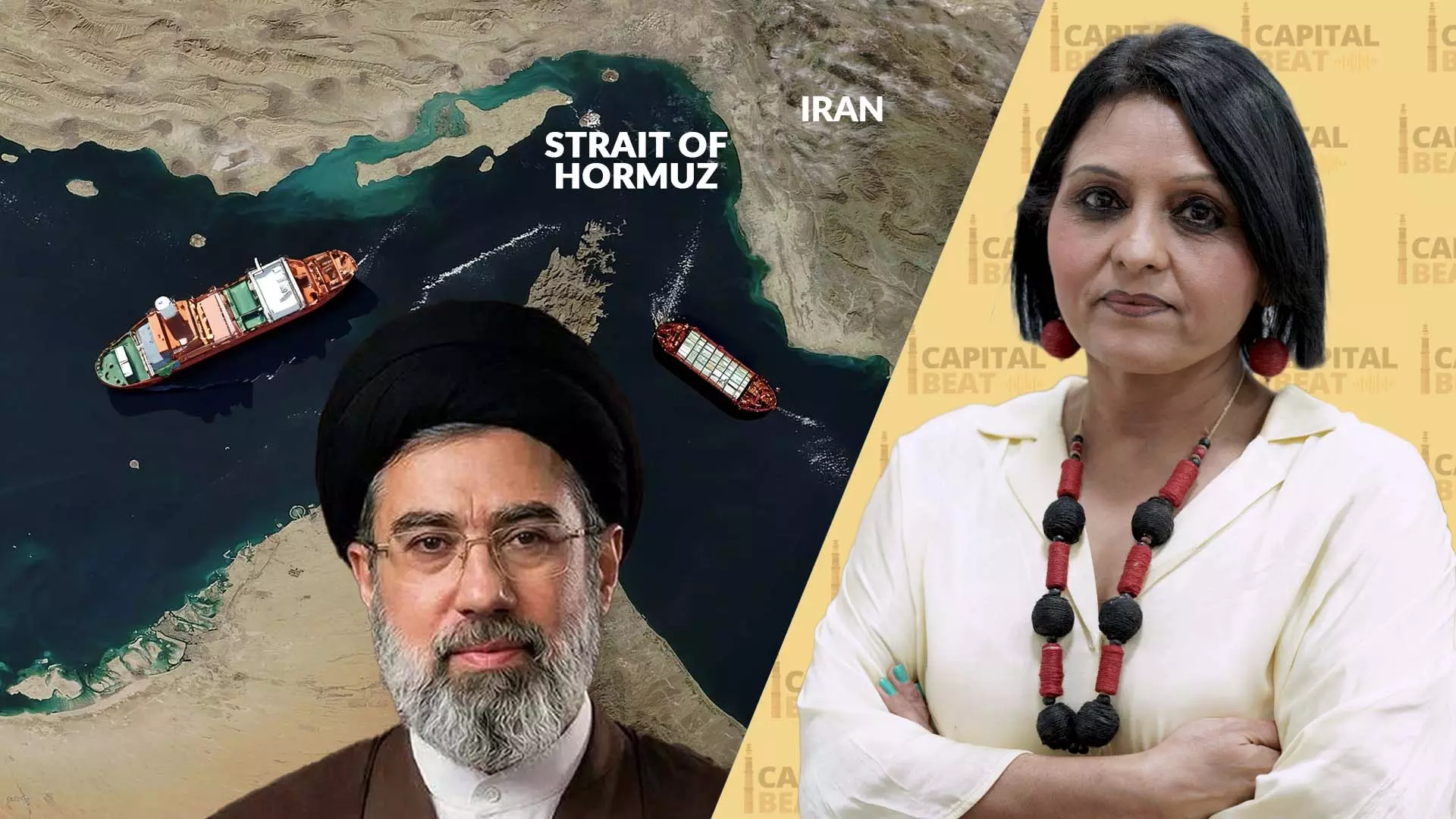
Strait of Hormuz crisis: Why Iran’s toll plan is big global concern
Iran tightens grip over Strait of Hormuz and moves to impose tolls on vessels, disrupting global oil flows and escalating tensions in key shipping chokepoint

“Iran is effectively turning the Strait of Hormuz into an energy weapon,” said senior journalist Kallol Bhattacharya, underlining the gravity of the unfolding crisis. With nearly 20% of global oil passing through this narrow waterway, any disruption has immediate worldwide consequences.
As tensions escalate following the Iran–US–Israel conflict, the Strait of Hormuz has emerged as the focal point of geopolitical and economic uncertainty. The Federal spoke to Kallol Bhattacharya, Senior Assistant Foreign Affairs Editor at The Hindu, and Professor Aftab Kamal Pasha, International affairs expert, to unpack whether Iran can truly convert this critical route into a toll-based checkpoint.
Toll proposal
Iran’s parliament is reportedly preparing legislation to formalise toll collection for ships transiting the strait. Iranian officials argue that since they ensure the security of the passage, it is “natural” for vessels to pay fees—much like transit duties in other corridors.
However, Bhattacharya noted a key distinction. Unlike the Suez Canal or Panama Canal, the Strait of Hormuz is a naturally occurring waterway, not a constructed one.
Also Read: Iran war: Why have peace efforts not clicked yet?
“This is not an engineered canal. It’s a natural strait, and that complicates Iran’s attempt to turn it into a commercial project,” he explained.
Despite this, reports suggest a de facto system is already in place, with some ships undergoing vetting by Iran’s Islamic Revolutionary Guard Corps and allegedly paying for safe passage.
Legal hurdles
The move raises serious questions about international maritime law. Under global conventions, straits used for international navigation typically guarantee freedom of passage.
Bhattacharya emphasised that any attempt to impose tolls could violate these principles. “It will go against international maritime rules and conventions,” he said, adding that enforcing such a system would be extremely challenging.
Professor Pasha, however, offered a more nuanced view. He pointed out that much of the navigable route used by large vessels lies within Iran’s territorial waters.
“Iran is asserting control over its 12-nautical-mile zone. It argues that if ships choose to pass through this safer route, they must comply with its regulations,” he said.
Strategic leverage
Beyond legality, the move reflects a broader strategic calculation. Iran appears to be leveraging geography as a tool of power.
Bhattacharya described this as the “weaponisation” of energy flows. “The Strait of Hormuz is the physical manifestation of Iran’s energy weapon,” he said, comparing it to the oil shocks of the 1970s.
He argued that Iran has shifted the battlefield from conventional military engagement to economic disruption. By controlling energy supply routes, Tehran is exerting pressure far beyond the immediate conflict zone.
“This was not fully anticipated. Many believed Iran would not go this far,” he added.
War context
Iran maintains that its actions are a response to wartime conditions following the escalation involving the United States and Israel.
According to Professor Pasha, Iran justifies inspections and tolls as necessary security measures. “In wartime, a country has the right to check vessels for contraband that may aid the enemy,” he said.
He also noted that Iran is framing the toll system as compensation for damages suffered during the conflict.
“This is part of a broader narrative—that the world must bear the cost of aggression against Iran,” he explained.
Operational risks
Even if legally contested, Iran’s actions are already impacting global shipping. Traffic through the strait has reportedly dropped sharply, with insurers and shipping companies wary of rising risks.
Bhattacharya highlighted the economic implications. “Shipping is a high-risk investment. If uncertainty increases, insurers and investors will pull back,” he said.
If ships enter Iranian waters, they pay. If they choose alternative routes, they take the risk
This could lead to higher transportation costs, which would ultimately be passed on to consumers worldwide in the form of rising energy prices.
Professor Pasha added that safety concerns also play a role. Large tankers navigating narrow channels face significant risks, and any दुर्घटना could block the route entirely.
Canal comparison
A key question is whether the Strait of Hormuz can function like the Suez or Panama canals.
Professor Pasha suggested that Iran is attempting a hybrid model. “If ships enter Iranian waters, they pay. If they choose alternative routes, they take the risk,” he said.
However, Bhattacharya remained sceptical. He argued that replicating canal-style control over a natural strait is fundamentally different and far more complex.
“The success of such a system depends on long-term geopolitical outcomes, especially the result of the ongoing conflict,” he noted.
Bigger picture
Ultimately, both experts agree that the situation reflects a shifting balance of power in the region.
Bhattacharya pointed out that Iran has turned a defensive position into a strategic advantage. “The war has moved onto terrain where Iran holds leverage,” he said.
He added that if Iran emerges stronger from the conflict, it could redefine not just energy trade but broader regional dynamics.
For now, the Strait of Hormuz remains a flashpoint—where law, strategy, and economics collide with global consequences.