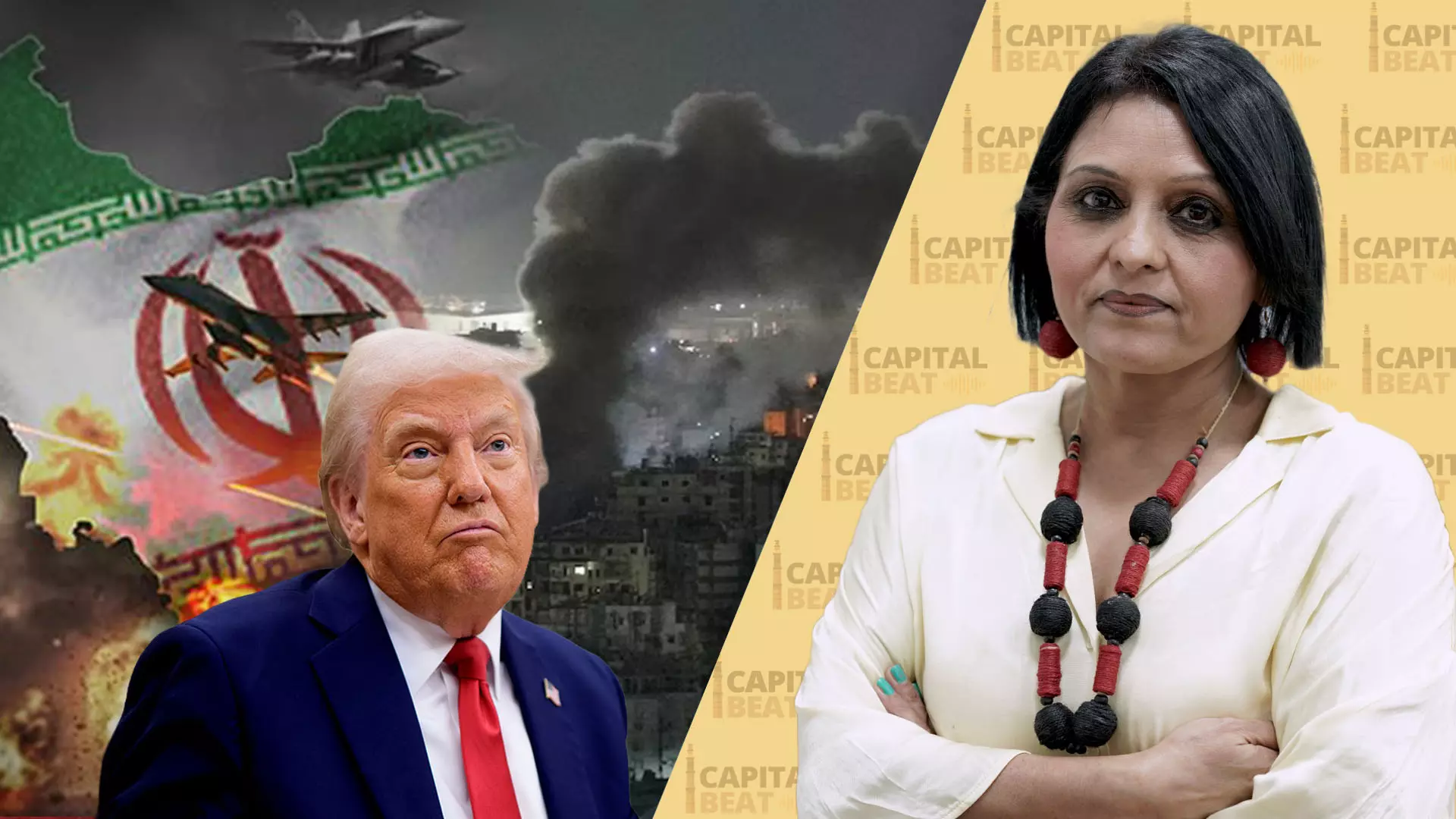
Trump blinks, ceasefire is brokered, but Iran has a warning; what next?
While the arrangement appears bilateral, between the US and Iran, the absence of Israel in the framework raises concerns, say panellists on Capital Beat

A temporary ceasefire between the United States and Iran, announced after diplomatic outreach involving Pakistan, has triggered a sharp debate on India’s absence from the negotiating table.
In the latest episode of The Federal's YouTube program Capital Beat, panellists KS Dakshina Murthy, Consulting Editor at The Federal, Prof Aftab Kamal Pasha, Middle East expert, and Sanjay Kapoor, senior journalist, examined how Islamabad emerged as a key mediator while India remained on the sidelines.
The discussion followed US President Donald Trump announcing a 14-day ceasefire, citing conversations with Pakistan’s leadership. Iran’s response, acknowledging Pakistan’s role, further reinforced the perception of Islamabad’s diplomatic breakthrough in a high-stakes geopolitical moment.
The panel outlined how this development, coming amid escalating tensions involving the US, Iran and Israel, has recalibrated diplomatic equations in West Asia, raising questions over India’s positioning.
Ceasefire and shifting diplomatic roles
Pasha described the ceasefire as a “historic development” with “global ramifications,” noting that the past 40 days had pushed the world towards an unprecedented crisis. “The entire world was really under unprecedented crisis… not a single country remains unaffected,” he said.
He characterised the pause in hostilities as “a very good beginning,” adding that the two-week window would be used for negotiations under Pakistan’s involvement. Referring to Pakistan’s military leadership, he noted, “It’s interesting that they mentioned Field Marshal Asim Munir, who seems to be the brain behind this entire effort.”
Pasha highlighted Iran’s position, stating, “Iran claims that the US has accepted Iran’s control over the Strait of Hormuz, enrichment rights, and removal of sanctions.” He added that Tehran’s stance suggested “hope from the Iranian side,” even as it sought assurances on core demands.
Unanswered questions
The panel underscored that while the arrangement appeared bilateral between Washington and Tehran, the absence of Israel in the framework raised concerns. “The big question mark is whether Israel has also agreed,” Pasha said, pointing to its ongoing military objectives.
He warned that the ceasefire’s durability would depend on broader regional compliance. “I hope this will encompass the region also… and that Iran would also not attack the Gulf countries,” he noted.
Kapoor described the ceasefire as “a very interesting two-week break… more than that, it is actually an agreement that has been signed between the two powers.” He raised questions about reparations, asking how compensation for “death and destruction” would be addressed within the framework.
Pakistan’s diplomatic gain
Kapoor pointed to Pakistan’s elevated role, stating, “Shahbaz Sharif and Asim Munir are on the winning side.” He suggested that Islamabad’s involvement had translated into strategic gains beyond mediation.
He noted, “Pakistan has got space both in terms of peacemaking… and also being used by Saudi Arabia to defend their assets,” adding that this expanded access to military and technological support marked a shift in regional dynamics.
Calling it “a setback for India in some ways,” Kapoor said, “Pakistan has gone far ahead and they don’t have a strategy,” referring to India’s response. He added, “India lost a chance… as head of BRICS… they could have made some initiative.”
Negotiation window
Dakshina Murthy framed the ceasefire as the outcome of a prolonged stalemate. “Both wanted to end the conflict… but there was no giving in,” he said, referring to US and Iranian positions.
He pointed out that Iran had remained firm on “very basic programmes which infringe on their sovereignty,” including its nuclear and missile capabilities. At the same time, the US maintained its opposition to Iran’s nuclear ambitions.
Dakshina Murthy explained that the ceasefire offered a face-saving exit. “Trump used that as a kind of a face saver and then decided to go in for this ceasefire,” he said, linking it to Iran opening the Strait of Hormuz.
He cautioned that the next two weeks would be critical. “Whether the ceasefire will progress and become a lasting peace is going to be tricky,” he said, citing unresolved issues like compensation, sanctions, and nuclear policy.
Mediation network
The discussion highlighted the broader network of mediators involved. Dakshina Murthy noted that “Pakistan, Saudi Arabia, Egypt, and Turkey… were constantly engaged,” suggesting sustained diplomatic coordination behind the scenes.
Pasha expanded on this, stating, “The Pakistanis have manoeuvred themselves into such a position where they have the confidence of China, the Saudis, the Americans, the Turks and perhaps Russia.”
He linked China’s involvement to strategic interests, saying, “They were really afraid that if Iran is decimated, their major source of oil will also evaporate.”
The panel also referenced upcoming negotiations in Islamabad, with Pasha noting that talks were expected to continue for two weeks, subject to extension.
India’s absence
The panel repeatedly returned to India’s position in the evolving situation. Pasha stated, “India is virtually sidelined… I don’t think we matter in this kind of global diplomatic manoeuvring.”
He added, “We have isolated ourselves… although we had a pivotal role to play,” suggesting missed opportunities despite India’s ties across blocs.
Kapoor echoed this view, saying, “India was a… head of BRICS… they could have made some initiative,” but remained “tongue-tied on such matters.”
He added, “Pakistan stole a march,” highlighting how Islamabad capitalised on the situation to enhance its diplomatic standing.
Dakshina Murthy framed the situation as a moment of reassessment, noting that “the biggest challenge now is for Pakistan” to sustain the negotiations, even as India would need to evaluate its foreign policy approach.
Risks ahead and fragile truce
The panel flagged multiple risks to the ceasefire. Dakshina Murthy warned that “Israel is going to be important,” noting its opposition to lifting sanctions on Iran and its potential to disrupt negotiations.
He added, “If the US is very clear that the war has to end… Israel has no option but to go with what Trump says,” pointing to Washington’s influence.
Pasha raised concerns about internal and external disruptions, including intelligence operations and regional instability, while also questioning how issues like tolling the Strait of Hormuz would be resolved.
Dakshina Murthy concluded that while “there’s a very good chance that this war will probably end,” the outcome would depend on how negotiations unfold and whether key stakeholders align.
The content above has been transcribed from video using a fine-tuned AI model. To ensure accuracy, quality, and editorial integrity, we employ a Human-In-The-Loop (HITL) process. While AI assists in creating the initial draft, our experienced editorial team carefully reviews, edits, and refines the content before publication. At The Federal, we combine the efficiency of AI with the expertise of human editors to deliver reliable and insightful journalism.