







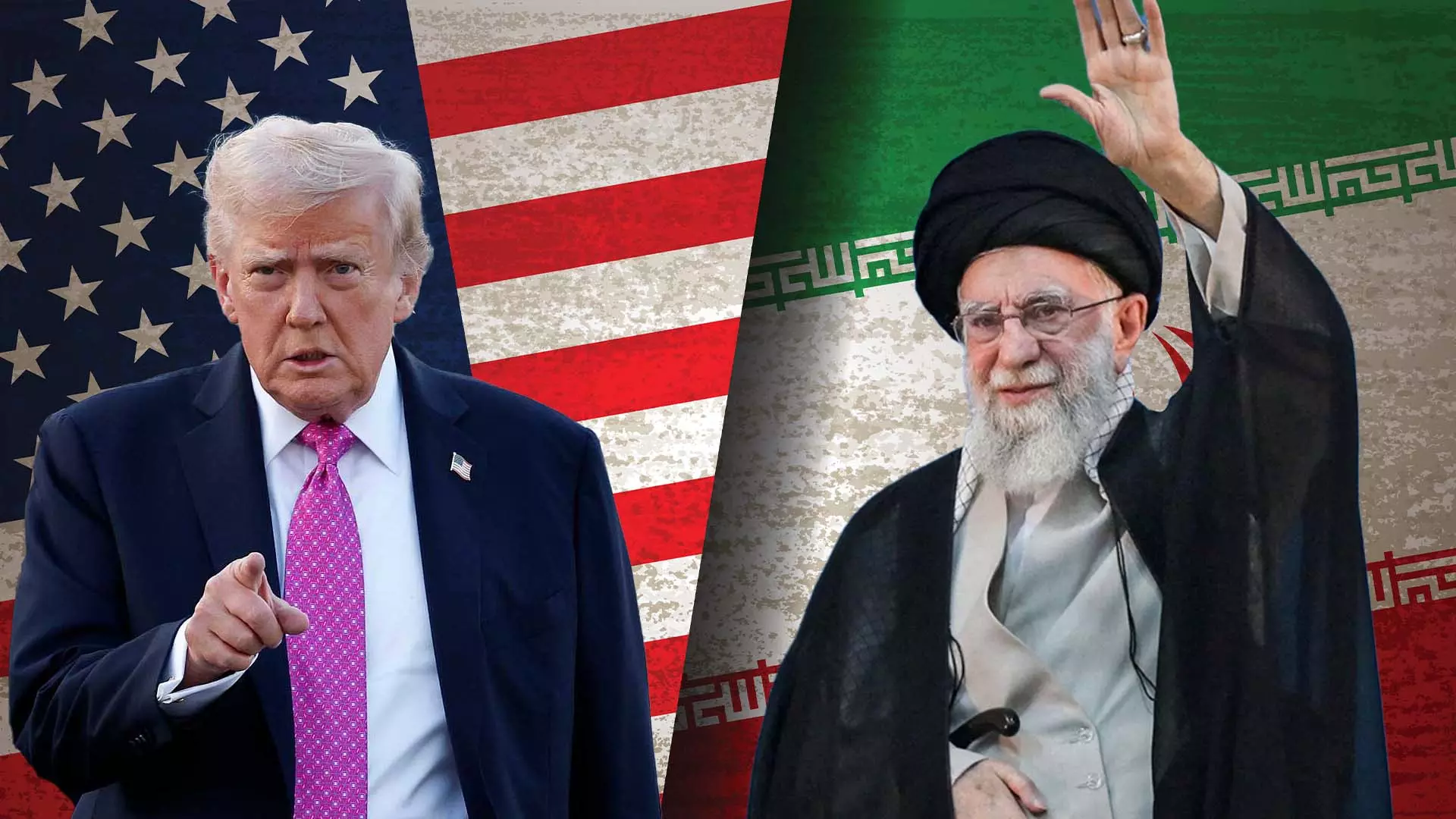
US weighs Khamenei's elimination amid military build-up, nuclear talks: Report
The Pentagon has reportedly presented US President Trump with a scenario to kill Iran’s Supreme Leader, even as White House remains split over the idea of a war

Despite diplomats from both the US and Iran meeting over talks they deemed positive and aides to US President Donald Trump advising him to focus more on domestic issues ahead of this year’s mid-term elections, dangers of yet another flare-up in West Asia loom large as the mercurial occupant of the White House has pushed Washington to the brink of war with Tehran.
Also read: Iran slams 'selective' action amid Geneva talks breakthrough with US
Trump’s defence establishment has reportedly even given him an option to eliminate Iran’s Supreme Leader Ayatollah Khamenei and his son Mojtaba, seen as his potential successor, leaving the final decision to the president.
Biggest Iran adventure since 1979
According to a report by Reuters, Trump has sought a massive build-up of military forces in West Asia for an air strike on Iran that may last weeks. However, he had not revealed to the people of his country the reason for leading the US into yet another aggressive stance vis-à-vis Iran since the 1979 crisis that resulted in Washington’s embarrassment.
On Friday (February 20), the US commander-in-chief warned of possible strikes against Iran, albeit limited, showing once more his fixation with the latter, even if he has repeatedly spoken against fighting overseas wars like many of his predecessors. His warning for a limited strike on Iran comes at a time when top diplomatic sources in the US said Iran hopes to have a proposed deal ready soon, following the nuclear talks between the two countries.
Pentagon's option to eliminate Khamenei, son
One of Trump’s closest aides has conceded that they have little idea what the former would eventually choose to do on Iran or when, an Axios report said. The official then revealed that the Pentagon had presented the president with many options, one of them being to kill Khamenei and his son, something which another source also confirmed with Axios.
Also read: Is India moving to US bloc? New Delhi's strategic autonomy comes under scrutiny
“They have something for every scenario. One scenario takes out the ayatollah and his son and the mullahs. What the president chooses no one knows. I don’t think he knows,” the adviser was quoted as saying by the Axios report. The Ayatollah has made clear Iran’s uncompromising position on the right to nuclear enrichment, an issue over which the two sides have failed to find themselves on the same page.
The White House has not offered any clarity on Trump’s military plans on Iran, saying the media could continue speculating, but it was only Trump himself who knew what he would do.
Tehran speaks in hard, soft tones
If Washington indeed carries out strikes on Iran’s leadership, the fallout would be precarious for the region, which is known for its volatility. Tehran has informed the United Nations in writing that it would not start a war, but if facing any attack, would not refrain from making all regional bases, facilities and assets of the “hostile forces” its “legitimate" retaliatory targets.
Iran’s ambassador to the global body, Amir Saeid Iravani, accused the US of issuing “explicit public threat of the use of force” in the letter dated February 19 and urged it to intervene urgently. The same day, Trump continued with his belligerent stance against Tehran, saying the latter must conform to a meaningful nuclear pact or “bad things will happen”.
Also read: Trump open to meeting Ayatollah Khamenei, says Marco Rubio amid strained relations
Amid reports of possible US attacks on Iran, the Trump administration is deploying one of its biggest concentrations of air power to West Asia since the 2003 war in Iraq. The build-up includes advanced fighter aircraft — F-35s, F-22s, F-15s and F-16s — besides command-and-control jets and reinforced air defence systems.
The US Navy currently has 13 ships in West Asia and the eastern Mediterranean, including the aircraft carrier USS Abraham Lincoln and nine missile-capable destroyers. USS Gerald R Ford, also a carrier, and its strike group are also en route.
The Iranian side has put up a brave face against the mobilisation, with Khamenei issuing a warning recently that his country has the ammunition to sink US war vessels “to the bottom of the sea”. An article published in The Tehran Times on Friday said, “While U.S. air defenses at these bases are sophisticated, they remain limited, even with the additional batteries Washington has recently scrambled to the area.
Also read: Why Iran's ballistic missiles could shift power balance in West Asia
“Iran has spent 40 years preparing for this exact scenario, perfecting an asymmetric warfare strategy designed to overwhelm American defences with swarms of drones and missiles, ensuring that its targets are successfully struck.”
Iranian Foreign Minister Abbas Aragchi, meanwhile, reiterated the language of peace and diplomacy and said the US's massive military build-up was "unnecessary and unhelpful".
However, before giving his military a go-ahead, Trump would have to prevail over a divided administration over the idea of attacking Iran, as a section of his advisers is concerned that a military adventure at this moment would affect the mid-term election results in November, Reuters added.