







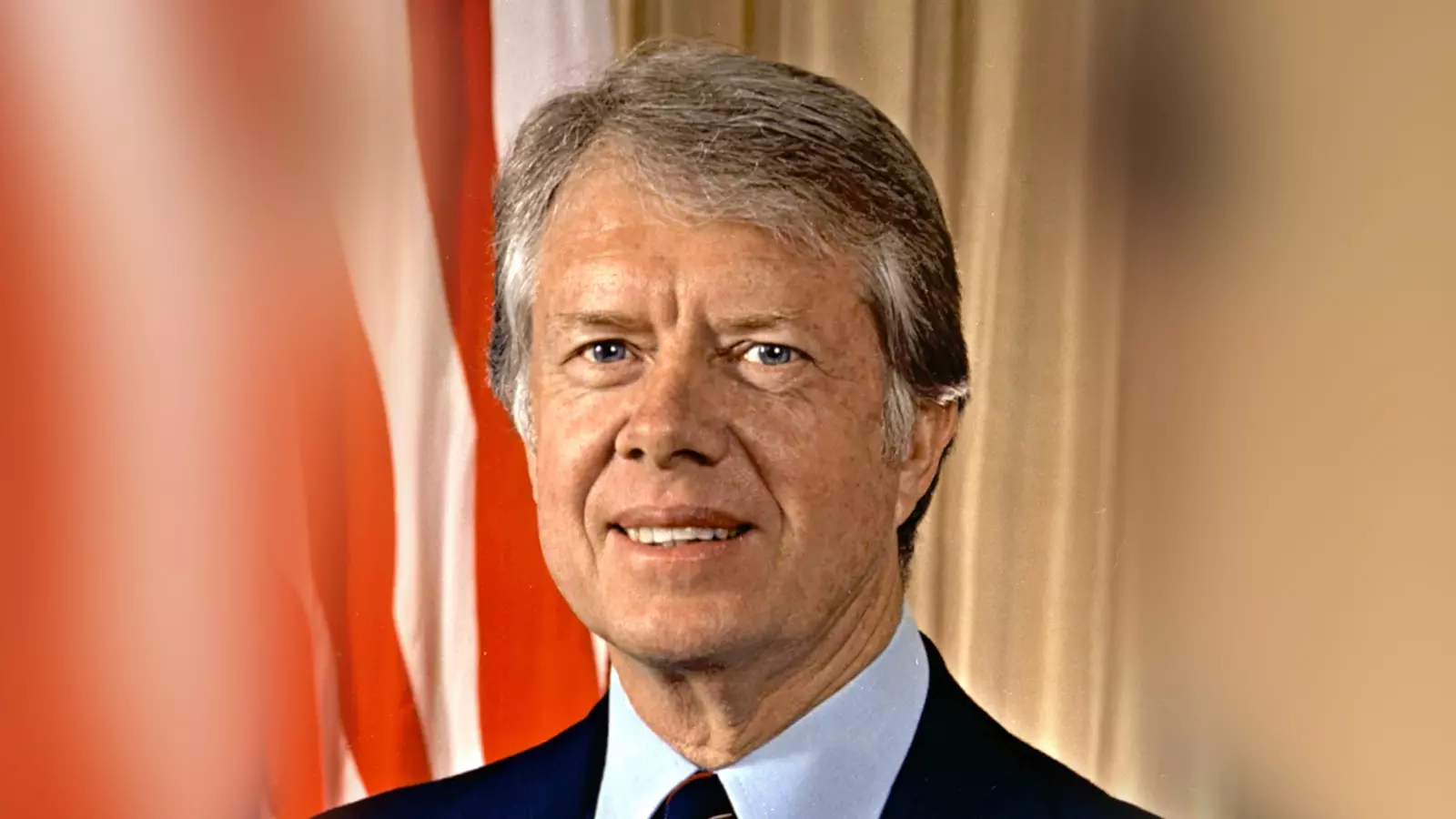
Iran crisis: Recalling the fall of President Carter after 1979 Tehran hostage disaster
As current President Trump warns of military action against Tehran, the history of Carter's failed rescue mission and re-election loss offers a grim reminder

As Iran continues to burn and the US, under the leadership of President Donald Trump, threatens strong military action against the West Asian nation and also those who do business with it by means of high tariffs, one can’t help but travel back in history to yet another American presidency which was marred by a crisis in Iran, nearly five decades ago.
Yes, we are speaking about Jimmy Carter, the 39th occupant of the White House, who, despite being considered one of the best presidents in the annals of American history, could not last more than a term, and one of the main reasons that marred his tenure was the Iranian hostage crisis of the late 1970s.
Iran fiasco undid 'Humanitarian Carter'
Carter, who passed away in 2024 at the age of 100, is also remembered for having brokered a peace deal between Israel and Egypt and also receiving the Nobel Peace Prize in 2002 for his humanitarian efforts towards achieving peaceful solutions to international clashes.
Also read: In today’s global cacophony, India’s challenge is to act with quiet steadiness
Yet, his presidency is remembered more for the hostage crisis in Tehran, the Iranian capital.
In 1979, when the Cold War was still on, Iran gave the US a major headache as its Islamic Revolution toppled Mohammad Reza Pahlavi, the Washington-backed Shah, and paved the way for a group of clerics led by the exiled Ayatollah Ruhollah Khomeini to power. The Carter administration gave the Shah, who was ailing then, political asylum, enraging the Iranians, particularly Khomenei and his supporters.
Iranian hardliners stormed US embassy
As the storm brewed, a group of hardline Iranian students stormed the US Embassy in Tehran in November 1979, months after the Shah’s fall, and took 66 Americans hostage. This happened as Khomenei sought a “purge” of “American-loving rotten brains” and encouraged activist students to widen their attacks against the US and its ally in the region, Israel, with which also the new leadership of Iran found little goodwill.
The attackers sought the return of Shah and an apology from the US for its past actions in Iran.
Also read: What Trump’s 25 pc Iran tariff means for India’s foreign policy and trade
A few weeks later, five women and eight black men were released on Khomenei’s order. Non-US hostages were also released. In July 1980, one American hostage was freed due to illness. For the remaining 52, fate was less forgiving as they were beaten, tortured and even forced to undergo mock executions.
Carter refused to accept demands
President Carter refused to surrender to Iran’s demands, despite the crisis, and it continued for more than a year.
He vowed that the lives of diplomatic personnel and other citizens on foreign soil had to be protected, and America would not tolerate the use of terrorism and the holding of hostages to push political demands. The commander-in-chief also warned that the resolve of the government and people of the US should not be underestimated.
Also read: My heart is with you’: Reza Pahlavi urges Iran protesters to go on as toll reaches 116
His administration took countermeasures against the Khomenei regime, first by sanctioning Iran in the first few months after the crisis unfolded, and freezing Iranian assets. The US even stopped importing oil from Iran and kicked out more than 180 Iranian diplomats. Several thousand of Iranian students in the US were also warned of deportation if they were found to be violating their visa terms.
These steps didn’t deter the militants in Iran, and they threatened to burn the American embassy and kill the hostages if Washington dared to initiate any military action against Tehran.
Operation Eagle Claw failed
With avenues for a peaceful resolution fast drying, Carter made a military attempt by asking the special forces to rescue the hostages. It was April 1980. But the mission, codenamed Operation Eagle Claw, failed to deliver the desired results and even saw the deaths of eight American soldiers and injuries to many. Even the military equipment were damaged, causing the US a major embarrassment.
Carter's embarrassment in election year
Carter took responsibility for the debacle, and it proved costly politically. The crisis dominated the headlines in the US in what was a year of the presidential election, and his re-election bid was defeated by Ronald Reagan, a former Hollywood actor who reenergised the Republican Party and made an impact with his economic agenda.
Also read: Mustafizur row | From ‘secular religion’ to political flashpoint: cricket’s new reality
Iran rubbed salt into Carter’s wound more when it released the hostages on January 20, 1981, the day Carter’s term ended at the White House.