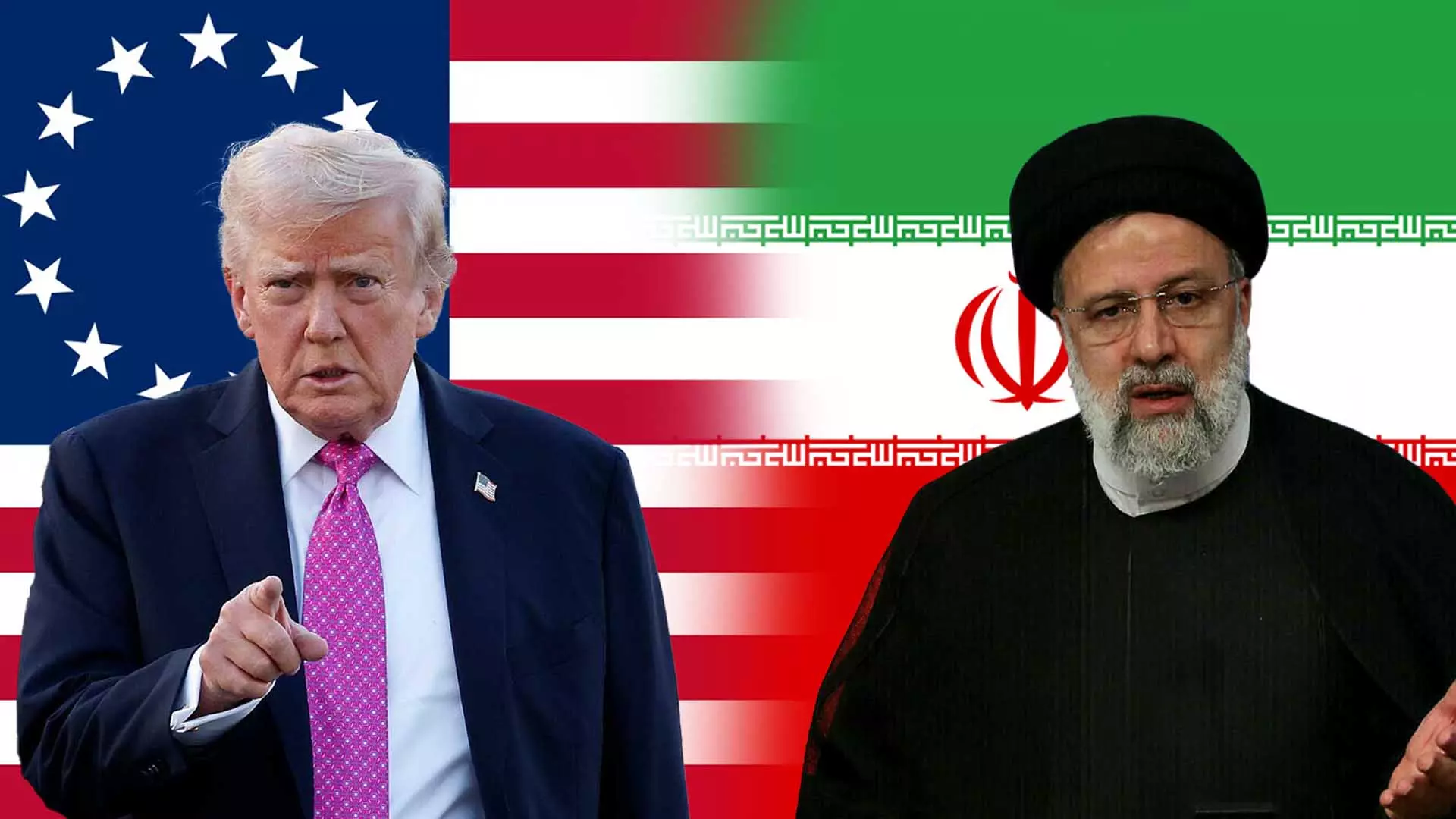
Iran missile programme is raising tension in the region
Why Iran's ballistic missiles could shift power balance in West Asia
Despite US strikes on nuclear sites, Iran’s growing ballistic missile arsenal has altered the strategic equation. Will negotiations hold or is conflict inevitable?

West Asia remains on edge as tensions between the United States, Israel and Iran continue to simmer. The latest flashpoint is US President Donald Trump’s renewed threat to militarily target Iran over its nuclear programme — and now, more significantly, its ballistic missile capabilities.
Although the US reportedly struck key Iranian nuclear sites last June using bunker-buster bombs, Washington and Tel Aviv are still pressing Tehran to end its nuclear enrichment programme. This raises a key question: if Iran’s nuclear facilities were effectively paralysed, why the continued pressure?
The answer, analysts suggest, lies not just in nuclear enrichment but in Iran’s expanding ballistic missile programme — an area that appears to have shifted the regional balance of power.
Nuclear strikes
Trump had earlier demanded that Iran halt its nuclear activities, dismantle its ballistic missile programme, stop supporting groups such as Hamas, Hezbollah and the Houthis, and deal more humanely with domestic protesters.
From Tehran’s perspective, retaining both its nuclear infrastructure and missile capabilities is crucial for survival.
Last June, US bunker-buster bombs reportedly struck three major nuclear sites in Iran, bringing a limited conflict to a close. However, the outcome did not fully satisfy either Washington or Israel.
If Iran’s nuclear programme was significantly damaged, the continued insistence on negotiations suggests deeper strategic concerns — particularly over Tehran’s missile capabilities.
Missile factor
Iran is believed to possess the largest stockpile of ballistic missiles in West Asia. Many of these have ranges exceeding 2,000 kilometres — sufficient to target Israel. Missile sites are reportedly located around Tehran, with several installations underground.
Missiles such as the Sejil can travel at speeds of up to 17,000 kilometres per hour and strike targets within minutes. Ballistic missiles, which follow a parabolic trajectory, are faster than drones and cruise missiles and far more difficult to intercept.
Israel operates a three-tier missile defence system — Iron Dome, David’s Sling and the Arrow series. However, during the 12-day conflict last June, Israel reportedly discovered it could not intercept all incoming missiles. Iran’s retaliatory strikes surprised not only Israel but also the US, which was engaged in nuclear negotiations with Tehran at the time.
This demonstrated capability has significantly enhanced Iran’s deterrence posture. Reports quoting Iranian military officials state that upgrades “in all technical dimensions” have strengthened the country’s defensive power.
Sanctions and protests
Meanwhile, stringent US sanctions have pushed Iran’s economy — including its currency — into turmoil. Economic hardship triggered domestic protests, with even traders, a traditional support base of the Islamic Republic since the 1979 revolution, joining demonstrations.
The US voiced support for protesters and called on Tehran to refrain from using force. However, overt US and Israeli backing appears to have complicated matters. Many protesters, while critical of their government, remain deeply opposed to foreign interference.
Israel operates a three-tier missile defence system — Iron Dome, David’s Sling and the Arrow series
Though Trump has threatened further action, he has recently appeared to pivot back toward negotiations. Talks, however, remain stalled. Iran has agreed to discuss only its nuclear programme, keeping its ballistic missile project, regional alliances, and internal matters off the table.
Strategic dilemma
From Tehran’s perspective, retaining both its nuclear infrastructure and missile capabilities is crucial for survival. The leadership under Ayatollah Ali Khamenei is acutely aware of Iraq’s fate in 2003, when a weakened military failed to withstand a US-led invasion that toppled Saddam Hussein.
For Washington, a full-scale military assault on Iran would carry significant risks. Even if leadership were removed, the conflict could spiral into a prolonged and destabilising war. Trump has repeatedly promised his supporters that he would avoid embarking on costly foreign military adventures.
The US is already grappling with geopolitical fallout from the Russia-Ukraine war, a conflict Trump had criticised his predecessor Joe Biden for. On paper, therefore, a large-scale attack on Iran appears unlikely.
Yet unpredictability remains a defining feature of Trump’s foreign policy. His temperament and shifting positions ensure that West Asia will continue to remain on tenterhooks.
The content above has been transcribed from video using a fine-tuned AI model. To ensure accuracy, quality, and editorial integrity, we employ a Human-In-The-Loop (HITL) process. While AI assists in creating the initial draft, our experienced editorial team carefully reviews, edits, and refines the content before publication. At The Federal, we combine the efficiency of AI with the expertise of human editors to deliver reliable and insightful journalism.