Iran slams 'selective' action amid Geneva talks breakthrough with US
As Tehran, Washington reach tentative 'guiding principles' deal, seizure of Iranian tankers by India exposes fragile balance between diplomacy and US sanctions

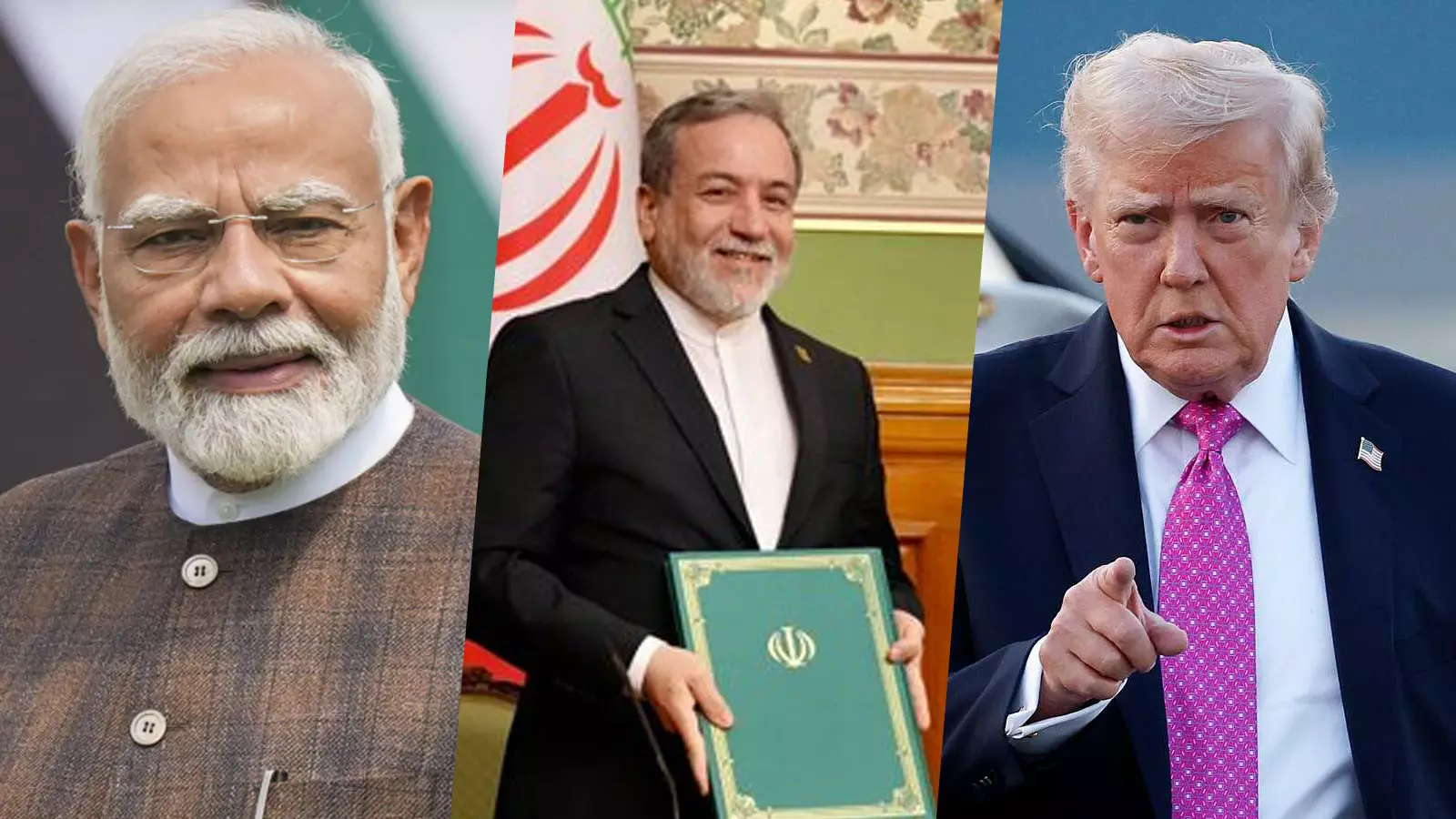
Iran has conveyed its disapproval over the seizure of Iranian tankers that New Delhi says fall under American sanctions.
“States that provide political, military, or intelligence support bear a responsibility under international law for aiding and abetting internationally unlawful acts,” said Abbas Araghchi, Iran's foreign minister, at the Conference on Disarmament on Tuesday (February 17).
Also read: 'Clash of Civilizations' returns as Munich summit exposes a fractured world order
“Selective condemnation and double standards greatly undermine the capability of international laws and institutions.”
Words come amid Iran-US talks
The remarks came as Iran and the United States held hours of face-to-face talks in Geneva, Switzerland, with Omani intermediaries shuttling between delegations. Iran’s public posture appeared calibrated but pointed, signalling frustration toward the US, Israel, and unnamed third countries.
Referring to Washington’s withdrawal from the Joint Comprehensive Plan of Action (JCPOA), agreed in Lausanne in 2015, Araghchi described it as a “clear violation of an internationally endorsed agreement” that delivered “a profound blow to trust and stability of multilateral obligations”.
Araghchi’s comments reflected broader concerns in Tehran that countries such as India may be aligning more closely with American sanction regimes.
At the Munich Security Conference last week, US Foreign Secretary Marco Rubio said, "In our conversations with India, we've gotten their commitment to stop buying additional Russian oil."
He added, “India will sanction some of the Russian oil. India agreed.”
Also read: In today’s global cacophony, India’s challenge is to act with quiet steadiness
If accurate, such commitments would represent a notable policy shift for India, which has sought to balance relations between Washington and Moscow.
The seizure of tankers under American sanctions reflects a wider debate over how sovereign states enforce sanctions policies and the extent to which such measures align with international law.
Buying Time
The Geneva talks focused on securing a temporary de-escalation. By noon, Iran's foreign minister told reporters that “good progress” had been made.
Despite expressions of cautious optimism, both sides appeared to be managing broader strategic considerations. Reports indicated increased military positioning in parallel with negotiations. As the Donald Trump administration deployed military assets, Iran strengthened its defences near the Strait of Hormuz.
In contrast, American Vice President J D Vance offered a mixed verdict in an interview with Fox News on Tuesday: “In some ways, it went well; they agreed to meet afterwards. But in other ways, it was very clear that the president has set some red lines that the Iranians are not yet willing to actually acknowledge and work through.”
Araghchi confirmed a tentative agreement on “guiding principles” following what he described as constructive discussions with US negotiators held outside the UN building.
Also read: Trump's world: Are global leaders sleepwalking into World War I-like crisis?
“We eventually reached a general understanding on some principle to guide us going forward and to help draft the text of a potential agreement,” he told reporters.
Pressed on whether this would produce a final deal, the Iranian diplomat said, “We hope this will happen soon, and we are ready to devote some time to it. However, once we begin drafting the text, it becomes more difficult and detailed.”
He added, “The path to an agreement has been started, but that does not mean we can reach an agreement quickly.”
Araghchi further stated, “The atmosphere in this round of negotiations was more constructive. Good progress had been made in comparison with the first meeting.”
He also acknowledged ongoing differences, saying, “Both sides have positions that take some time to get closer to each other.”
Amid the talks, Iran’s Supreme Leader Ali Khamenei responded to reports of US naval deployments near Oman, saying, “More dangerous than a warship is a weapon that can send it to the bottom of the sea”.
Also read: Why has India stopped short of condemning US action against Venezuela?
The Geneva discussions marked the second round of face-to-face talks amid continued US statements regarding Iran’s nuclear programme and broader regional concerns. Earlier that day, through Omani intermediaries at the Omani Ambassador's residence, Iran and the US addressed Tehran’s nuclear activities, including enriched uranium stockpiles, following reported US-Israeli strikes on Iranian facilities.
Araghchi also met with the head of the International Atomic Energy Agency (IAEA), though details were not disclosed. A limited number of IAEA inspectors remain in Iran without full access to all nuclear sites.
On Monday (February 16), President Trump said, “I don’t think they want the consequences of not making a deal. They want to make a deal.”
Rhetoric at disarmament conference
In a statement at the Conference on Disarmament, Araghchi described what he called a deteriorating global security environment: “Escalating armed conflicts, ever-increasing weakened respect for international law and the Charter of the United Nations, erosion of multilateralism, imposition of unlawful unilateral coercive measures, and the renewed reliance on nuclear weapons as instruments of policy have created a highly unstable global environment.”
Also read: Why Iran's ballistic missiles could shift power balance in West Asia
He also said that “humanity continues to live under the shadow of more than 12,000 nuclear warheads, many of which remain deployed or on high alert, embedded in doctrines that contemplate their rapid use and, in some cases, their first use”.
Slamming US' retreat from JCPOA
Referring to Washington’s withdrawal from the Joint Comprehensive Plan of Action (JCPOA), agreed in Lausanne, Switzerland, in 2015, Araghchi described it as a “clear violation of an internationally endorsed agreement” that delivered “a profound blow to trust and stability of multilateral obligations”.
He further stated, “More troubling still was the recourse to military aggression against Iran last June, at a time when we were in the midst of negotiations.”
Such action, he argued, “stands in stark contradiction to basic principles of the UN Charter and international law, in particular paragraph 4 of Article 2 of the Charter”.
Araghchi also said that the UN Security Council and the IAEA did not condemn the US and Israel, creating what he called “a dangerous precedent” in the international rule of law. “Responsibility for such unlawful acts does not rest solely with the direct perpetrators,” he said.
Will agreement on principles deliver?
The Geneva meetings produced an agreement on guiding principles for further negotiations, while military activity continued in the region. Iran faces domestic and regional pressures, and the US continues to link negotiations to broader security concerns.
As Araghchi acknowledged, drafting a final text will be more complex than agreeing on principles. The negotiations have begun, but significant differences remain. Whether diplomatic engagement can prevent escalation in the Strait of Hormuz remains uncertain.