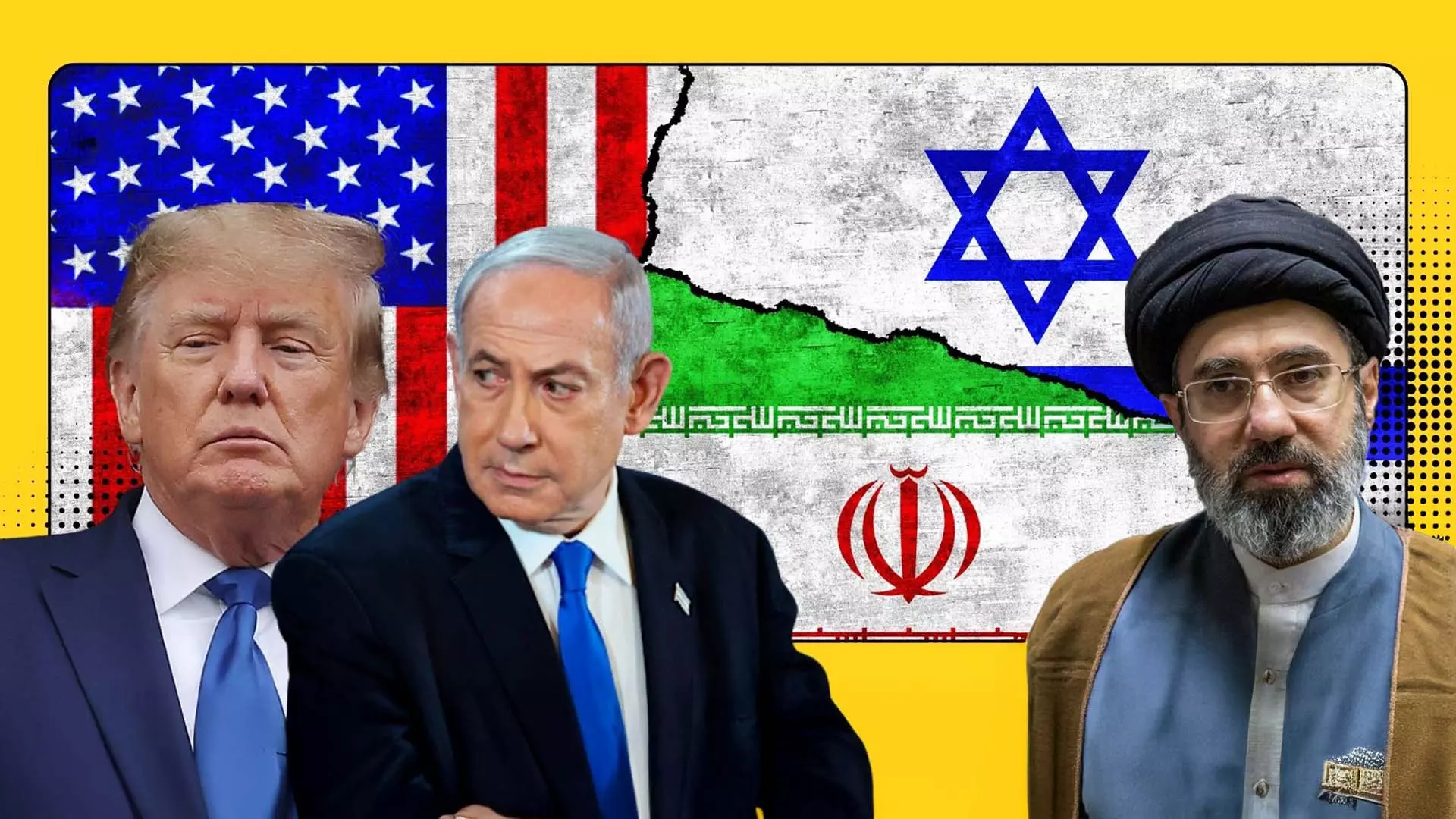
Close friends to bitter foes, US-Iran story of a busted partnership
From allies to adversaries, the Iran–US–Israel story spans coups, revolutions, and war. What really caused this decades-long conflict?

The ongoing conflict between Iran, the United States, and Israel is rooted in a complex history that dates back decades. What appears today as deep hostility was once a close strategic partnership shaped by global politics, energy interests, and shifting power equations.
To understand how these nations became adversaries, it is essential to revisit the period after the Second World War, when Iran was still a monarchy and closely aligned with Western powers.
In 1951, Iran elected Prime Minister Mohammad Mosaddeq, marking a shift towards political independence. Mosaddeq nationalised Iran’s oil industry, ending the dominance of the British-owned Anglo-Iranian Oil Company. At the time, Iran was one of the world’s largest oil producers and exporters.
The coup
The move to nationalise oil triggered strong reactions from the West. The United States, working with the United Kingdom, used the CIA to orchestrate a coup that removed Mosaddeq from power. This restored authority to the monarchy under Mohammad Reza Shah Pahlavi.
The Shah pursued rapid modernisation along Western lines and maintained close ties with both the United States and Israel. Iran during this period adopted many Western cultural and economic practices, becoming a key ally in the Cold War.
Also Read: A deadline over Hormuz, Iran’s ominous threats, and a U-turn by Trump
However, political opposition grew steadily. To maintain control, the Shah relied on authoritarian measures, using the secret police, SAVAK, to suppress dissent through arrests and imprisonment.
The revolution
After nearly four decades in power, growing public anger culminated in the 1979 Iranian Revolution. The Shah was forced into exile as widespread protests united various sections of Iranian society against his rule.
The United States continued to support the Shah even after his removal, offering him asylum. This deepened resentment among Iranians, particularly towards both the US and Israel, who were seen as backing an unpopular regime.
Also Read: West Asia crisis: WHO chief warns of nuclear risk after Natanz strike
The revolution brought Ayatollah Ruhollah Khomeini to power. The new leadership nationalised key sectors, including oil, and fundamentally altered Iran’s political and foreign policy direction.
Ties collapse
Relations between Iran and the United States deteriorated rapidly. Iranian students seized the US embassy in Tehran, holding diplomats hostage for 444 days. This crisis permanently severed diplomatic ties between the two countries.
Since then, communication between Iran and the US has largely taken place indirectly, through intermediaries or third-party nations.
In the aftermath of the revolution, the US supported Iraqi leader Saddam Hussein in launching a war against Iran. The conflict lasted eight years but ultimately strengthened Iran internally, consolidating support for the new regime.
Rising tensions
Through the late 20th century, tensions continued to evolve. While global attention shifted during events like the Gulf War, the region regained focus after the September 11 attacks.
Iran adopted a strong stance against Israel, particularly over the Palestinian issue. Former Iranian President Mahmoud Ahmadinejad made provocative statements against Israel, further escalating tensions.
Also Read: Beyond bombs and bunkers, how Iran has cemented its place in the world of science and technology
Meanwhile, the United States increased pressure on Iran’s nuclear programme, working through international mechanisms such as the International Atomic Energy Agency (IAEA).
Regional alliances
Iran expanded its influence by building alliances with groups and governments across the region, including Hezbollah in Lebanon, the Houthis in Yemen, and partnerships in Syria. It also maintained tactical ties with Hamas in Gaza.
At the same time, Iran advanced its nuclear programme with support from countries like Russia, China, and North Korea, bringing it closer to potential nuclear capability.
Also Read: Israel, Iran's tit-for-tat war puts global security on the edge
The United States and Israel viewed these developments as major security threats, further deepening mistrust.
Present conflict
Recent events have pushed tensions to a new level. The October 7, 2023 Hamas attack on Israel acted as a trigger for intensified conflict in the region.
Israel’s response in Gaza and its strategic coordination with the United States, including under leaders like Donald Trump and Benjamin Netanyahu, have contributed to the current escalation involving Iran.
Also Read: Iran war emissions hit 5 million tonnes in two weeks, study flags climate toll
What is unfolding today is not an isolated crisis, but the culmination of decades of geopolitical rivalry, historical grievances, and strategic competition.
(The content above has been transcribed from video using a fine-tuned AI model. To ensure accuracy, quality, and editorial integrity, we employ a Human-In-The-Loop (HITL) process. While AI assists in creating the initial draft, our experienced editorial team carefully reviews, edits, and refines the content before publication. At The Federal, we combine the efficiency of AI with the expertise of human editors to deliver reliable and insightful journalism.)