



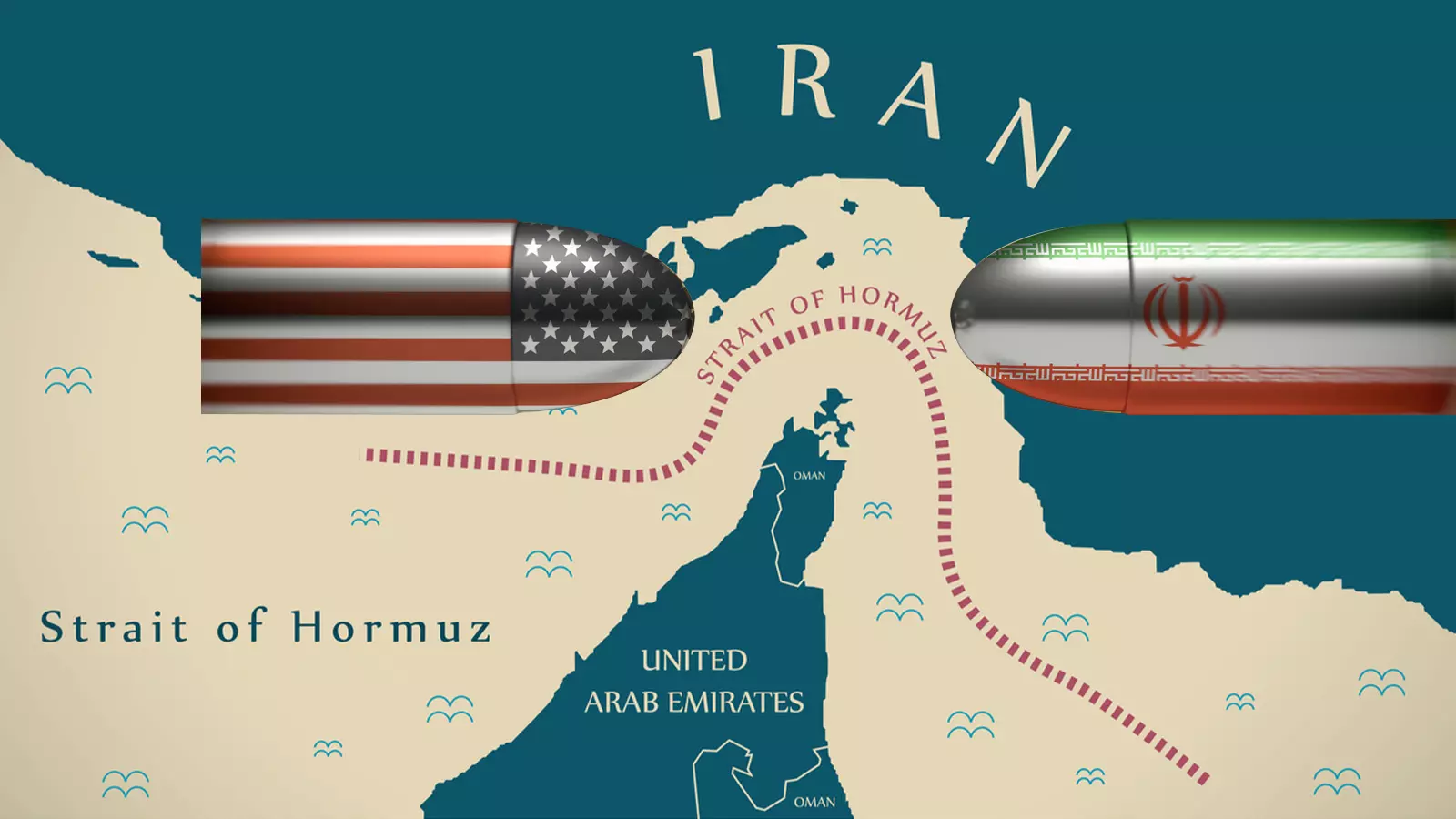
A deadline over Hormuz, Iran’s ominous threats, and a U-turn by Trump
Trump takes a step back after Tehran talks tough over attacking power and energy infrastructure if the US goes ahead and attacks it over opening Hormuz Strait

US President Donald Trump has taken a U-turn again. Just when things looked increasingly bleak, with Iran making a series of ominous threats as his deadline for it to open the Strait of Hormuz drew near, he has taken a step back—bringing much relief to the world—saying he puts his plans to strike Iran's power plants and energy infrastructure on hold for five days—if the ongoing "discussions" succeed, that is.
But then, Trump took a U-turn just two days back as well, setting the 48-hour deadline for Iran on Saturday (March 21), right after saying that he was planning to ‘wind down’ the ongoing conflict. Tehran also warned of escalating strikes on vital assets in the region that belong to the US and Israel.
Also read: What Modi said in Parliament over West Asia conflict
In his threat to Iran earlier, Trump said American forces would “obliterate” the West Asian nation’s power plants if it did not allow the key waterway to allow resumption of trade. Around 20 per cent of the world’s oil passes through the Strait of Hormuz, and with Iran blockading it since Israel and the US launched joint attacks against it on February 28, the global supply chain has suffered a shock.
Trump budges
Just when both sides looked set for yet another collision course, came a sudden Truth Social post from Trump saying the US and Iran have had “very good and productive conversations regarding a complete and total resolution” of their hostilities over the past two days. It's another matter that Iranian media claimed there have been no conversations in the first place.
Anyhow, Trump added that these “constructive conversations” will continue throughout the week, and “subject to the success of” these ongoing discussions, he has instructed the war department to postpone all military strikes against Iranian power plants and energy infrastructure for five days.
This was a total change in tone from US Treasury Secretary Scott Bessent's statement in NBC News’ “Meet the Press” programme on Sunday (March 22) that “sometimes, you have to escalate to de-escalate”.
On the same day, Col Ebrahim Zolfaqari, spokesman for Iran’s Khatam al-Anbiya military command headquarters, said if the country’s fuel and energy infrastructure was targeted, “then fuel, energy, information technology systems and desalination infrastructure used by America and the regime in the region will be struck”, Iran’s state news agency IRNA reported.
Also read: How Iran has cemented its place in the world of science and technology
Mohammad Bagher Ghalibaf, speaker of the Iranian parliament, also said on X on Sunday that critical infrastructure, including energy, would be taken up as a legitimate target and would be irreversibly destroyed if Iran’s own infrastructure came under attack.
Iran's tit-for-tat war
Iran has so far engaged in a fierce tit-for-tat warfare with Israel by targeting two of its cities near its Negev Nuclear Research Centre, causing considerable damage in residential areas and leaving civilians injured, in retaliation for yet another attack on its own Natanz Nuclear Facility.
Its missiles also came dangerously close to the Al-Aqsa Mosque in Jerusalem on Saturday. Tehran even fired a couple of ballistic missiles at the US-UK military base on Diego Garcia in the Indian Ocean.
Not to forget that Iran has already hit assets in various countries in West Asia, which are close to the US, after the war was initiated.
What could Iran target if US strikes it?
So, if the US goes on to pound Iran’s energy infrastructure if the talks aren't to Trump's satisfaction, what has Iran threatened to target?
Power plants: Iran will target Israel’s power plants and those supplying America’s bases across the Gulf, the country’s Revolutionary Guards said on Monday (March 23), Reuters reported.
Also read: Israel, Iran's tit-for-tat war puts global security on the edge
“If you strike electricity, we will strike electricity,” the country’s Revolutionary Guards said in a statement.
It, however, added that the Iranian side seemed to retract its earlier threats to destroy desalination plants, which serve as lifelines for many Gulf nations by supplying drinking water after treating seawater.
Energy and oil facilities: As the leader of the Iranian parliament said, Iran’s retaliation would include attacks on energy and oil facilities throughout the Gulf region and an irreversible destruction of those facilities would mean the price of oil would remain high for a long time.
The International Energy Agency has already said that the current energy crisis is worse than the oil shocks of the 1970s.
Laying sea mines: In another serious threat of escalation, Iran’s Defence Council on Monday said Tehran would disconnect all Gulf routes by planting sea mines if Trump attacked the country, its state media reported.
“Any attempt to attack Iran's coasts or islands will cause all access routes in the Gulf ... to be mined with various types of sea mines, including floating mines that can be released from the coast,” a statement from the council read. “In this case, the entire Gulf will practically be in a situation similar to the Strait of Hormuz for a long time ...”
On March 20, Axios reported that the Trump administration was mulling occupying or blockading Iran’s Kharg Island to force Tehran to reopen the Strait of Hormuz.
Targeting US treasury bond holders: Ghalibaf warned that entities holding US Treasury bonds could be picked as legitimate targets besides the military bases.“ US treasury bonds are soaked in Iranians' blood,” he said in another post on X on Sunday. “Purchase them, and you purchase a strike on your HQ and assets,” he added. According to him, financial entities that finance America’s military budget would be considered targets.
Also read: West Asia crisis: WHO chief warns of nuclear risk after Natanz strike
Disrupting undersea cables: While Iran has threatened to hit information technology systems, it has not said more in detail about the specific targets. However, experts fear that they could be internet cables. Iran can technically disrupt several major global cables that pass through the narrow Persian Gulf and Red Sea region, causing major turmoil worldwide.
Imposing steep fees on vessels: Iran, which has said that the strait is already open for all ships except for those linked to its enemies, its decision to charge high amounts from some vessels (as high as $2 million) to use the Strait of Hormuz is another likely form of retaliation.
The toll has already been in place, marking Iran’s new approach to control the critical route, its lawmaker Alaeddin Boroujerdi, also a member of the parliament's national security body, told state broadcaster Islamic Republic of Iran Broadcasting, one report said. Iran, in fact, has counter-threatened to close Hormuz indefinitely if Trump comes up with an attack.
Also read: Russian oil tanker rerouted from China reaches India; more on the way: Reports
Hormuz has clearly emerged as a subject that Trump cannot walk away from. However, Ross Harrison, a senior fellow at the Middle East Institute and an expert on Iran, told the NBC News that unless the US completely cripples Iran (which he felt would not be a possibility), military means alone would not be enough to serve what the US president to aiming to achieve: easing oil markets and pricing by opening up the strait.