



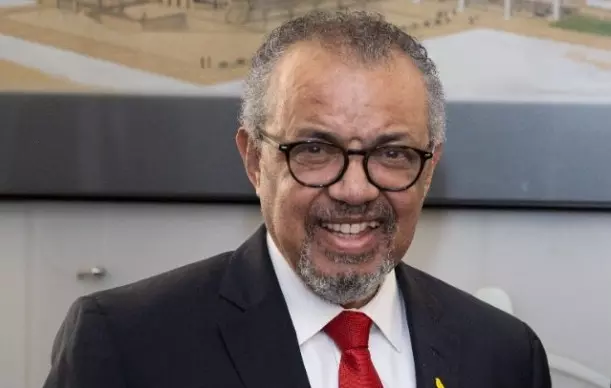
Director-General of the World Health Organization Tedros Adhanom Ghebreyesus warns of nuclear risks due to ongoing US-Israel war on Iran. X/ Tedros Adhanom Ghebreyesus
West Asia crisis: WHO chief warns of nuclear risk after Natanz strike
Tedros Adhanom Ghebreyesus revealed that WHO has been quietly preparing for worst-case scenarios since the conflict began, training its own staff and UN personnel across 13 countries to respond to potential nuclear incidents

The World Health Organization (WHO) director-general Tedros Adhanom Ghebreyesus issued a stark warning on Sunday (March 22) after reported strikes hit Iran's Natanz Enrichment Complex and the Israeli city of Dimona, home to a nuclear research facility, marking what he described as a "perilous stage" in the rapidly expanding Middle East war.
Also Read: LIVE | Iran war: IEA warns current global energy crisis could rival 1970s oil shocks
The International Atomic Energy Agency (IAEA) is actively investigating both incidents. No abnormal radiation levels have been detected at either site so far, offering limited immediate reassurance. However, experts caution that strikes near nuclear infrastructure carry consequences that could extend far beyond any frontline, threatening populations across entire regions.
"International Atomic Energy Agency is looking into incidents reported yesterday in southeastern Iran, and in Israel’s city of Dimona. No indications of abnormal or increased off-site radiation levels have been reported. Attacks targeting nuclear sites create an escalating threat to public health and environmental safety," he wrote.
A humanitarian toll already staggering
The conflict, which erupted following US and Israeli strikes on Iran in late February, has reportedly claimed over 1,300 lives in Iran and at least 570 in Lebanon. Israel has reported its own fatalities alongside more than 2,000 injuries. Children have borne a devastating share of the violence, reportedly over 1,800 killed or injured across the region since hostilities intensified.
Beyond the human cost, the war has struck hospitals, schools, and energy infrastructure across the Gulf, sending global oil prices climbing and pushing millions closer to a full-scale humanitarian emergency.
WHO's quiet nuclear preparedness
Tedros revealed that WHO has been quietly preparing for worst-case scenarios since the conflict began, training its own staff and UN personnel across 13 countries to respond to potential nuclear incidents. It is a sober indication of how gravely the organisation views the current trajectory.
Also Read: Israel, Iran's tit-for-tat war puts global security on the edge
Calling on all parties to exercise maximum military restraint, Tedros warned that nuclear risks respect no borders. His closing words were unambiguous: "Peace is the best medicine."