



A beginner's guide to the US-Israel war with Iran
Bombs, oil shocks, closed airspace and a dead supreme leader. The US-Israel war with Iran explained for anyone trying to make sense of it

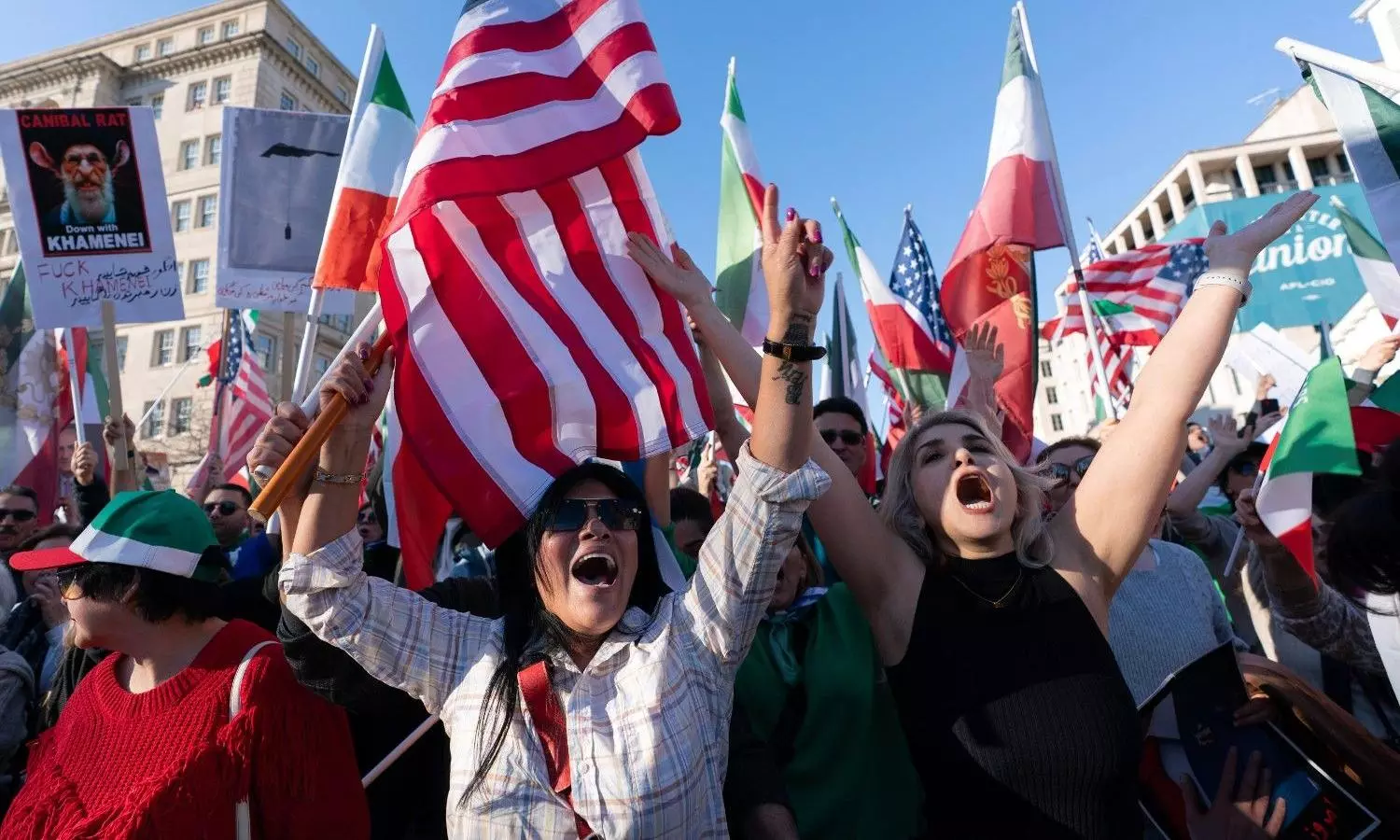
In the early hours of Saturday, February 28, 2026, the Middle East changed in ways that will take years to fully understand. The United States and Israel launched a massive coordinated strike on Iran, hitting its capital and several major cities, killing its supreme leader Ayatollah Ali Khamenei, and targeting what both governments described as nuclear facilities.
Iran has retaliated. Airspace across the region is closed, oil markets are rattled, and the world is scrambling to work out how bad this gets. Here is what is known, why it happened, and what may come next.
What exactly happened?
In the early hours of February 28, the US and Israel launched coordinated strikes — codenamed Operation Roaring Lion by Israel and Operation Epic Fury by the US — targeting Tehran, Isfahan, Qom, Karaj and Kermanshah.
US President Donald Trump announced the attacks publicly, framing them as an effort to dismantle Iran's nuclear programme and calling on Iranians to overthrow their government. Iranian Supreme Leader Khamenei was reported killed on Sunday, March 1.
Also read | By striking Iran, Trump and Netanyahu make a mockery of global order
Iran responded with missile strikes on Bahrain, Saudi Arabia, Qatar, the UAE and Iraq, where US military bases are located. Airspace across the wider region closed within hours, and Iran has allegedly shut the Strait of Hormuz, through which roughly a fifth of the world's oil supply passes.
Why did this happen — and why now?
The two sides offer very different answers. Washington and Tel Aviv say the strikes were necessary to prevent Iran from developing a nuclear weapon, with the Trump administration claiming Tehran was weeks away from weapons-grade material. They also point to Iran's support for armed groups across the region — including Hamas in Gaza and Hezbollah in Lebanon — as a long-running security threat. The strikes came days after nuclear talks in Geneva collapsed.
Tehran's view is starkly different. Iran insists its nuclear programme is civilian and legal under international law, and that its regional alliances represent legitimate resistance to decades of Western interference and Israeli military aggression.
Iran also notes that Israel possesses a substantial, undeclared nuclear arsenal of its own — outside any international inspection regime — while facing no comparable pressure. From Tehran's perspective, the strikes are an illegal act of war against a sovereign nation.
Who are the main players and what do they each want?
Israel, under Prime Minister Benjamin Netanyahu, has long regarded Iran as its primary strategic threat, citing Iran's stated opposition to Israel's existence, its funding of hostile armed groups, and its nuclear ambitions. Israel wants Iran's nuclear capacity permanently eliminated.
Watch/Read | US-Israel strikes on Iran: What it means for India and South Asia
The United States, under Trump, wants to prevent Iranian nuclearisation, reassert its dominance in the Middle East after years of perceived retreat, and settle what it frames as a 47-year adversarial relationship dating back to the 1979 Islamic Revolution and the hostage crisis that followed.
Iran, under the Islamic Republic, has sought to position itself as the leading power in a region it views as historically dominated by outside forces — the US, Britain, and Israel foremost among them. It has built alliances with non-state armed groups as strategic leverage. With Khamenei now dead, its immediate goal is regime survival.
How did we get here?
The current crisis has deep roots. The 1979 Revolution that brought the Islamic Republic to power ended a close US-Iran relationship built around the US-backed Shah, whom many Iranians viewed as a brutal autocrat. The hostage crisis that followed poisoned ties for generations.
Decades of US sanctions have severely damaged Iran's economy; Iran says this amounts to economic warfare against its civilian population.
More recently, in April 2024, Israel and Iran exchanged direct missile strikes for the first time in decades. In June 2025, Israel launched what it described as pre-emptive strikes on Iranian military and nuclear sites — the "Twelve-Day War" — in which the US joined on June 22. A ceasefire held until now.
In the months that followed, Iran's economy deteriorated sharply, mass protests erupted across more than 100 cities from late 2025, and its regional proxy network was significantly weakened. Saturday's strikes came as Iran was already under severe internal and external pressure.
What is the immediate impact?
The human toll is already significant. One Israeli strike hit a girls' school in the city of Minab, killing at least 108 people — an incident that has drawn sharp international condemnation.
Watch/Read | Why Iran's ballistic missiles could shift power balance in West Asia
Major airlines including Air India, British Airways, Lufthansa and IndiGo have suspended Middle East flights. Oil markets face serious disruption with Iran's alleged blocking of the Strait of Hormuz. Financial markets globally have reacted with alarm.
What are the options for resolution?
In the worst case, the conflict expands: Hezbollah, the Houthis in Yemen, and Iran-backed militias in Iraq and Syria enter the fight; oil supplies are disrupted; and the region is pulled into a prolonged, multi-front war with no clear exit. Analysts have drawn uncomfortable parallels to the 2003 invasion of Iraq — where toppling a government proved far simpler than managing what came after.
In a more hopeful scenario, the strikes accelerate a political transition inside Iran, a new government seeks negotiations, and a fresh diplomatic framework eventually takes shape. Iran's foreign minister has indicated Tehran is "interested in de-escalation."
Oman, which helped broker the failed Geneva talks, has called for restraint. Europe has warned of a "dangerous nuclear proliferation cascade" if the situation is not contained.
Neither side has signalled it is ready to stop. The diplomatic door is ajar — but no one has walked through it yet.
What does this mean for India?
Quite a lot. India finds itself in an acutely exposed position, with significant ties to all sides of this conflict and real vulnerabilities on multiple fronts.
Start with energy. India imports approximately 2.6 million barrels of oil per day from Gulf countries, and around 50 per cent of its total oil imports pass through the Strait of Hormuz. A blocking of the strait could lead to fuel prices in India rishing sharply, with knock-on effects for inflation.
Also read | Real reason why Kashmir feels close to Iran
Then there is the Chabahar question. India has invested heavily in developing Iran's Chabahar port on its southeastern coast — a project central to India's plans for connectivity with Afghanistan and Central Asia. Iran, for its part, has seen Chabahar as strategic leverage with New Delhi. A prolonged war, or a change of government in Tehran, creates uncertainty for both sides of that arrangement.
Aviation is already disrupted. Air India diverted its Delhi–Tel Aviv flight back to India after Israeli airspace closed; IndiGo and SpiceJet have also reported disruptions. Airspace closures across Israel, Iran, Iraq, the UAE, Jordan and Syria have forced cancellations and rerouting across the board. Dubai and Doha — critical transit hubs for Indian travellers and for the large Indian workforce in the Gulf — are directly affected.
Diplomatically, India is navigating competing relationships. It has a close and growing strategic partnership with both the US and Israel, but also a long-standing relationship with Iran. The government has called for diplomacy and issued advisories for Indian citizens in the region.
Prime Minister Narendra Modi had visited Israel two days before the strikes — a visit that Iranian officials have since referenced critically. Some analysts argue India could use its relationships with all parties to push for de-escalation; others note that any visible tilt risks straining ties with whichever side feels abandoned.
Watch/Read | B-2 strikes & broken deals: The US-Iran story you need to know
The broader strategic picture is also in flux. A prolonged US military focus on the Middle East would likely draw American attention and resources away from Asia — a shift that analysts say could benefit China at a moment when India has been working to deepen its own regional influence. How New Delhi calibrates its response in the coming days will be watched closely.