



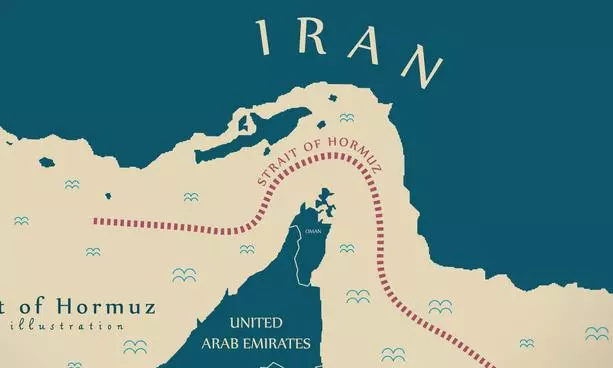
Iran blocks Strait of Hormuz traffic, India issues urgent advisory for seafarers
IRGC naval warnings halt vessels at key oil chokepoint as DG Shipping directs Indian crew, ship owners and maritime firms to exercise caution amid escalating tensions

Iran has blocked ship traffic through the Strait of Hormuz, one of the world’s most critical maritime chokepoints, according to maritime sources. The Islamic Revolutionary Guard Corps (IRGC) Navy has reportedly begun issuing warnings over VHF radio to vessels transiting the strait, stating that no ship will be allowed to pass.
Also read | All eyes on Strait of Hormuz, but India needs to watch its oil vulnerability
The Federal is in possession of an audio recording attributed to a commanding officer of the IRGC Navy, in which sailors and ship masters are warned not to proceed through the Strait of Hormuz. The authenticity of the audio has not been independently verified, but maritime tracking inputs indicate heightened tension and caution among vessels in the region.
Hormuz tensions trigger advisory
The Strait of Hormuz is a strategic maritime corridor through which nearly 25 percent of the world’s total oil supply passes. Any disruption to traffic through the narrow passage linking the Persian Gulf with the Gulf of Oman is expected to have immediate global repercussions, including a potential surge in crude oil prices and shipping insurance costs.
The developments come amid escalating tensions in Iran. On February 28, the Directorate General of Shipping issued an urgent advisory to Indian seafarers and maritime stakeholders in view of the rapidly evolving situation.
The advisory follows earlier directions issued after the Ministry of External Affairs on January 14, 2026, strongly advised Indian nationals to avoid travel to Iran until further notice, citing a deteriorating security environment. The Embassy of India, Tehran had also urged Indian citizens present in Iran to leave the country at the earliest using available commercial transport.
Fresh curbs for seafarers
Subsequently, DG Shipping had issued Circular 01 of 2026 advising all Indian seafarers, Recruitment and Placement Service License holders, shipping companies, trade unions and maritime stakeholders not to deploy Indian crew to Iran until further orders. Stakeholders were directed to closely monitor the safety and status of Indian crew members operating in Iranian waters or nearby regions.
The February 28 circular reiterates those directions and strengthens them following fresh escalation, including reported pre-emptive strikes in Tehran and other areas.
Indian seafarers presently in Iran, including those awaiting vessel joining, pending wages or repatriation after sign-off, have been asked to remain vigilant and avoid unnecessary movement ashore. They have been directed to strictly follow advisories issued by the Ministry of External Affairs and the Embassy of India in Tehran and to urgently register their details with the Embassy, either directly or through family members.
They have also been instructed to adhere to safety protocols advised by local authorities and coordinate with RPSL companies, shipping firms, trade unions and local agents to facilitate safe departure wherever feasible.
Crew details sought urgently
All RPSL companies, ship owners, managers, agents and seafarers’ unions have been directed to urgently submit details of Indian crew currently in Iran, Iranian waters or nearby areas to the Crew Branch of DG Shipping through designated official email IDs.
Also read | Will Iran's move to block Strait of Hormuz affect oil supplies in India?
Indian-flagged vessels and Indian seafarers onboard foreign flag ships calling at Iranian ports or transiting through the Strait of Hormuz have been advised to exercise utmost caution while navigating the region, given the prevailing security situation.
With a quarter of global oil flows passing through the narrow waterway, the reported blockade and naval warnings mark a serious escalation with potential consequences for international shipping, energy markets and the safety of Indian seafarers operating in the region.