CAPF Bill locks IPS dominance in paramilitary forces, defying SC order
Centre is widely seen as using Parliament to neutralise a landmark verdict that promised career parity to 10 lakh paramilitary officers

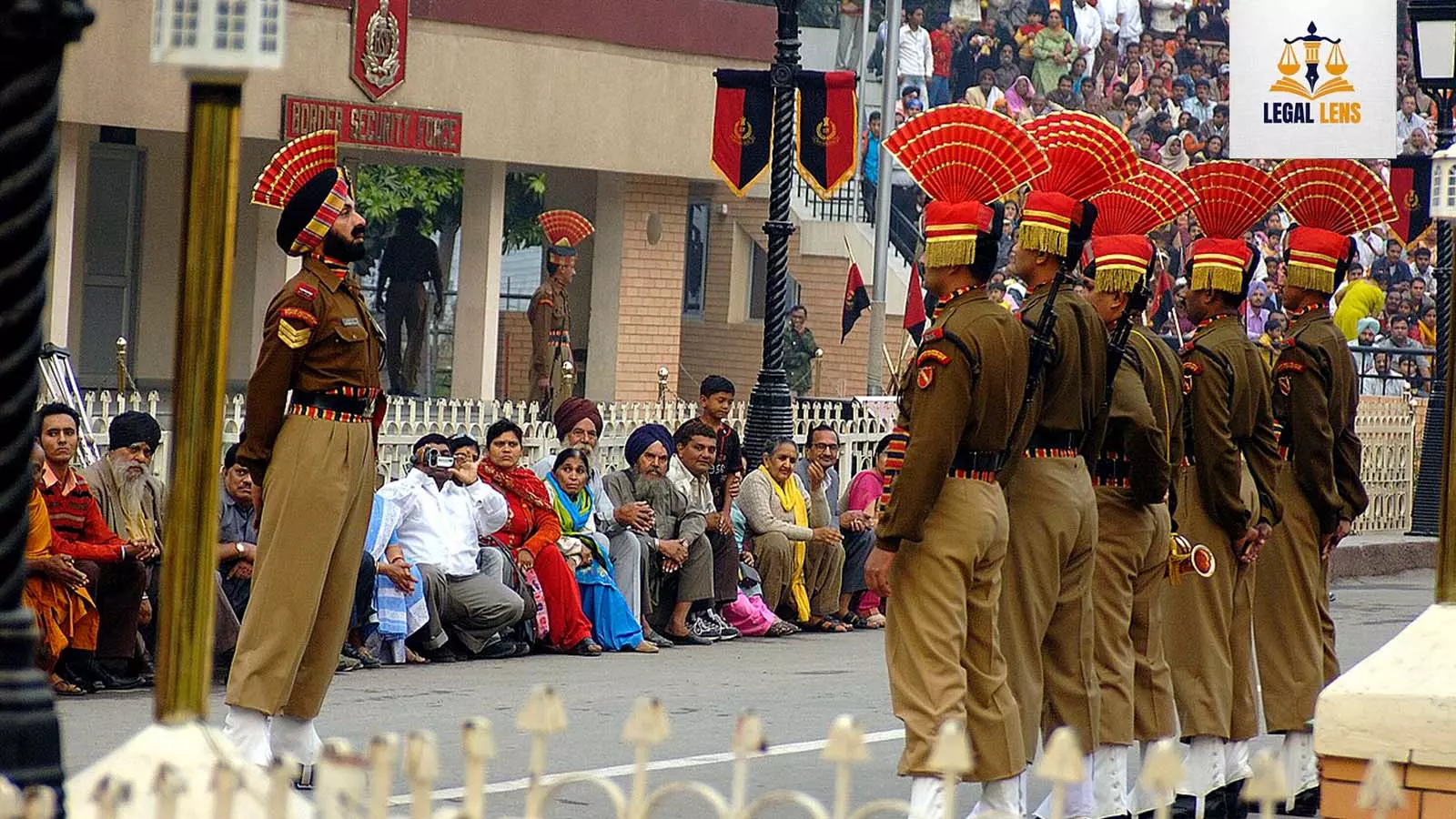
For the roughly 10 lakh personnel who serve in India's five major paramilitary forces, the career ladder has long had a glass ceiling.
Officers who enter the Central Armed Police Forces (CAPF) as young assistant commandants through the UPSC can spend their entire working lives guarding borders or fighting insurgencies, only to find the top jobs filled by outsiders.
Senior positions, from Inspector General upward, are routinely given to Indian Police Service (IPS) officers on "deputation" — state-cadre police officers temporarily posted to lead central paramilitary forces they have never served in. An assistant commandant who joined the Border Security Force at 25 might wait decades for a promotion that many IPS officers reach in barely a decade.
Statutory intervention
Last May, the Supreme Court said this had to change. In a landmark judgement on May 23, the SC recognised CAPF cadre officers as members of Organised Group A Services, a classification that entitles them to the same structured career progression and financial benefits that officers in other central services enjoy.
It directed the government to progressively reduce IPS deputation in CAPFs up to the level of Inspector General within two years.
Also read | Why Centre urging preference for ex-Agniveers in security jobs has triggered fear in Haryana
The government tried to get the verdict reversed. It filed a review petition. The apex court dismissed it in October 2025. CAPF cadre officers and associations filed contempt petitions alleging delay in implementation. Last month, the government told the SC that it was planning a "statutory intervention".
That intervention arrived on March 25, when the minister of state for home affairs, Nityanand Rai, introduced the Central Armed Police Forces (General Administration) Bill, 2026, in the Rajya Sabha. The Bill proposes to achieve by legislation what the government was denied in court: the preservation of IPS dominance in the senior ranks of the CAPFs.
Also read: Women's reservation is finally coming, but the formula carries its own tension
Under the Bill, half of all Inspector General posts, at least two-thirds of Additional Director General posts, and every Director General and Special Director General post must be filled by IPS officers on deputation. These quotas already existed as executive orders that could be revised at any time.
The Bill converts them into statute. An executive order can be changed by the next home minister; a law requires a fresh Act of Parliament.
Troubling feature
This is precisely what the Opposition calls the Bill's most troubling feature. Clause 3 of the Bill empowers the Union government to make rules on recruitment and service conditions "notwithstanding" any other law, any court judgment or order, or any government instruction.
In plain terms, the Bill is widely seen by critics as a legislative move that would neutralise the effect of the SC’s 2025 verdict. The CPI(M)'s John Brittas put the constitutional objection sharply: Parliament may be competent to legislate, but it has no power to simply declare a binding court order void. It cannot, by bare declaration, annul the operative judicial orders without addressing their legal basis, he said.
Also read | Indian courts have an AI problem, and the Supreme Court is not amused
In a similar vein, the DMK's Tiruchi Siva said the Bill was designed to nullify the court's ruling. To understand why this matters beyond the senior ranks, consider the promotion chain. In the CAPFs, officers move up only when the post above them is vacated. Each rank is a bottleneck. When an IPS officer on deputation occupies an IG post, the CAPF officer who should have become IG stays at DIG. That DIG slot is blocked, so the commandant below stays put. This slows promotions down multiple ranks, affecting morale even at the lowest levels.
Across five forces, the Bill's 50 per cent reservation at IG could stall large numbers of promotions across multiple ranks.
Anti-federal, says Opposition
Congress's Ajay Maken, speaking in the Rajya Sabha, put a human face on these numbers, citing government data. Between 2021 and 2025, he said, 749 CAPF personnel died by suicide, 46,000 took voluntary retirement, and 9,532 resigned. In the CISF, officers say it can take close to three decades for a cadre officer to reach the ADG rank.
The procedural saga matched the substantive controversy. On March 24, the government's first attempt to table the Bill was stalled after the Trinamool Congress's Derek O'Brien pointed out it had been circulated in violation of the 48-hour advance notice convention. Congress, AAP, and the CPI(M) also objected.
Also read: Elvish Yadav is free, but his 'punishment' came from a case built on sand
The next day, the government pushed it through by voice vote. O'Brien staged a silent protest, calling the Bill "anti-federal."
Sovereign authority
The government's case rests on a constitutional claim and a policy argument. Parliamentary Affairs Minister Kiren Rijiju argued that Parliament has sovereign authority to legislate on policy and that legislators who defer to court verdicts on administrative questions surrender a power the Constitution vests in them.
The Bill's Statement of Objects and Reasons, signed by Home Minister Amit Shah on March 16, makes the policy case: IPS officers provide an essential bridge between the Centre and the States.
CAPFs work closely with state police on internal security, counter-insurgency, and election duty; IPS officers, who rotate between state and central postings, ensure coordination.
This argument deserves honest engagement. The five CAPFs have operated under separate Acts with distinct service rules, producing a fragmented and litigation-prone administrative landscape. A single umbrella statute has real advantages. The Bill also appears to remove the 20 per cent IPS deputation quota at the DIG level, and reduces the ADG reservation from roughly 75 per cent to 67 per cent. These are meaningful concessions for officers in the middle ranks. However, the Centre-State coordination rationale faces a serious counter.
Standing Committee scrutiny
Retired CAPF officers, including former IGs from the BSF and CRPF, have argued that the forces have developed their own operational expertise in border security and counter-insurgency over six decades, domains in which IPS officers drawn from urban policing backgrounds bring limited field experience. The government's founding vision for IPS deputation may have made sense when these forces were newly raised in the 1960s. Whether it still holds for mature organisations with established internal leadership pipelines is a question the Bill declines to engage with.
YSRCP's Golla Baburao, Rajya Sabha MP, while acknowledging the Bill's reformist aims, urged the government to send it to the Parliamentary Standing Committee on Home Affairs. Retired CAPF associations have made the same request, asking that cadre officers be heard before the law is finalised.
Also read: NCERT textbook ban: Judiciary moves fastest when it's the one being judged
For legislation that will shape the careers and morale of one of the world's largest paramilitary establishments, this appears to be the minimum standard of deliberation. The Bill's own preamble promises to "harmonise judicial directions with administrative and federal requirements".
Scrutiny by a Standing Committee is where that promise can be tested.