New Bill tightens birth registration rules, but leaves key questions unanswered
Bill shifts delayed birth/death registrations to criminal courts, but says nothing on evidence, inquiry, and legal recourse for rejected applicants

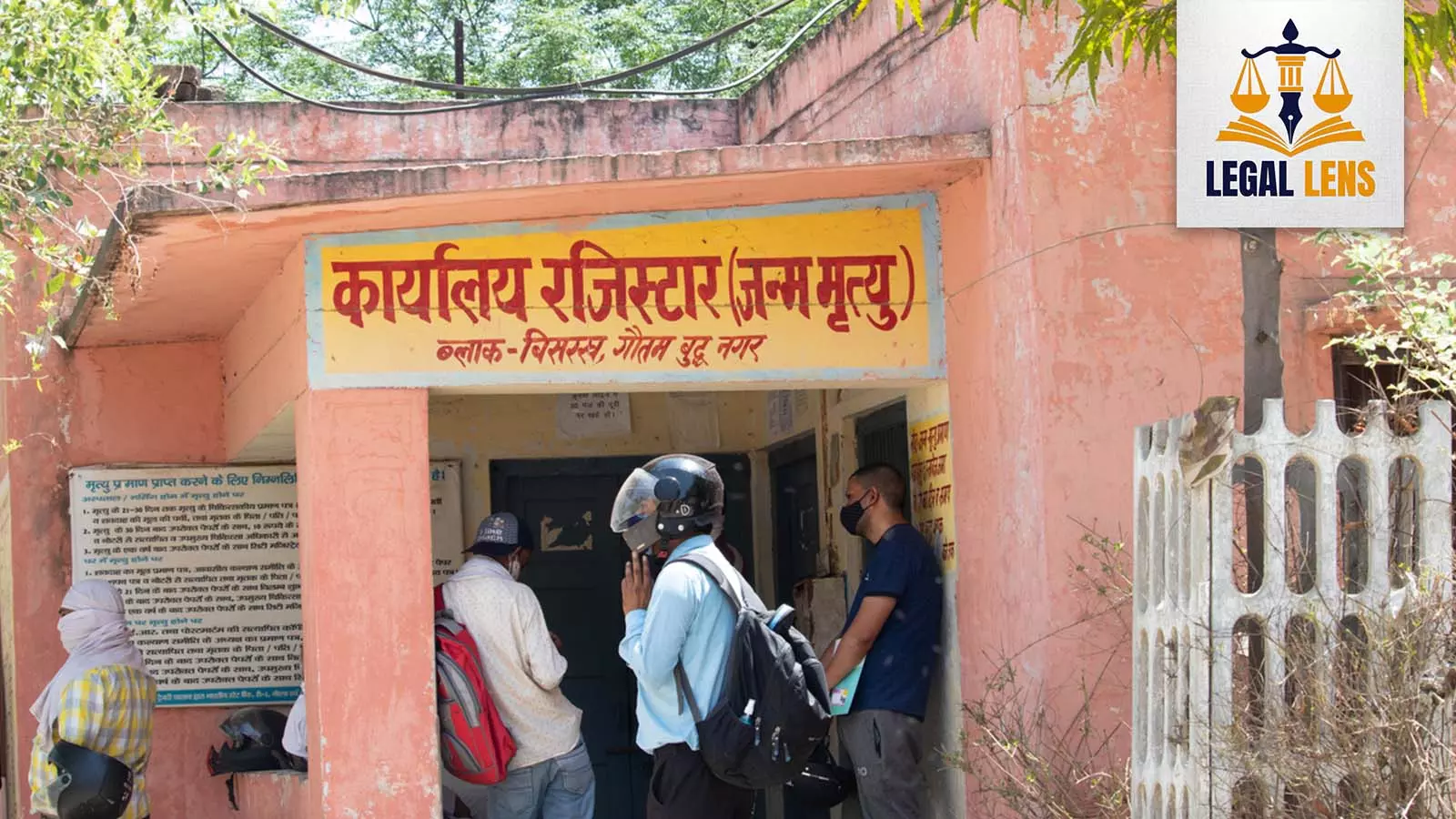
On July 29, the Union government introduced the Registration of Births and Deaths (Amendment) Bill, 2026 in the Lok Sabha, in Home Minister Amit Shah's name. The Bill contains a single working clause. It makes the registration of a birth or death reported more than two years late a matter for a criminal court. That sounds technical, but it is not. For crores of Indians whose births were never recorded, the change decides how hard it will be to prove who they are, and, in this season of voter-list revision, whether they can prove it at all.
What changes?
Births and deaths must ordinarily be reported within 21 days. The law allows late entry, called delayed registration, with rising hurdles. For up to 30 days, it imposes a late fee. A delay up to one year needs the district registrar's written permission, a fee, and self-attested documents (copies signed as genuine). If the delay is beyond one year, it needs an order of the district magistrate, the sub-divisional magistrate or an authorised executive magistrate: officers of the district administration, not judges.
Also read: Is India heading towards nationwide citizenship register? | AI With Sanket
The Bill splits this last category into two. Between one and two years, the executive route continues. Beyond two years, only a judicial magistrate of the First Class, a judge of the district criminal courts, may order registration. In both cases, the magistrate must be of the place where the birth or death occurred, however far the applicant now lives. Everything else in the law stays as it is.
Birth certificate the master document
Because the state has made the birth certificate the master document. For persons born on or after October 1, 2023, the birth certificate is the single proof of date and place of birth for school admission, government jobs, passports, Aadhaar and the voters' list; birth data now flows directly to UIDAI (Unique Identification Authority of India), the authority that issues Aadhaar.
A late registration usually is not the applicant's fault. The duty to report lies on hospitals, jailors, institutions and heads of households; the Registrar himself must learn of every event in his area. A late registration can flow from any of their failures.
The Special Intensive Revision (SIR) of electoral rolls, the Election Commission (EC)’s rebuilding of voters' lists household by household, has sharpened the point. At SIR hearings in West Bengal this winter, voters who could not trace themselves to the 2002 list were asked to show when and where they were born. Aadhaar would not do; the Supreme Court has held it proves identity, never citizenship. A birth certificate, on the EC’s list of admissible documents, would. The government's own broadcaster has described the SIR as verifying voters' place of birth to help identify non-citizens.
Also read: MEA says passport is not citizenship proof; so how do you prove you are Indian citizen?
Under the Citizenship Act, everyone born in India before July 1, 1987 is a citizen by birth; later births turn on the parents' status. The date and place of birth decide citizenship, and the certificate is the state's preferred proof of both.
Who will be hit the hardest?
Mostly people who did nothing wrong. The Civil Registration System, the official machinery that records every birth and death, captured barely 56 per cent of births in 2000 and 82.4 per cent as late as 2011; it reached 99.1 per cent only in 2024. The near-perfect number describes newborns. A woman of 40, delivered at home, was almost certainly never registered.
Nor is late registration usually the applicant's fault. The duty to report lies on hospitals, jailors, institutions and heads of households; the Registrar himself must learn of every event in his area. A late registration can flow from any of their failures: an unreported home birth, a hospital's omission, a lost record. And stringency cannot reach backwards. Nothing a magistrate does today can make a birth of 1990 reported on time.
Also read: Proving citizenship would be easier if pre-1987 rules existed today
For the adults the system missed, the Bill only raises the wall. The migrant worker in Mumbai, born unregistered in a Bihar village, must now seek a criminal court's order a thousand kilometres away.
Hasn't this been tried before?
Yes, and it failed. The 1969 Act gave the power to “a magistrate of the First Class or a presidency magistrate”, without saying whether that meant a judge or an executive officer. The high courts were divided on the matter: Madhya Pradesh in 2022 and Karnataka in 2023 said only a judge could act; Madras said the opposite.
The Madras case, P. Duraisamy v State (2015), is instructive. A father obtained an order recording a son's birth, ostensibly for a passport, actually to claim the son was a minor at the time of his offence and undo a conviction. The alarmed court called for statistics: Tamil Nadu's judicial magistrates had ordered 4,13,751 delayed registrations in 18 months. It found weak evidence and convenient dates. But it also found that judges had no staff to verify events, that local registering authorities did not assist them, and that court work suffered. Calling the task administrative, it moved the cases to revenue officers.
Also read: Citizenship proof burden can’t be on people: Legal expert Faizan Mustafa | AI With Sanket
In 2023, Parliament settled the question nationally in the executive's favour, which the then minister of state for home affairs told the Rajya Sabha was simpler and more accountable. Three years later, the oldest cases return to the judiciary. Three regimes in three years, with no account of what the last one got wrong.
What the Bill leaves out
Almost everything that matters in practice. The Statement of Objects and Reasons, the government's explanation of a Bill's purpose, says the change will make delayed registration “more stringent” and “encourage timely reporting”. It cites no data on applications since 2023, none on fraud detected, and no reason for the two-year line.
Parliament should ask how many two-year-plus claims came since October 2023, how many were false, and what support judicial magistrates will get.
The Bill tells the judge only to verify “the correctness of the birth or death”. It prescribes no evidence, no time limit, no notice, and no inquiry. It is silent on applications already pending before executive magistrates. It leaves everything to state rules, which could differ from state to state for the same event. It is unclear what a rejected applicant can do next: Section 25A's appeals run against registrars, not magistrates. And the Financial Memorandum says the Bill costs the Union nothing; the workload lands on crowded district courts, and the fees, lawyers and travel on the applicant.
What should Parliament ask?
Fraud is a real concern; a false entry can manufacture age, identity and claims. But the law already requires verification, penalises false information and lets the registrar cancel fraudulent entries under Section 15. Both tiers of the Bill apply the identical formula of “verifying the correctness”. It changes the forum and leaves the method untouched. Parliament should ask how many two-year-plus claims came since October 2023, how many were proved false, and what support judicial magistrates will get. A committee could weigh less cumbersome answers: mandatory local reports, with court referral only where evidence conflicts.
Also read: Passport, citizenship, and the SIR debate: Why the govt’s stand faces scrutiny
If the Bill passes, the sequence facing the unregistered voter will be complete. Before she may satisfy the official who keeps the voters' list that she is entitled to vote, she must satisfy a criminal court that she was born. An accurate register must exclude invented events and contain the genuine ones that were missed. The Bill strengthens the gate. It has yet to show that the new gatekeeper is better equipped to decide who should pass through it.