It is necessary to find fixes to illegal immigration while ensuring that they don’t come with problems now evident because of changes in citizenship laws
It would be no exaggeration to recognise that India was largely an undocumented society during the British period. The exception was in the maintenance of land records in rural and urban areas, which kept details of their ownership and tenancies. This was a complex process involving registration of deeds and entry into government records, one of whose purposes was the collection of taxes.
Rise of documented society
Certainly, the British did not insist on registration of births and deaths of individuals or of marriages. Hence, the identity of persons and their place of stay was accepted either on their own statements or through the collaboration of reputed and knowledgeable individuals. In the absence of birth certificates, the date of birth as recorded in the papers of their first board-level examination was accepted as final for even senior government positions. This situation continued in the early decades of independence too.
Read/watch: Is India heading towards nationwide citizenship register? | AI With Sanket
It was only in 1969 that a law was passed for the registration of births and deaths. And, it is only for the past few decades that Indians have begun to recognise the importance of these documents. That too shows that the country is now more and more becoming a documented society.
Worrying row over citizenship
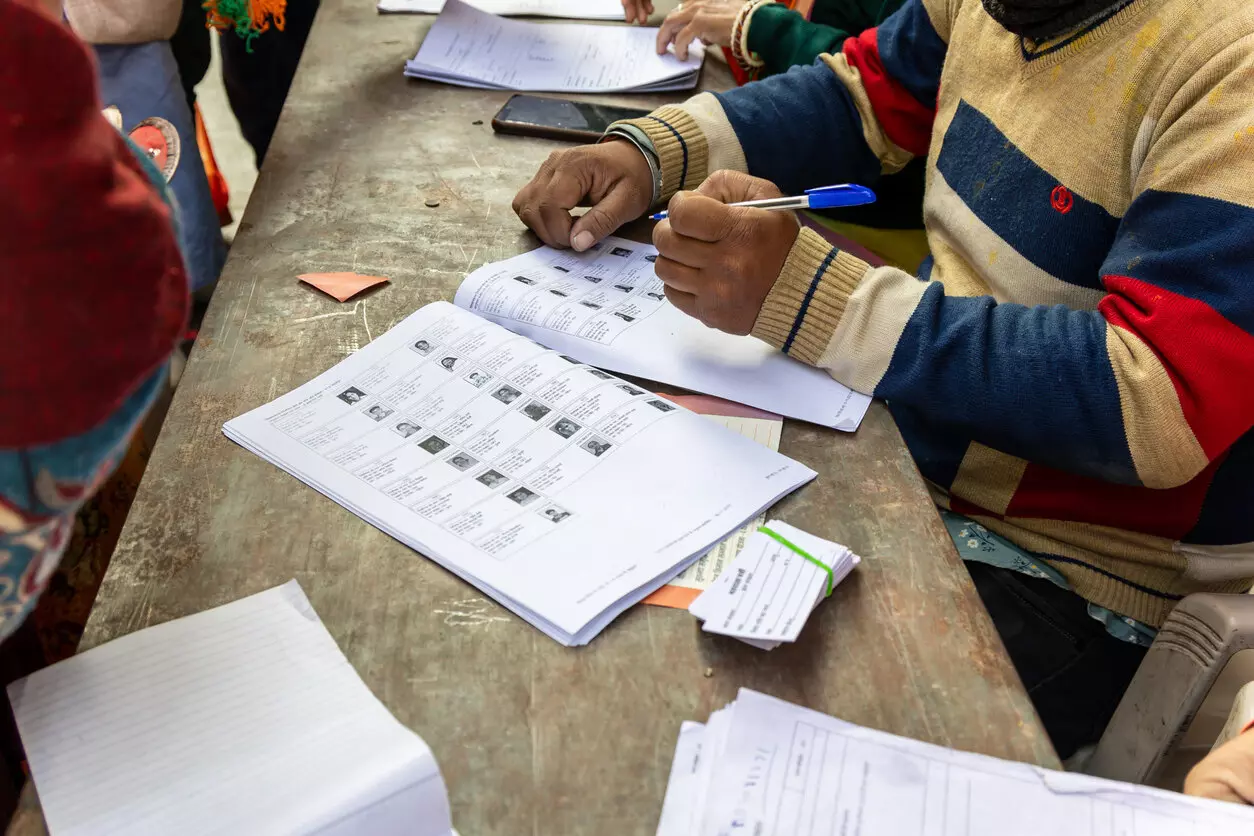
How is the country faring as it is moving from an undocumented society for individuals to a documented society? This question assumes very great and far-reaching consequences because of the controversies and difficulties witnessed in the Election Commission of India (EC)’s Special Intensive Revision (SIR) of electoral exercise across states and the recent controversy generated by the Ministry of External Affairs (MEA)’s assertion that a passport is not proof of citizenship.
A child born today in India is not treated automatically as an Indian but has to go through the process of proving that his parents are Indians and if only one is an Indian citizen he/she has to establish that the other is not an illegal immigrant.
The SIR has become politically contested, as has MEA’s contention. The politics associated with them cannot obscure the complete discordance that currently exists because of different stands taken by different constitutional and statutory authorities as proof of the one fundamental identity of Indians from which all others flow. That identity is citizenship.
Also read: MEA says passport is not citizenship proof; so how do you prove you are Indian citizen?
It would be no exaggeration to say that its conclusive settlement on the basis of a single uncontestable document should lie at the core of India’s pursuit of becoming a documented society. Citizenship is the most vital attribute and status for all Indians. Can this proposition be even debatable? Yet its determination under the current citizenship laws is tying the country in knots and is raising fundamental apprehensions in the minds of vast sections of our people.
Absence of single authoritative document
The Home Ministry administers the Citizenship Act. It has the authority to give certificates of citizenship under the relevant sections of the Act. Till 1987, citizenship was based on a person born on the territory of India. That was a fact that could be proved through a birth certificate, but in its absence, the authorities gathered evidence to establish the birth of an individual so as to establish his citizenship.
Changes in citizenship rules over the years:
Before 1987: A person born in India between January 26, 1950 and June 30, 1987 was automatically an Indian citizen by birth.
After 1987: A person was granted citizenship by birth only if one parent was a citizen.
After 2004: The Citizenship (Amendment) Act, 2003 (applicable from 2004 onwards) granted citizenship to a child only if one parent is an Indian and the other is not an illegal immigrant.
From 1987 onwards, the laws relating to citizenship moved away from the factum of birth on Indian territory to the identity of the parents of a child born in India. And, beginning with 2004, the fact of birth in the territory of India became insufficient for Indian citizenship. It became necessary that either both parents were Indians or, if only one was, then the other was not an illegal immigrant.
Also read: Indian passport issued after verification, but not proof of citizenship, clarifies MEA
These changes were of far-reaching nature and were introduced because of illegal immigration and the politics associated with it. What was not realised was that as India moved towards becoming a documented society, the absence of a single authoritative document like a birth certificate based on territoriality would result in not even a plethora of documents being able to fill the gap of a single authoritative document. The predicament has led to apprehensions and deep suspicions among vast sections of our people. It has also led to different constitutional and statutory bodies, despite the Home Ministry being the authority to administer the Citizenship Act to apply different criteria for accepting Indians as citizens.
All powers vested in Home Ministry
Thus, the Supreme Court and the high courts take a person’s assertion of his or her Indian citizenship on the basis of an affidavit. This is in all cases where he/she asserts it so, and it is especially important in cases where the person invokes the writ jurisdiction of the courts involving fundamental rights that are inherent only in citizens. The courts do not ask the person to positively prove that he/she is an Indian citizen. It can also be said without fear of contradiction that the state authorities also do not establish the proof of the applicants’ citizenship as respondents in a case. And, this is in the cases involving fundamental rights, which can be said to be on a higher pedestal than statutory rights. The courts have held that participation in elections is a statutory and not a fundamental right.
Also read: Passport, citizenship, and the SIR debate: Why the govt’s stand faces scrutiny
The courts have allowed different constitutional and statutory bodies to apply different criteria for the determination of citizenship. This obviously flows from the fact that the Citizenship Act does not provide an easy method for a citizen to get a certificate from the Ministry of Home Affairs for a declaration that he/she is a citizen of the country, especially after 1987 when citizenship moved away from territoriality as its determinant. As the Home Ministry is empowered under the Government of India Business Rules to administer the Act, it is the only body that has the power to authorise the issue of such a certificate.
Proving citizenship a harder affair today
Today, under the Act, any person born till 1987 can get a certificate of citizenship on the production of a certificate that he/she was born on Indian territory. As most Indians did not have such a certificate, a “chain of evidence” was required to establish citizenship.
In these circumstances it is necessary to find a way of dealing with illegal immigration in a manner which does away with the problems which are now evident because of the changes in citizenship laws which moved away from territoriality.
Also, while the Registration of Births and Deaths was made compulsory in 1970, it is only now that India is moving to a documented society. Hence, if the pre-1987 citizenship rules existed now, getting a citizenship certificate from the Home Ministry would have been relatively easy.
However, that is not the case because the rules have changed. Thus, a child born today in India is not treated automatically as an Indian but has to go through the process of proving that his parents are Indians, and if only one is an Indian citizen, he/she has to establish that the other is not an illegal immigrant. This is not a simple process for children whose parents were born after 1987. Increasingly, most children will be born of such parents.
Read/watch: Citizenship proof burden can’t be on people: Legal expert Faizan Mustafa | AI With Sanket
Nightmare for those born after 2004
The SIR process may have had the laudable objective of updating electoral roles. However, the West Bengal experience has established that in the absence of a single document establishing citizenship, vast numbers were left out of the election and now too the adjudication of their citizenship, even through the examination of all the documents being taken together cannot be conclusive.
In the SIR exercises now being conducted in different states, all kinds of documents are being used and yet none of them, even collectively, can conclusively establish the citizenship of persons born after 1987 as the law could before 1987. Neither Aadhaar nor PAN cards nor Ration cards can conclusively prove one’s citizenship. Driving licenses also cannot be and the government has informed that Indian passports, which state the Indian nationality of their holders, are also not proof of their citizenship. Hence, what can do so? Nothing. Thus, the establishment of the Indian identity of citizens born after 2004 can be a nightmarish experience.
Govt must move to pre-1987 position
In these circumstances, it is necessary to find a way of dealing with illegal immigration in a manner which does away with the problems which are now evident because of the changes in citizenship laws which moved away from territoriality. In any event, in view of the size of our population, what is the percentage of illegal immigration? Should the country be put through such doubts on citizenship if illegal percentages do not warrant so much attention?
Also read: Passport as citizenship proof: Trial balloon for a larger agenda?
In sum, there is logic and reason which the political class should seriously consider and revert to the pre-1987 position on citizenship. The experience of the past few years points in this direction too.
(The Federal seeks to present views and opinions from all sides of the spectrum. The information, ideas or opinions in the articles are of the author and do not necessarily reflect the views of The Federal)