Kerala elections | Unusual dissent rattles IUML over candidate list
A senior leader and the women’s wing chief publicly challenge the 'generational transition', the party faces a rare internal revolt ahead of the April 9 polls

The Indian Union Muslim League’s (IUML) exercise to select election candidates is generally marked by organisational cohesion and discipline, but this time, an unusual dissent has been witnessed, with prominent voices publicly questioning both the process and choices reflected in the list of 25 candidates picked for the April 9 Kerala polls.
Also read: Kerala elections | Cong's candidate crisis: Internal tussle stalls final list
While the leadership projected the list, which includes two women and young faces, as one which makes a calibrated attempt at generational transition, it has exposed intra-party fault lines, particularly over issues of consultation, representation and the criteria applied in selecting the candidates.
Senior leader Abdurrahiman not impressed
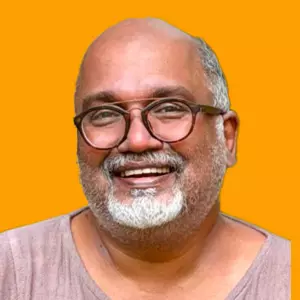
One such dissenting voice is senior leader Abdurahiman Randathani. Defending his questioning as a use a democratic practice within the party rather than a personal grievance, he was particularly critical of the decision to field P M A Sameer from Tirurangadi, one of the IUML’s strong bastions in Kerala’s Malappuram district. If sources are to be believed, the leader was expecting to get the ticket from the seat himself.
“Raising concerns about projecting a candidate by invoking the authority of the Thangal family should not be treated as a violation of discipline,” Abdurahiman said, indicating that the leadership’s reliance on the symbolic weight of the Thangal leadership to legitimise decisions was itself open to scrutiny.
The Panakkad Thangal family holds significant political influence within the IUML, with the party’s state president drawn from it, and also commands considerable religious stature as a lineage widely believed to trace its ancestry to Prophet Muhammad.
Also read: Take a stand on Sabarimala women entry issue, Congress dares Pinarayi Vijayan
The dissenting leader’s remarks also suggested that the invocation of respected figures within the party cannot substitute for broader consultation, and that dissent, when articulated within organisational bounds, remains integral to the party’s functioning.
LDF sensing an opportunity?
What makes the Abdurahiman episode significant is not just his criticism but also speculations that are rife about him shifting base to the state’s Left Democratic Front (LDF) from the United Democratic Front (UDF) of which the IUML is a part.
The Left, which has faced a considerable wave of defections in the pre-poll season, has also sensed an opportunity in the Abdurahiman case. The Communist Party of India (Marxist), which leads the LDF, is understood to be recalibrating its candidate strategy for the polls, including a possible reshuffle in at least three seats. It also expects more district-level leaders from the IUML to break ranks.
At the time of writing this report, the CPI(M)'s Malappuram district leadership is in discussions with Abdurahiman, and The Federal has learnt that the Left is considering offering the IUML leader either of the Thirurangadi or Tanur constituency, which is also located in Malappuram. Abdurahiman had been an MLA from Tanur between 2011 and 2016, when he lost the seat. The CPI(M) might even request its LDF ally, the Communist Party of India, to cede the Tiruragandi seat as part of a broader understanding.
State Sports Minister V Abdurahiman, who represents Tanur (he beat Abdurahiman Randathani in 2016), is likely to be shifted from the seat and shifted to the neighbouring Tinur constituency, suggesting a wider realignment of seats in the Malappuram district.
However, it was learnt that Abdurahiman is yet to make a decision on joining the LDF. More details are expected to come out on this matter as poll strategies intensify for the April battle.
In a related move, Kunnath Mohammed, a local IUML leader from Mankada constituency, was fielded from the seat after the CPI(M) withdrew its earlier candidate, M P Alavi. This move is also being seen as an effort to tap into the local dissatisfaction within the IUML.
There were also indications that the CPI(M) is also weighing the possibility of accommodating Kerala's dissident Youth Congress leader Riyas Mukkoli, although a formal decision was yet to be taken.
While the Abdurahiman issue may still be resolved internally, given the IUML’s organisational cohesion, one would not deny the fact that even the emergence of such a situation is not common.
Comparable instances have been rare since the revolt led by K T Jaleel in 2006, which was more overtly political in nature.
Criticism also emerged from within the party’s women’s wing.
Questions over women candidates selected
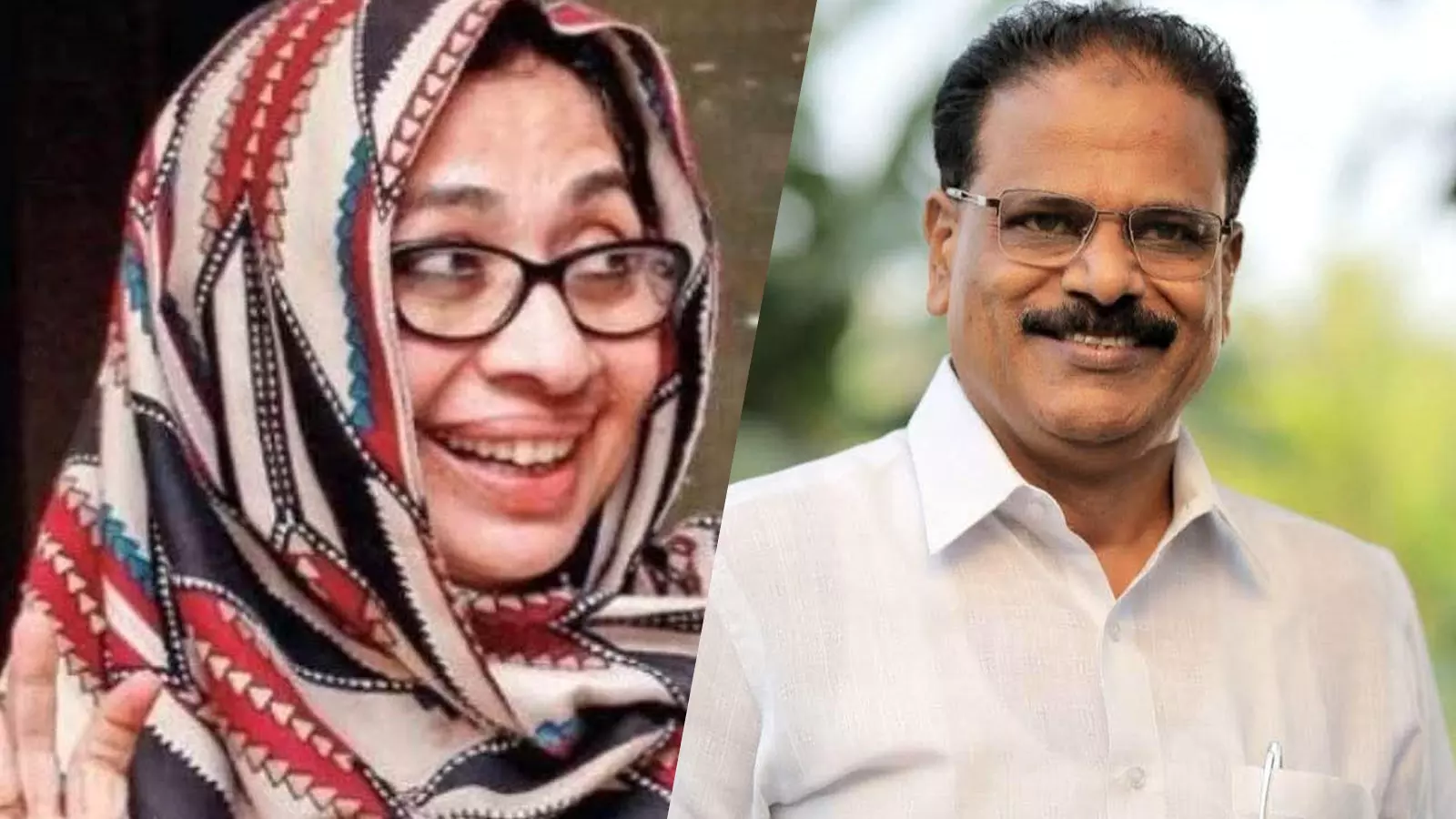
Noorbina Rasheed, the national general secretary of the IUML's Muslim Women’s League, who contested the 2021 polls from Kozhikode South but lost, doubted the rationale behind the selection of the two women candidates.
Also read: Five elections, and a moment of reckoning for Congress, BJP and EC
In contrast to the party portraying the selection of women as an indicator of expanding representation, Noorbina’s response suggested a disconnect between organisational work and electoral recognition.
The senior leader, who was the IUML’s only woman candidate in the 2021 polls, was not happy with the candidature of Fathima Thahliya from the Perambra constituency in Kozhikode, citing the latter’s remarks against the party in the past.
“Making someone who has publicly spoken against the leadership a candidate will give the wrong message,” she said, adding that such decisions could create a perception that dissent alone qualifies one for elevation.
Noorbina also questioned whether the leadership’s decisions on selecting candidates were based on a consistent evaluative framework.
Referring to the two women candidates, she alleged that while one of them emerged from the Youth League (Fathima) and the other (Jayanthi Rajan, fielded from Kuthuparamba in Kannur district) held a national-level position, neither made any significant contribution to the party’s organisation.
Also read: BJP's first list of 47 candidates for Kerala polls out; Union Minister George Kurian to contest
“We do not know what work they have done for the party,” Noorbina said, contrasting the duo’s presence in the list with the absence of several long-serving women leaders.
She also questioned the basis for picking Jayanthi, a prominent non-Muslim and Dalit face and the national secretary of the Women’s League, raising a bigger concern over an alleged shortage of transparency in decision-making.
The interventions made by Randathai and Noorbina point to distinct but converging concerns, one centred on internal democratic processes and the other on representational equity.
Also read: Assembly polls 2026: EC's U-turn, shorter-phase polls and bigger controversies
The IUML’s candidate list reflects an attempt to accommodate younger leaders while retaining elements of its established base. Such transitions often generate friction, especially in outfits where seniority and organisational loyalty have historically influenced decisions on candidature.
The episode also assumes added significance in the broader political context of Kerala, where multiple parties are navigating internal challenges alongside electoral preparation for the high-stakes battle due in less than a month.
For the IUML, the management of internal dissent also carries implications, not only for organisational coherence, but also for its negotiating position within the alliance politics.