- Home
- India
- World
- Premium
- THE FEDERAL SPECIAL
- Analysis
- States
- Perspective
- Videos
- Sports
- Education
- Entertainment
- Elections
- Features
- Health
- Business
- Series
- In memoriam: Sheikh Mujibur Rahman
- Bishnoi's Men
- NEET TANGLE
- Economy Series
- Earth Day
- Kashmir’s Frozen Turbulence
- India@75
- The legend of Ramjanmabhoomi
- Liberalisation@30
- How to tame a dragon
- Celebrating biodiversity
- Farm Matters
- 50 days of solitude
- Bringing Migrants Home
- Budget 2020
- Jharkhand Votes
- The Federal Investigates
- The Federal Impact
- Vanishing Sand
- Gandhi @ 150
- Andhra Today
- Field report
- Operation Gulmarg
- Pandemic @1 Mn in India
- The Federal Year-End
- The Zero Year
- Science
- Brand studio
- Newsletter
- Events

250 years after Jane Austen’s birth, why her theme of marriage is no longer central to the lives of Indian women
Matrimony was central to Austen’s works, but to perceive her as a proponent of marriage — especially a 'marriage of convenience' — would be to miss her discomfort with the society then. On her 250th birth anniversary on Dec 16, a look at what life is like for single women in India today.

“It is a truth universally acknowledged”, writes Jane Austen at the beginning of one of her most popular novels, Pride and Prejudice, “that a single man in possession of a good fortune must be in want of a wife”.That accuracy of that statement may or may not hold true today, but another sentence in the book, presented as the musings of one of the characters, which cites marriage as...
“It is a truth universally acknowledged”, writes Jane Austen at the beginning of one of her most popular novels, Pride and Prejudice, “that a single man in possession of a good fortune must be in want of a wife”.
That accuracy of that statement may or may not hold true today, but another sentence in the book, presented as the musings of one of the characters, which cites marriage as the “only provision for well-educated young women of small fortune, and however uncertain of giving happiness, must be their pleasantest preservative from want”, has been challenged and negated by women around the world and in India in the 212 years since the book was first published in 1813.
While matrimony was one of the central themes of Austen’s works, to perceive her as a proponent of marriage for women — especially of the kind that can be classified as a “marriage of convenience” — would be a misinterpretation of her writings. In Pride and Prejudice, one of the principal characters, Jane, cautions her sister — and the novel’s protagonist, Elizabeth Bennet — “Do anything rather than marry without affection”. And in Emma, another of Austen’s novels, the protagonist insists, “I lay it down as a general rule… if a woman doubts as to whether she should accept a man or not, she certainly ought to refuse him. If she can hesitate as to ‘Yes’, she ought to say ‘No’ directly.”
More than two centuries after the writer’s time — Austen’s 250th birth anniversary is being celebrated on Tuesday (December 16, 2025) — it is a motto the women of 21st-century India seem to have taken to heart.
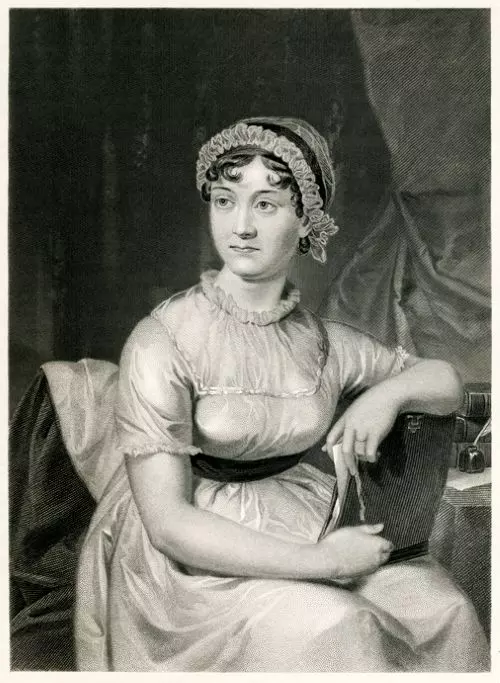
An engraving of Jane Austen. iStock image
In her book Status Single, 48-year-old author and journalist Sreemoyee Piyu Kundu writes about the kind of questions and critiques that are sometimes directed towards her owing to her marital status. “You must be the picky sort, huh? Too choosy… nothing is ever good enough for you,” she recalls being told once.
But rather than apologising for being too demanding, Sreemoyee and her tribe — the host of Straight Up with Shree podcast is also the founder of ‘Status Single’, an online and offline community of urban single women — are clear and vocal about their choices.
“The bubble around marriage has burst,” Sreemoyee tells The Federal. “Traditionally, men were perceived in the role of the provider. But with greater access to education and livelihood options, many women today find that they don’t need a provider. Men, on the other hand, even when they want a working woman wife, often still perceive the responsibilities of the house to be a ‘woman’s domain’. It is the kind of unpaid labour that educated, independent women no longer want to sign up for.”
Delhi-based food writer and content strategist Ayandrali Dutta calls it “upgrading”. “The dynamics have changed. Women have kept challenging themselves, upgrading themselves. As a result, women now do not want to ‘settle’ for marriage. They are okay being single or in a relationship without marriage. And men have gotten insecure with women not wanting to marry,” she sums up.
Also read: Why Delhi moms across economic and social groups are losing out to a common fear
According to the 2011 Census, the percentage of married women in the country at the time was 49.9 per cent, a marginal increase from the 47.7 per cent recorded in the previous census of 2001. The percentage of widows was 7.4 per cent. The data had also shown that 0.24 per cent of the married population and 0.11 per cent of the total population of the country at the time were divorced, while the percentage of those separated from their partners was 0.61 per cent of the married population and 0.29 per cent of the total population. When it came to the separated/divorced population, women outnumbered men.
Forty-three-year-old Pallavi Pratap, a Delhi-based advocate practising in the Supreme Court, got married at 24 and divorced at 36. It had been an arranged marriage. “My ex-husband fell in love with someone else and eventually went on to marry her and have a family,” she says.
Pallavi adds: “My family was extremely supportive [of her decision to end her marriage]. My mother-in-law definitely told me multiple times that divorce would destroy me and my reputation, but I don’t think anyone else has made any comment to my face. [Since the divorce] many well-meaning people talk to me about getting remarried, but I don’t think I will get married again.”
Part of the greater social acceptance of single women probably comes from the growing awareness about relationships that are beyond the conventional marriage, feels Sreemoyee. There is greater knowledge of same-sex relationships, for example. “We are emotionally more literate. Sex is not only linked to marriage,” she says.
In any case, having a supportive family and like-minded friends goes a long way in making the decision to be single easier.
Writtika Maitra, a 40-year-old professional currently based in Chennai, recalls that her decision to not get caught up in a traditional marriage came sometime in her twenties. “My family is fairly progressive. And my social circle includes many single friends, men and women, so my marital status has never been a matter of problem,” she says.
Asked if she gets to hear questions like, “who will take care of you if you remain single”, her answer is blunt and prompt. “Do men take care? I don’t think so."
Having said so, she admits that she does face the odd curiosity disguised as concern from the larger social and family circle. “I do get asked if I am seeing someone, for example,” she says.
Also read: How Kerala’s empowerment programmes are ensuring women's participation in grassroots politics
Experiences, however, vary greatly, depending on social, cultural and economic parameters. Also, the same woman may face different levels of acceptance from different people.
As a 44-year-old graphic designer working at a leading media company in Delhi puts it, “even when they accept that you are going to be single, there is always the hope that you may eventually change your mind”. And that holds true also for many parents of single women. “In my community, for example,” says the 44-year-old, speaking on condition of anonymity, “a daughter not getting married is also a reflection on the parents. It is perceived by others as them not having done their duty.”
And so even though the woman may not have a FOMO (fear of missing out) regarding marriage, there will be some neighbourhood aunty, domestic help, random guy at a wedding, the colleague who is only a passing acquaintance, or the bank officer processing a home loan application, who will take it upon themselves to preach the benefits of matrimony to the single woman.
This interference, or social gaze could range from a benign curiosity on “when are you going to settle down”, to downright nosy and passive judjement, or even maliciousness.
Dutta remembers a visit to the gynaecologist, where the doctor disapprovingly told her, “if educated women like you don’t marry and have children…”.
For Pallavi, her marital status often becomes ammunition for a rival lawyer to target her. “In my profession, people are not kind; they say extremely distasteful things and will stoop to any level to bring you down. This is not gender specific,” she says. But adds: “However, being a single woman at times makes me especially vulnerable. While representing a woman client, for example, I sometimes have to hear that I am taking a certain stand only because I am a divorcee. I also represent male clients, but they will not bring up my marital status then,” she says.
Gargi Guha, a poet, freelance journalist and former hospitality industry professional, currently based in Goa, recalls being excluded from social events organised by her married friends at times, simply because she didn't have a partner. A single mother, who had separated from her husband after 11 years of marriage, even before his death in 2020, Guha adds, “When I walk into a social event, I sense a certain shift in dynamics at times. Married women become slightly defensive about their husbands, while men show a lot of interest.”
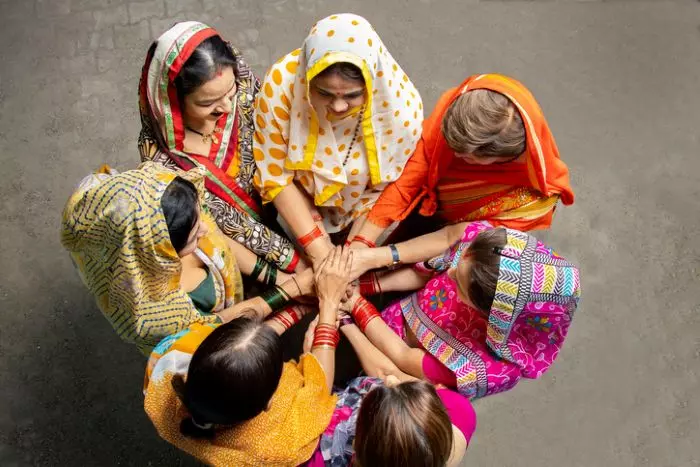
Experiences vary greatly, depending on social, cultural and economic parameters. The same woman may face different levels of acceptance from different people. But as a whole, the social acceptance of a single woman seems to be on the rise. iStock Photo
Remember that scene from the 2001 romantic comedy starring Renee Zellweger, which familiarised us with the word ‘singleton’ — Bridget Jones’s Diary. At a dinner, with “lots of smug, married people”, one woman asks her, “why is it there are so many unmarried girls in their thirties these days, Bridget?” The protagonist replies with an awkward laugh, “I guess it doesn’t help that underneath our clothes our entire body is covered in scales.” The sarcasm is lost on her audience.
According to ‘singletons’ in Indian cities today, their social acceptance also depends on which category of singlehood they can be classified in — while the Delhi-based graphic designer quoted above feels people are more accommodating towards divorcees than women who never married, Gargi says she received a “sympathy” after being widowed which was missing when she was “merely separated”.
The choice to be single, however, is a privilege that many among the country’s ‘not-married’ women did not have, points out 38-year-old Sweta Mantri, a stand-up comedian based in Pune. Born with Spina Bifida — a congenital spinal disorder — which requires her to use crutches to walk, Mantri says, “Life as a single woman is very different from that of a single woman with disabilities. Because in the case of a single woman with a disability, there is a pre-conceived notion that she will not get a partner or be in a relationship.”
She adds: Even if a man is interested, his family does not support the relationship. And this is true even of families of men with disabilities. And if you feel alone at times, or you want to talk about your emotions, even that is not expected. You are supposed to be strong and silent.”
Yet, Mantri chose to rise above social expectations and channel her experiences as a woman with disabilities into her humour. “The audience is at times awkward, but that is okay. I see it as using humour to build awareness,” she explains.
Also read: Why despite progressive image, Kerala continues to struggle with accepting interfaith marriages
It is that same steadfastness that single women in small towns exhibited in their conversation with The Federal. They may have lesser financial security than many of their counterparts in metro cities, lesser agency over their lives, their marital status may not even be at times a choice they made, yet they are intent on making the most of what they have.
“I was married off at a young age and became a mother soon after. My husband had mental health issues, still I remained in the relationship for years. I started working, living apart, before finally getting a divorce,” says Chandrakala Sharma, coordinating director of Ekal Nari Shakti Sansthan, an organisation working to support single women — unmarried, divorced, separated and widowed. Originating in a state-level convention held in Rajasthan in 1999, the organisation was registered in 2002. Among the issues it works on are single women’s property rights, domestic violence, exploitation and atrocities against single women and accessing government entitlements, among others.
One of those associated with the organisation is 58-year-old Kamala Devi, a widow in Rajasthan’s Ajmer district, who lost her husband 26 years ago. “I worked as a construction labourer for 22 years, often earning as little as Rs 25 a day, to feed my three children,” she recalls. “It wasn’t easy. There were men with evil intentions and there were unsavoury comments. When my elder son grew up, I started taking him with me to work. I wasn’t scared,” she says.
Perhaps at times, not giving in to fear is the only thing left to do. Agrees Pawani Devi, of Pindwara district, Rajasthan, "Sometimes people may say things to me thinking that I am alone, or try to create trouble at my shop. There have been times when I have had to resort to physical assault." Pawani says she never wanted to get married and after trying to find a match for her once or twice, her family gave up. A former auto driver, she hopes to become the sarpanch of her village one day.
What's interesting in these cases is how even in small towns, where people are often perceived to be more conservative, families are rallying around single women.
Mukesh Joshi, 47, a resident of Rajasthan’s Churu district, has never been married. An anganwadi karyakarta, she says her family did look for matrimonial alliances for her, but nothing worked out. Her father passed away in 2000 and she lives with her mother, a divorced sister, brother and sister-in-law and nephews and nieces. Asked whether she has to put up with barbs from her sister-in-law for being unmarried and living in her parental home, she is quick to say, “My sister-in-law never says anything either to my sister or me. My mother is the one who sometimes lashes out at both of us.”
She adds: “Looking at my [divorced] sister, however, I feel it is better that I didn’t marry at all.”
There are, however, some practical issues that singletons continue to battle, renting a house as a single woman being the foremost of these. Writtika remembers getting her parents to meet landlords at times to give the impression that they, too, would be living with her. “But it is a problem which is gender neutral; my single male friends, too, have a problem,” she adds.
From concerns of rowdiness and indiscipline, to apprehensions of drunken behaviour, partying and bringing a romantic interest home for sex, there are many presumptions made of single tenants. The problems worsen if the woman is known to have an unconventional job or work hours, a journalist, for example.
Chandrakala remembers the many unsavoury comments she would have to put up with because of making late-night, out-of-town bus journeys to attend Ekal Nari meetings the following morning.
Then there are security concerns. “Especially if you are not living in a gated complex, where the building security will scan anyone entering the premises,” says Writtika.
However, the rules made to offer security in such colonies may end up creating their own unique issues for a single woman. “My housing society doesn’t allow delivery personnel to enter after a certain hour at night. Which means I have to walk or drive down to the main gate to pick up the delivery; it could be medicines, it could be food.... My house is near the gate, but for a woman who is living at the other end of the colony, walking to and back alone, even inside the complex, could be an issue,” points out Ayandrali.
Also read: Despite laws, why inheriting parental property remains a challenge for women
For Sreemoyee, it was a medical emergency, which triggered the idea of her book, Status Single. “Logging on to Facebook I read the status I had shared way past midnight, confessing that I was living my greatest nightmare and how, for the first time in my life, my aloneness had stared me in the face, literally knocking me over. The way my heart skipped a beat when I filled out the following — Status: Single,” she writes.
The lack of preparedness on the part of healthcare providers to handle single people is something Writtika has also given some thought to. “From the time we fill out the forms at a hospital, there is an assumption that there will be a caregiver. For single people that may not always be the case. As a society, we need to be more sensitive to the needs of single people,” she says.
There are other ways in which single women say they feel unseen or uncared for.
“People think that since you are single, you have all the time in the world. Since you don’t have kids, you don’t have the right to have self-care time,” says Pallavi.
Ayandrali, on her part, would have loved to be a mother, but found the legalities involved in adopting as a single woman daunting. She gave up.
Some plans, however, can’t be pushed away, no matter how difficult the process of executing them as a single woman. Changing a light bulb in the apartment, for example, or getting a car serviced. “In our society, electricians, mechanics, maintenance guys are used to talking to the ‘man of the house’. They find it difficult to process that a woman is in charge, even when you are the one who is paying for the service. Or, they try to fleece you if they know you are alone. There have been times when I have taken my male cousin with me, just to get the job done smoothly,” says the Delhi-based graphic designer quoted above.
Despite the pressures of handling things alone, however, single women are not losing out on social life. They are going on solo trips, or traveling with friends, with platforms like Wander Womaniya, Jugni and Wow Club organising women-only or solo women's trips.
And they are dating, though not necessarily with marriage on their minds.
Ayandrali, who has been in a relationship for a while, says “My boyfriend has brought up marriage a couple of times, but I always tell him what will change. On the other hand, if things don’t work out, we will not have to handle the legal hassle if we don’t marry."
Gargi too admits to having received proposals of marriage, but says she is not looking to marry. “I have dated, I have been in relationships, but I don’t think I will marry again,” says the 50-year-old.
According to Samarpita Samaddar, former India communications director of the dating app Bumble, there has been an increase in midlifers, both men and women, taking to dating apps to find love. “Women in their 40s and 50s are more cautious. They have a life experience, so they know what they are looking for. Still, we have had success stories,” she tells The Federal.
Also read: Farmers’ suicides in Telangana: How widows are finding ways to rebuild their lives
A far cry from Charlotte Lucas in Pride and Prejudice, who, while talking of her upcoming marriage, tells her friend Elizabeth, “I am not romantic. I ask only a comfortable home...my chance of happiness with him is as fair as most people can boast on entering the marriage state.”
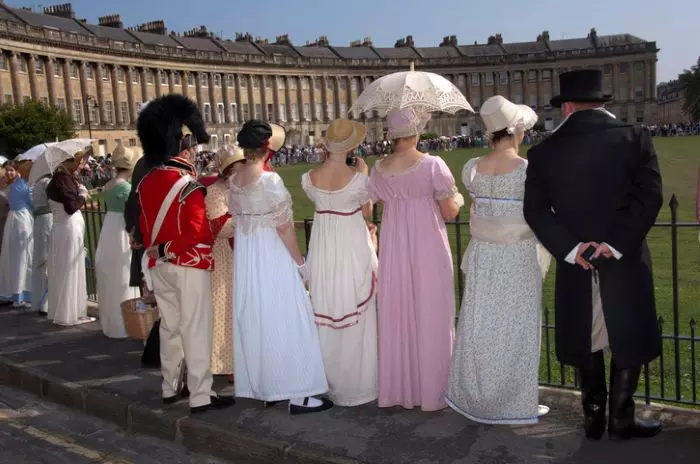
The annual Jane Austen festival in Bath, England, to celebrate the author's time in the city. iStock photo
Interestingly, Austen herself never married.
While the author never identified as a feminist, indeed the term didn’t even exist during her time, latter-day readings of her works have cited the highlighting of issues of inequality faced by women in her times. From inequality in inheritance, with property being fixed on the male heir, to marriage being seen as the only purpose of a woman’s life, her writings reflect her deep discomfort with the social realities of the late-18th-early 19th-century England.
Charlotte’s marriage was a cause of cheer not only to her but the entire family. The “boys were relieved from their apprehension of Charlotte's dying an old maid.” In her, Austen expresses the irony of a woman with a superior mind forced by circumstances into a union with a man much her inferior.