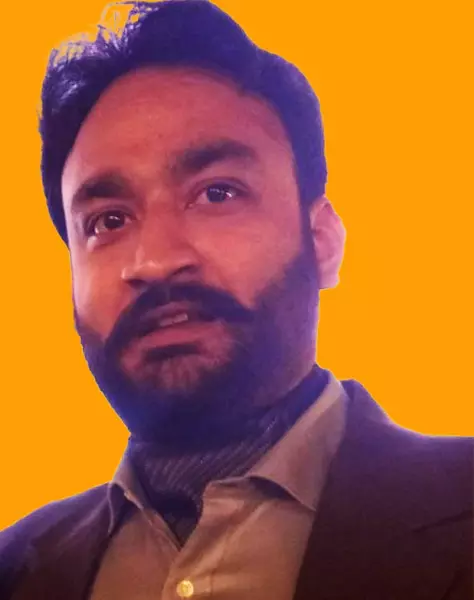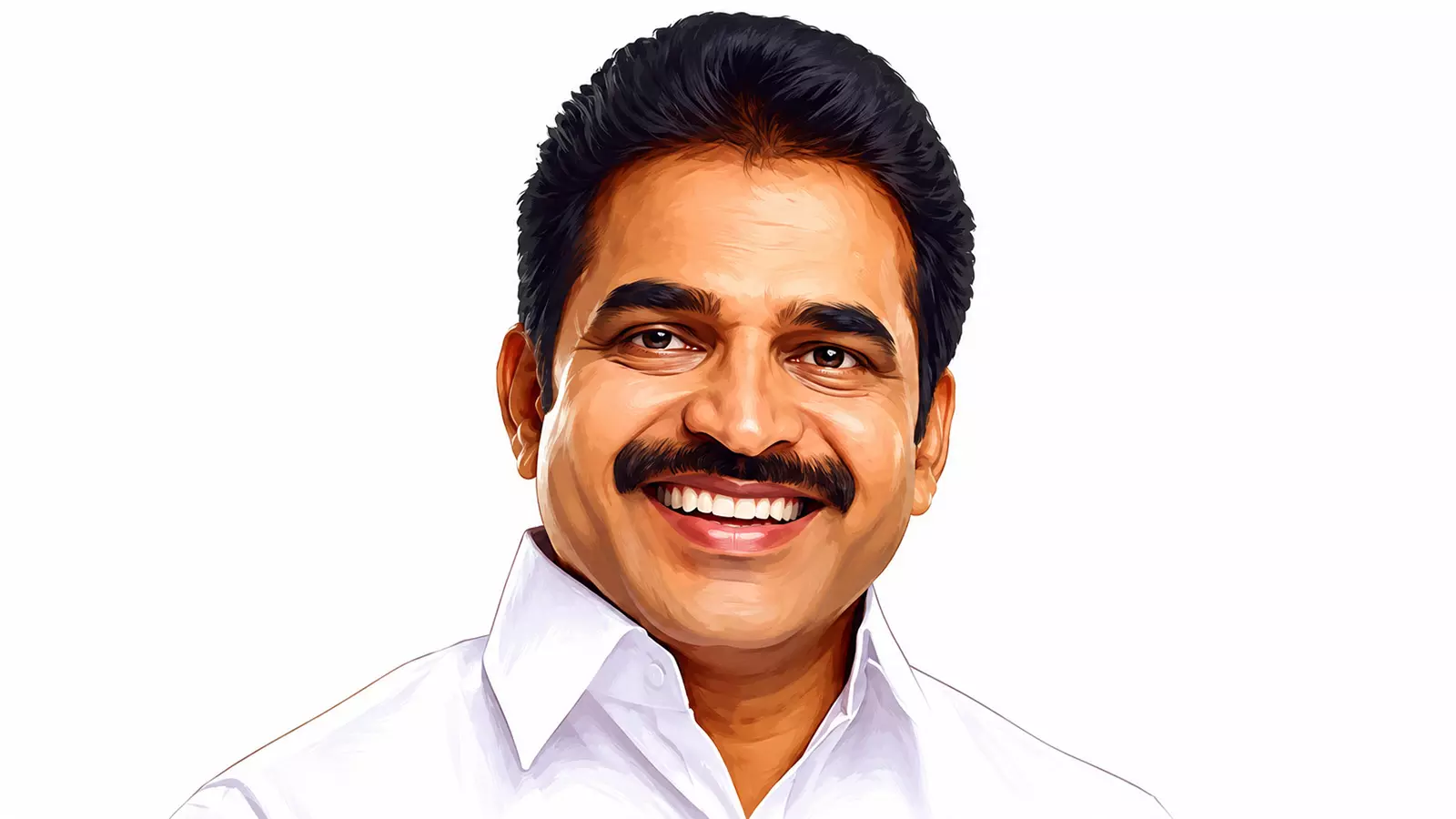
K C Venugopal, the former Kerala Youth Congress president, built his base through cadre work and internal networking rather than public mobilisation.
KC Venugopal: Rahul's gatekeeper, who couldn't unlock Kerala CM office
From Youth Congress organiser to AICC power centre, Venugopal’s rise has been shaped less by mass appeal and more by proximity to Rahul. Finally, he lost out to VD Satheesan

After ten days of intense internal deliberations and leadership tussle, the Congress has officially named V.D. Satheesan as the next Chief Minister of Kerala.
The decision resolves a high-stakes leadership contest that saw senior figures — including KC Venugopal and Ramesh Chennithala — in contention for the top post following the UDF’s landslide victory on May 4.
While the wait sparked significant political speculation and factional friction, Venugopal has publicly accepted the high command’s choice. But for many, KC K C Venugopal jumping into the fray was a total surprise, and he finally had to eat the humble pie at last.
When K C Venugopal was asked about Kerala’s chief ministerial race during the election campaign, he deflected. Remove his name from the discussion, he told reporters. It was a careful response, true to a political style built not on mass appeal but on quiet manoeuvring.
Now, with the UDF winning over 100 seats and in a contest he never formally entered, Venugopal still emerged as its central figure. Why did he stake his claim? That is where the story lies. Read on.
Venugopal’s political journey began in the organisational trenches of the Congress. A former Kerala Youth Congress president, he built his base through cadre work and internal networking rather than public mobilisation. That grounding would come to define his politics.
Rise of K C Venugopal
His administrative experience came during his tenure as a minister in Kerala between 2001 and 2006 under A K Antony and later Oommen Chandy. In government, Venugopal earned a reputation as a dependable administrator. He was never projected as a mass leader, but as a minister who could manage portfolios without attracting controversy. The stint added executive credibility to his organisational heft.
Also read: Three leaders, one chair: Congress’s Kerala CM test begins
The decisive shift came in 2009 when he entered national politics by winning the Alappuzha Lok Sabha seat. The Congress-led UPA was then in power at the Centre. Party insiders say this was when Venugopal began cultivating a close rapport with Rahul Gandhi, who was then pushing for greater representation of younger leaders within both the Congress and the Union government headed by Prime Minister Manmohan Singh.
Unlike privileged dynasts such as Jyotiraditya Scindia, Milind Deora, RPN Singh, Sachin Pilot and Jitin Prasada, who came to define Rahul’s early coterie, Venugopal consciously avoided the spotlight. Instead, he quietly earned Rahul’s trust as one of the few loyalists content with proximity to power without advertising it.
Entry into Union cabinet
By January 2011, Venugopal had entered the Union Council of Ministers. He served first as Minister of State for Power and later for Civil Aviation through the remainder of the UPA’s turbulent tenure. In the 2014 general election, which reduced the Congress to a historic low of 44 Lok Sabha seats, Venugopal retained Alappuzha and returned to Parliament for a second term.
It was only in mid-2017, however, that Rahul’s backing earned Venugopal his first major AICC assignment. Replacing veteran leader Digvijaya Singh, he was appointed Congress general secretary in charge of Karnataka, where Siddaramaiah’s government was expected to comfortably retain power in the assembly polls that were due the following year.
Also read: 'Pinarayi Vijayan afraid of Rahul Gandhi': Venugopal hits out at Kerala CM
The appointment allowed Venugopal to work closely with Rahul, who would formally assume the Congress presidency later that year. The Karnataka results, however, fell far short of the confidence Venugopal and Siddaramaiah had projected. The Congress was forced into a post-poll alliance with the JD(S) and had to cede the chief ministership to H D Kumaraswamy after the BJP’s attempt to form government as the single-largest party collapsed.
Becomes Rahul’s close aide
Yet, in an early glimpse of what would become his defining political instinct, the blame for the Congress failing to secure a majority was pinned on Siddaramaiah and the Karnataka unit while Venugopal, despite publicly predicting victory throughout the campaign, emerged untouched.
By the time the Congress-JD(S) government collapsed in July 2019 following the defection of over a dozen MLAs to the BJP, Venugopal had firmly embedded himself within Rahul’s inner circle. Earlier that year, he had already become the AICC’s powerful general secretary organisation while Rahul was the party president.
As Congress chief, Rahul was widely seen as disengaged from day-to-day organisational management and often directed leaders with grievances to “meet Venu”. That arrangement steadily expanded Venugopal’s influence across the party structure.
Also read: KPCC chief says no debate in Congress over CM candidate
Even after Rahul resigned following the Congress’s defeat in the 2019 Lok Sabha election, forcing Sonia Gandhi to return as interim chief before eventually installing Mallikarjun Kharge as president in 2022, Venugopal only consolidated his position within both the AICC and Rahul’s political ecosystem.
Rahul’s dependence on Venugopal
Congress insiders say Venugopal’s influence over Rahul was evident in his role in persuading him to contest the 2019 election from Kerala’s Wayanad in addition to Amethi. Senior leaders from the Hindi heartland had reportedly advised Rahul against contesting two seats, warning it would allow the BJP to portray him as insecure about Amethi. Venugopal, nevertheless, convinced him otherwise.
Venugopal, however, appears to have convinced the only man who matters in the Congress – Rahul Gandhi – that his role in Kerala’s victory was decisive
The veterans were proved right. Rahul suffered a humiliating defeat in Amethi to the BJP’s Smriti Irani, though he swept Wayanad by a massive margin. Ironically, while Rahul’s candidature helped the Congress-led UDF win 19 of Kerala’s 20 Lok Sabha seats, the only seat the Congress lost was Venugopal’s own Alappuzha constituency.
Yet the blame never touched him. In a shrewd pre-election move, Venugopal had opted out of contesting, claiming he needed to devote himself fully to managing Rahul’s Wayanad campaign.
Power within AICC
Rahul’s dependence on Venugopal deepened once he became an MP from Kerala. Whether in the state or elsewhere, Venugopal became a constant presence at Rahul’s side. Over time, Congress leaders began to see him as Rahul’s gatekeeper.
Within the AICC hierarchy, the general secretary organisation is effectively the second-most powerful office after the Congress president, since all organisational appointments and key political decisions are routed through the General Secretary Office (GSO). In Venugopal’s case, many within the party believe he has appropriated a stature that often appears greater than even that of the formal party chief.
Also read: How UDF won Kerala after a decade: From 'total disarray' to total dominance
As the man widely believed to control access to Rahul, still seen as the ultimate authority over major party appointments despite Kharge’s presidency, Venugopal wields enormous influence over how colleagues are viewed by the leadership. That has given him a Janus-faced stature within the Congress. Leaders court him to remain in Rahul’s good books while they resent the influence he appears to wield over the Nehru-Gandhi scion.
When Congress was unhappy with Venugopal
Rahul’s unquestioning trust in Venugopal has long puzzled senior Congress leaders, though few discuss it publicly. In private conversations, many marvel at how indispensable he has made himself despite lacking either a mass base or strong communication skills in Hindi and English.
His handling of internal crises, both at the Centre and in states, is almost universally viewed as uninspiring and ineffective. To many colleagues, he remains little more than the unquestioning executor of Rahul’s political will – the man who implements instructions without assessing consequences.
He was never projected as a mass leader, but as a minister who could manage portfolios without attracting controversy
Congress leaders also say Venugopal lacks the instinctive troubleshooting ability expected of a GSO. A former Union minister recalled repeatedly trying to flag serious organisational concerns and propose solutions but failing to even get an appointment with Venugopal. Frustrated, the leader eventually decided to retire from politics “because I still could not betray the Congress ideology”. He informed Venugopal of his resignation through a message. “Even then, he did not call to ask why I was unhappy. He just replied: OK,” said the leader.
Is Venugopal a true leader?
A section of leaders who have worked with Venugopal on organisational assignments say his greatest political skill lies in claiming credit when things go right and escaping accountability when they do not. They point to how Rahul continues to face ridicule from rivals, allies and commentators alike for the Congress’s repeated electoral defeats while Venugopal, despite serving as GSO for over seven years, has escaped all scrutiny.
Also read: Kerala election results: What led to LDF's rout and what next for the Left?
“It is absurd seeing hoardings and social media campaigns projecting Venugopal as the architect of the Kerala victory because, as GSO, he supposedly ensured the organisation was election-ready. By that logic, should he not also explain Assam or be held accountable for the Congress’s more than 90 electoral defeats during his tenure,” asked an AICC functionary.
Not everyone is happy
Talks of his elevation as CM are far from universally welcomed. Venugopal was not the preferred choice among large sections of the cadre, especially as his rise appeared to sideline V D Satheesan, the outgoing CLP chief with strong grassroots popularity, and veteran leader Ramesh Chennithala. The resentment spilled onto the streets, with protests erupting across Kerala as party workers openly backed Satheesan.
Also read: Protest rally for V D Satheesan as Congress CM race intensifies in Kerala
The show of strength by supporters of Venugopal, Satheesan and Chennithala reportedly irritated Rahul enough to read the riot act to the trio on May 9 when the high command summoned them for evolving a consensus over the new CM. Rahul is learnt to have told them that the “unruly behaviour” of their supporters had embarrassed the Congress despite its sweeping victory and directed them to ask workers to “pull down the flexes” and await the high command’s decision.
Venugopal’s trajectory
Thanks to the public and UDF allies' support, the balance tilted in VDS' favour where it mattered most. What's next for KC Venugopal? That is the question everyone seems to be asking.
(With inputs from Rajeev Ramachandran )