MEA's claim misreads a 2013 court order, and the timing points to a wider bid to redraw who counts as an Indian citizen
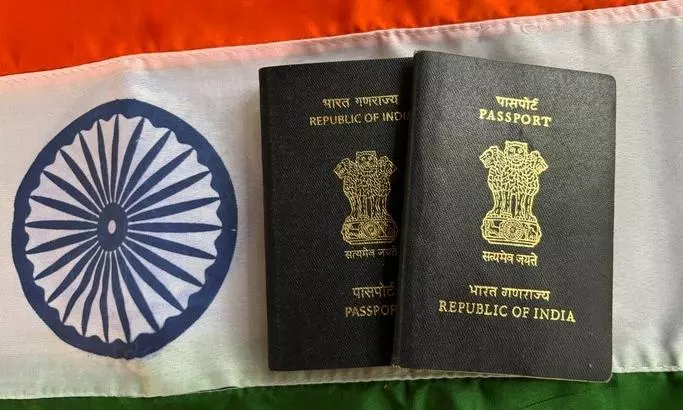
In journalistic parlance, there is an expression “flying a balloon”—meaning a test idea is floated in the public space to check how people react to it. The recent quote, attributed to an unnamed Ministry of External Affairs (MEA) official, that a “passport is a travel document and not proof of citizenship” appears to fit this expression.
The government’s trial balloon did its work, evoking ridicule, anger, shock and disbelief, besides scores of memes, among the many reactions that are continuing to flood the media, a week after the official’s remark.
But the underlying question is, why did the government float the idea that prima facie attempts to undermine the importance of the passport?
Citing a 13-year-old court order
When the flood of near-hostile reactions started to come, the ruling BJP and the government attempted to clarify that this was not a new decision, and this definition of what a passport can do was already pronounced in a Bombay High Court judgment of 2013.
Also read: Passport, citizenship, and the SIR debate: Why the govt’s stand faces scrutiny
Purportedly quoting the judgment, they said the court had already stated that a passport was not proof of citizenship, and this was the policy all these years. So why the fuss now?
If the court had indeed passed such an order 13 years ago, one year before the Modi government came to power, why was it never debated at that time or later?
What the order never said
Strangely, media outlets quoted the BJP’s take on the Bombay HC judgment while not reproducing the relevant portion of the order itself. Apparently, there continues to be an implicit trust in whatever the government or the ruling party says.
Meanwhile, the NGO portal Sabrang came out with the original order, and in it, there’s no quote of the kind attributed to it by the government or the ruling BJP.
The judgment dated July 26, 2013, in the Anwar Hussain Abdul Kadar Shaikh & Ors v/s State of Maharashtra, states that the passport produced by the appellant was a “terminated” one and did not take it into consideration while deciding on the issue of citizenship sought for by the appellant.
What the order said
In other words, the court did not take cognisance of the passport since it was not valid at the time it was examined. The judgment says nowhere that the passport is not a proof of citizenship.
Also read: Passport row: If a passport isn't proof of citizenship, what is? Experts explain
The relevant portion in the third paragraph of the judgment reads: “However, the passport to which the learned Counsel gave reference is already terminated passport. Therefore, no legal basis can be achieved for its reliance.”
A screenshot of the relevant section 3 of the 2013 Bombay High Court order
The government’s claim, backed by the ruling BJP, falls flat in the light of the 2013 judgment. The terminated passport was produced before the judge to prove citizenship. Since it was a terminated passport, the court order summarily dismissed the evidence and did not go into the merit of the passport as a document to prove citizenship.
Issue of citizenship
Yet now, 13 years later, the judgment is being loaded with meanings that do not exist. This could have been dismissed as an oversight or a mistake but for the fact that under the current Modi dispensation, citizenship has become a point of contention.
The ruling dispensation’s agenda of exclusion is actively looking for people or sections of people that can be excluded, say from citizenship, voting list, etc. If a passport is interpreted only as a travel document, then it is still possible to exclude anyone from the voters’ list despite that person having a passport, on the grounds that it is not conclusive evidence of citizenship.
Also read: Citizenship proof burden can’t be on people: Legal expert Faizan Mustafa | AI With Sanket
In recent months, millions have been controversially disenfranchised—most of them on the issue of citizenship—in the Special Intensive Revision (SIR) of electoral rolls, first in Bihar and, later, in the West Bengal Assembly elections. Those getting cut out of the voters’ list face an unsettling situation as several benefits and welfare measures accrue only if an individual is recognised as a citizen.
Thousands at risk
The MEA official’s “new” definition, attempting to delink passport and citizenship, is, therefore, fraught with adverse consequences if put into practice, as many more thousands can be denied entry into the voters’ list. While it is true that just around 10 per cent of Indians own a passport, in absolute terms, the number is huge, numbering close to 10 crore people.
Semantics, too, is playing a crucial role in compounding the confusion. While a passport holder is almost always an Indian citizen, Indian citizens do not necessarily need passports to affirm their citizenship. There are several other criteria that establish it under the Citizenship Act, 1955. At the same time, if an individual does hold a passport, s/he is almost always a citizen.
In rare situations, which is estimated at less than one per cent, travel documents are issued to non-citizens, such as refugees. This minuscule percentage cannot be extrapolated to doubt the citizenship of a regular passport holder, as there are stringent conditions that can be satisfied only if an individual is a citizen.
NRC in a new avatar
The attempt to redefine the power of the passport is the latest controversy over citizenship, since the Modi government took over power 12 years ago. In 2019, the country reacted angrily to the outcome of the National Register of Citizens (NRC) exercise for Assam, which was riddled with inaccuracies.
Also read: Is India heading towards nationwide citizenship register? | AI With Sanket
The outrage boiled over and spread across the country when the government announced that the Citizenship Act would be amended (CAA). The CAA aimed to exclude undocumented Muslim migrants from neighbouring countries from being given citizenship. It spread fear among the community when viewed in conjunction with the then-proposed NRC exercise across the entire country.
The resulting uproar forced the government to go slow on the CAA and drop the NRC exercise. The ongoing SIR, in which millions have already been disenfranchised, is being viewed as the NRC in disguise.
It is in this context that the passport, which was always viewed as a rock-solid proof of citizenship, is now being undermined. And, viewed in conjunction with the constant attempt by the government to meddle with time-tested and legally accepted precepts of citizenship, excluded sections face an ominous future.