



US force build-up in West Asia belies Trump’s peace overtures; what’s Pentagon’s plan?
White House's contingency plans reportedly include ground raids, troop deployment, and short-term missions even as Pentagon remains silent on the development

There are tell-tale signs that the United States may be planning to put boots on the ground in Iran even as the country's president Donald Trump talks about peace initiatives and discussions with the West Asian country.
Plans reportedly range from possible ground raids on Kharg island and coastal sites near Strait of Hormuz to a broader troop deployment. The White House, however, maintains that no final decision has been taken even as the West Asia conflict enters its fifth week.
Also read: Iran war: Why have peace efforts not clicked yet?
The Washington Post reported that Pentagon officials have spent weeks developing options that stop short of a full-scale invasion. These include short-duration missions using Special Operations forces and regular troops to achieve specific short-term objectives.
Contingency plans
The plans reportedly include targeted raids on Iranian coast and operations near the Strait of Hormuz to locate and destroy weapons capable of threatening commercial and military shipping. The Post report also highlighted discussions around the possible seizure of Kharg Island, a key hub that handles the bulk of Iran’s crude exports and holds strategic and economic significance for Tehran.
Officials familiar with the developments reportedly told the Post that such operations would likely be time-bound but intense. While some officials pointed that these missions would be short-term that would last “weeks, not months”, others pointed to a possible duration of “a couple of months”, reflecting differing assessments within the Pentagon.
This has been characteristic of the upper echelons of the Trump administration throughout the Iran crisis. From Trump to his Secretary of War, Pete Hegseth, to Secretary of State Marco Rubio, varying accounts have appeared about how long the US thinks the war in Iran will last, what its objectives are, and what the status is.
Also read: Why Kharg Island is the lifeline of Iran’s oil empire and what happens if it goes offline
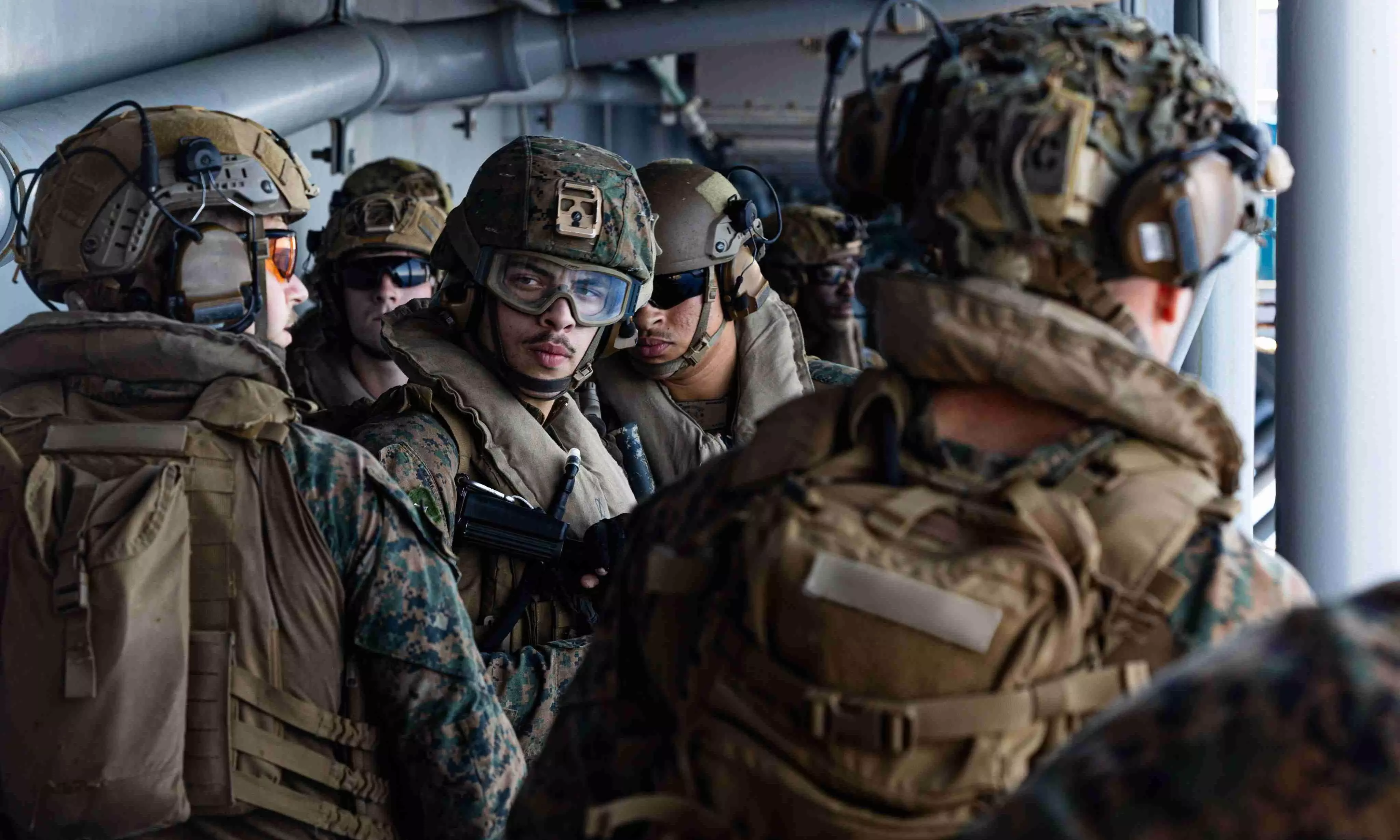
However, recent military movements have added fuel to the speculation about Washington’s next steps. The amphibious assault ship, USS Tripoli, carrying around 3,500 Marines and sailors along with aircraft and tactical assets, has arrived somewhere in the West Asian region. The deployment is part of what the US Central Command officials described, in a social media post on its official handle, as the largest US force buildup in the Middle East in over two decades, positioning troops for a range of contingencies.
Former defence officials told the Washington Post that the plans are not new or reactive. "We've looked at this. It's been war-gamed. This is not last-minute planning," an official reportedly told the Post. They have been studied and practised over time, showing the US was preparing even before the current escalation. One former senior official said capturing a place like Kharg Island could have both symbolic and strategic value, and could be used as leverage in future talks.
Word of caution
However, the official warned that holding such territory would be much harder than taking it, because Iran can launch drone, missile and artillery attacks. Military analysts also warned that the US has a poor track record in long-term wars of attrition. A ground presence could become a "trap," leading to high casualties without achieving stable regime change.
Also read: Close friends to bitter foes, US-Iran story of a busted partnership
Despite these preparations, public messaging from Pentagon remains deliberately ambiguous. Trump has denied plans to deploy troops while also signalling that he retains flexibility. At the same time, reports also suggested the Trump administration is considering sending thousands of additional personnel to the region.
Senior officials have echoed this calibrated stance. Rubio has said the US can achieve its objectives without deploying ground forces, while the White House has warned of severe consequences if Iran refuses to scale back its actions. Press secretary Karoline Leavitt said the president is “prepared to unleash hell” if Tehran does not accept the current realities, while also emphasising that military planning does not equate to a final decision.
Iran's preparedness
For now, Iran seems to be well aware of and prepared for the US’ machinations. Its Parliament Speaker Mohammad Bagher Ghalibaf has said, as quoted by the IRNA news agency, that Iranian forces were ready for the arrival of US troops.
Ghalibaf rebuked Trump for expressing willingness to negotiate with Iran, while “secretly planning a ground attack”. “The enemy is openly sending a message of negotiation and secretly planning a ground attack. Our men are waiting for the arrival of American soldiers on the ground to set them on fire,” he was quoted as saying.
Tehran has withstood pressure from the US and other stakeholders to exert counter geopolitical and economic pressure amid the war.
In a significant move recently, Iran, while laying out conditions for ending the conflict, introduced a new demand: formal recognition of Iran’s sovereignty over the Strait of Hormuz.
Also read: The Tehran 'toll booth'? Iran eyes to cash in on Strait of Hormuz disruption
The Strait of Hormuz remains a strategic flashpoint in the ongoing US-Iran conflict. Any disruption to this critical shipping route, which carries around 20 per cent of global oil and gas exports, raises the stakes for both regional stability and global markets.
With nearly 2,000 vessels stranded close to the narrow strait, which is located between Iran to its north and Oman and the United Arab Emirates to the south, Iranian officials are considering converting that leverage into a structured system of control and revenue.