



Iran war
Iran war: Why have peace efforts not clicked yet?
Despite global efforts, US proposals, the Iran war continues. What’s blocking peace and who can break the deadlock? And, why India may have missed its window to mediate

As the Iran conflict stretches on with no clear resolution, repeated diplomatic efforts have failed to produce even a temporary ceasefire.
With global powers involved and tensions escalating across the region, the key question remains—what is truly blocking peace, and is a negotiated settlement still within reach?
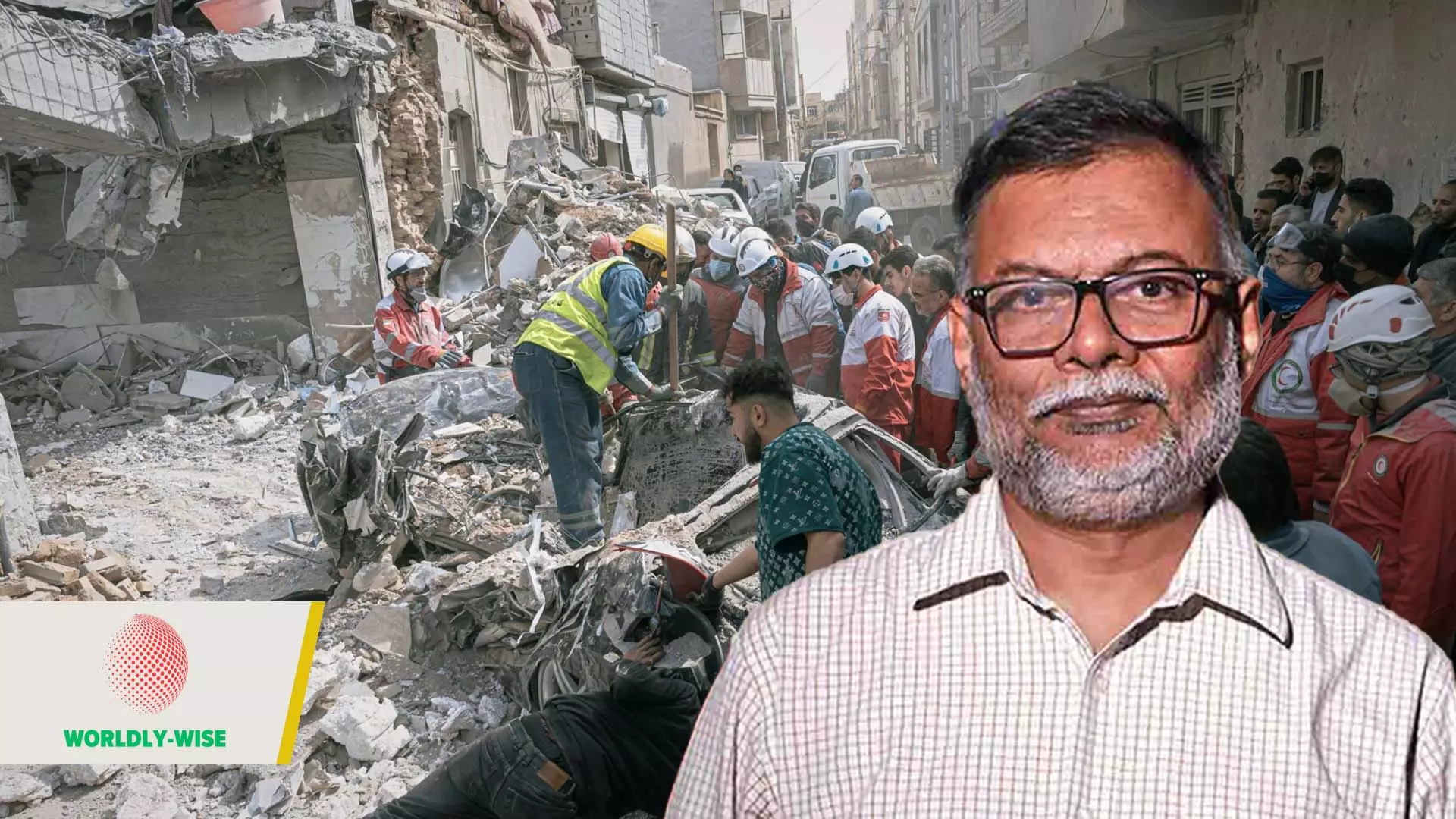
The Federal spoke to consulting editor K S Dakshina Murthy to understand what is really blocking a resolution and who, if anyone, can break the deadlock.
What is the biggest obstacle preventing a breakthrough right now?
If you look at the way the US and Iran are talking, they are not talking to each other, they are talking at each other. What the US is asking Iran to do is to give up all its military programmes. They want Iran to control its ballistic missile programme, wind up its nuclear programme, open it up for inspection, and hand over enriched uranium to the US or the IAEA.
As far as Iran is concerned, it says it should be allowed to carry out its legitimate rights as a sovereign country. It wants to be left alone. It also says the war was imposed on it by the US and Israel, and it wants reparations for the damage caused. Additionally, it wants security guarantees to ensure such attacks do not happen again.
What you are seeing is that Iran is not addressing US demands directly, except to say they are one-sided. The US, on the other hand, is ignoring Iran’s demands completely. So neither side is engaging with the other’s core concerns.
Both sides also want to come out appearing as winners. They do not want to be seen as losers. This is a very important factor.
Also read: Iran war tests India’s strategic autonomy as it walks a diplomatic tightrope
When Donald Trump announced a five-day pause in attacks on Iran’s power sector, it was seen as an opening. But the conflict has already had global consequences, especially because of the Strait of Hormuz, through which 20 per cent of the world’s energy passes. The ripple effects are being felt globally.
There is pressure on the US to act, especially since Trump expected Iran to fold quickly, which has not happened. Iran has retaliated in a way that surprised both Israel and the US.
It is difficult to say whether things are moving toward peace or escalation. The tension remains high, and anything can happen.
Iran also points to past negotiations, saying that during talks in June 2025 and again before the February 28 attacks, the US and Israel struck Iran mid-negotiation. This has deepened the trust deficit.
At the same time, when we talk about the US today, we are really talking about Trump. His actions are unpredictable. Nobody knows what he will do next. Even the five-day pause has been viewed by some as a strategic ploy linked to market movements.
All of this has made the situation extremely unclear. It is difficult to say whether things are moving toward peace or escalation. The tension remains high, and anything can happen.
Who is winning the war at this stage?
The real issue is perception. From a military perspective, Iran is taking a massive hit. Israel continues missile strikes, causing significant damage and loss of life in Iran.
But can that be called winning? The original objective of the attacks was regime change. That has not happened. Even though key leaders have been killed, they have been replaced. The system remains intact. So this cannot be called a victory for the US.
Also read: 'India's silence over attacks on Iran not pragmatism, but cowardice' | Interview
For Israel, the primary concern is Iran’s nuclear programme. Israel has historically acted against nuclear facilities in the region and sees Iran as a threat. It wants to ensure Iran does not develop nuclear capabilities.
Iran, on the other hand, says it is asserting its sovereign rights. It argues there is a double standard because Israel itself has nuclear capabilities, even if it does not officially acknowledge them.
Iran also maintains that its nuclear programme is for peaceful purposes and that it has the right to maintain regional alliances, just as the US does.
If Iran gives up everything being demanded, it would lose its strategic standing and sense of sovereignty. There is also an issue of national dignity.
Also read: Hard to believe, but Trump’s ‘pause’ should mean ‘end of Iran war’
So, can we say Iran is a virtual winner by resisting? It is possible. Similarly, Trump calling for pauses raises questions about whether the US has reached its limits. At this stage, there is no clear winner. Everyone is losing, including the global economy. There are energy concerns worldwide, including LPG shortages and fuel anxiety in India.
The nature of this conflict does not allow easy answers. However, if this is seen as round one, it would go to Iran because it has demonstrated resilience and control over key strategic points like the Strait of Hormuz.
Has the involvement of multiple global players complicated the situation?
I would say there has not been enough involvement. The response from the world has been underwhelming.
The Gulf Cooperation Council countries, which are directly affected, have not acted as strongly as expected. Europe has expressed positions but has not taken significant steps.
There are fragmented efforts. Europe is doing its own thing. Middle Eastern countries are doing theirs. Pakistan has stepped in, claiming to facilitate talks. Egypt and Turkey are also involved in different ways. But the real issue is not too many players. The world is dealing with an individual—Donald Trump—not the United States as a system.
Trump’s 15-point plan is not seen as a negotiation. It is seen as a set of demands asking Iran to give up everything, including its sovereignty.
The rest of the world finds it difficult to engage with Trump because of his unpredictable approach. He can be friendly one day and hostile the next.
There are no stable alliances or predictable patterns in his diplomacy. The only possible pressure point is internal US politics, especially concerns around elections.
Also read: Close friends to bitter foes, US-Iran story of a busted partnership
Global institutions like the United Nations, G7, or BRICS have not been effective. The level of mediation is far less than expected.
Israel, backed by the US, is also not responsive to external pressure. This was evident in Gaza, where international pressure failed to change its actions.
So the problem is not too many negotiators—it is the inability to influence key decision-makers.
Where does India stand, and can it play a meaningful role?
Historically, India had strong credibility due to its non-aligned stance and principled positions under leaders like Jawaharlal Nehru and Indira Gandhi. It supported causes like Palestine and opposed apartheid, earning global respect.
However, over the last few decades, especially after 1990, India moved closer to the US. This has diluted its position with Arab nations and Iran.
Since 2014, this shift has become more pronounced, with stronger alignment toward Israel and the US.
Before the February 28 attacks, Prime Minister Narendra Modi visited Israel and strongly condemned Hamas without equally addressing Israel’s actions in Gaza. This affected India’s perceived neutrality.
Despite this, India still had an opportunity to play a mediating role because of its relationships across the region. But that opportunity was not taken.
Now, Pakistan appears to have taken a more active diplomatic role, and India has distanced itself from mediation, stating it is not a broker.
However, mediation is a core part of international diplomacy. Countries like Norway and Qatar have successfully played such roles in the past.
India had the platform to do something similar but missed the opportunity. At this stage, stepping in may not be effective, especially with Pakistan already involved. It can be seen as a lost opportunity for India.
The content above has been transcribed from video using a fine-tuned AI model. To ensure accuracy, quality, and editorial integrity, we employ a Human-In-The-Loop (HITL) process. While AI assists in creating the initial draft, our experienced editorial team carefully reviews, edits, and refines the content before publication. At The Federal, we combine the efficiency of AI with the expertise of human editors to deliver reliable and insightful journalism.


