Oppn's best Monsoon Session yet; and what really cost PM Modi?
Parliament's washout exposed Modi's political vulnerability — the question now is whether the Opposition can convert outrage into votes before the BJP regroups

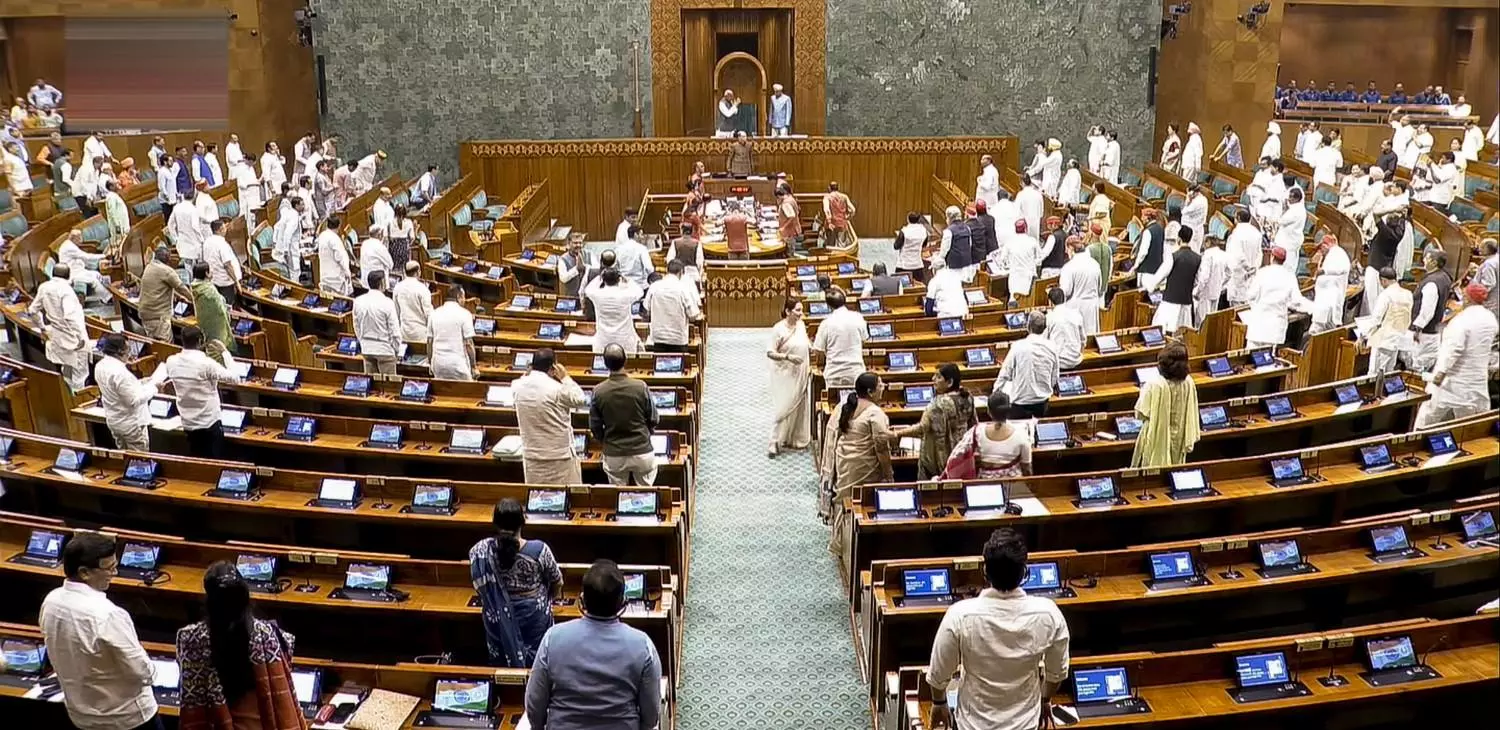
The Monsoon Session of Parliament was an unending roast of the Centre, particularly of Prime Minister Narendra Modi and Home Minister Amit Shah. The Opposition’s unremitting protests inside Parliament and, outside it, a predominantly youth-driven outrage pushed the Modi regime into a corner few imagined was possible until even a month ago. Yet, with the Parliament session concluded on Thursday (August 13), the challenge for both the government and the Opposition may have only just begun.
A session that changed political equation
To many an observer, the Monsoon Session would have seemed like a theatre of political irony.
Before it commenced on July 20, the Opposition was descending into disarray. The DMK wanted nothing more to do with the INDIA bloc, citing the Congress’s “betrayal”. Mamata Banerjee’s Trinamool Congress, Uddhav Thackeray’s Shiv Sena-UBT and Arvind Kejriwal’s AAP had all lost a sizeable chunk of their MPs in Lok Sabha and Rajya Sabha to the BJP, its allies and an obscure proxy, the NCPI.
Also Read: FCRA with JPC: Why Modi's legislative strategy has Opposition fuming
Within three months of defeating Modi’s bid to amend the Constitution for reconfiguring the Lok Sabha’s composition and rejigging boundaries of parliamentary and assembly constituencies across the country, the Opposition was no longer in a position to thwart a second attempt to do so by the Centre during the Monsoon Session.
Also Read: Centre’s ‘divide-and-rule’ bid on parliament debate backfires as Oppn calls its bluff
In contrast, the Centre looked formidable. The NDA’s legislative strength swelled considerably due to defections from the Trinamool, AAP and SS-UBT. Backchannel negotiations with the DMK to draw support for the Constitution (131st Amendment) Bill and the Delimitation Bill were, as per government sources, on track.
The government was also keen on pushing through Parliament its draconian Foreign Contribution (Regulation) Amendment Bill and other controversial Bills, at least two of which were in the final stages of scrutiny by Joint Committees of Parliament.
How the student protests changed everything
And then it all went to seed; a reversal of fortunes for both the Centre and the Opposition, none imagined was possible until July 20. A session that was supposedly meant to decisively tilt the political landscape in BJP’s favour turned into its biggest nightmare.
Thousands of ‘cockroaches’, students and youth from all corners of the country exasperated by repeated examination paper leaks and growing unemployment, marched to Parliament. They were assaulted by the Delhi Police and Rapid Action Force, which report to Amit Shah’s Home Ministry.
Also Read: Explained: DMK's 3 conditions that could make or break Delimitation Bill
Visuals of the brutal crackdown triggered a tsunami of outrage that manifested at Delhi’s Jantar Mantar and other parts of the country in profanity-laden satire, songs and memes of protest, many directly targeting Modi. The Opposition, which had half-heartedly supported the protestors until then, was now fully on board.
Modi’s decision to accept Education Minister Dharmendra Pradhan’s resignation from the Union cabinet finally dispersed the protestors on July 25, but by then the Prime Minister had lost a lot more.
The young agitators had burst Modi’s bubble of unparalleled popularity and infallibility. After nearly three decades of sowing the winds of communal hate, vulgar political discourse and fear, Modi was now reaping a whirlwind of scorn against his personality cult; ‘chappan inch’ (56 inches) no longer evoked the image of a strong leader.
Opposition turns protest into parliamentary pressure
The Opposition, in particular Lok Sabha’s Leader of Opposition Rahul Gandhi, upped the ante. An apology from Modi, a statement from Shah and a discussion on the donation theft at Ayodhya’s Ram Mandir, whose Trust was directly constituted by the Prime Minister, became non-negotiable conditions to allow Parliament’s functioning.
A senior NDA minister in the Modi cabinet told The Federal, “Modi had already bent before the students when he was forced to let Pradhan go, he was definitely not going to bend before the Opposition now even if it meant allowing a washout of Parliament and derailing the government’s legislative agenda... the day Rahul Gandhi rallied the Opposition to demand Shah’s statement, we knew this session was lost.”
Also Read: Amid Opposition pressure, Amit Shah likely to attend Parliament next week
Parliament sessions have been washed out earlier too during the Modi-era. This was, however, as Congress MP Jairam Ramesh recalled, “the first time since the BJP came to power in 2014 that both Prime Minister and Home Minister refused to come to the floor of Lok Sabha and Rajya Sabha for an entire session”.
The Centre can draw solace from the fact that 12 Bills were passed in the monsoon session – 11 of them bulldozed without any discussion in Lok Sabha – despite the Opposition’s protests. Yet, what it lost in the process will now weigh heavily on Modi’s mind.
It’s in this realm of Modi’s political loss and the Opposition’s perceptible gain that the BJP and its rivals must now battle.
Govt says it was a setback, not a defeat
The BJP, under Modi, has shown remarkable ability to bounce back from setbacks using any and all means available. It would be folly to think that the washout of one session of Parliament or even the personal loss of face for Modi would stall the Centre’s legislative agenda or disrupt the BJP’s electoral shenanigans.
Also Read: Beyond the bypoll results: Why Bankipur and Datia setbacks should worry BJP
For the Centre, passing the Constitution (131st Amendment) and Delimitation Bills, along with the proposed law for conducting Lok Sabha and State Assembly polls simultaneously, remains at the top of its legislative agenda.
Sources in the government maintain that these Bills, which the government hoped to get passed in the Monsoon Session, will now be brought in the winter session. The government hopes to utilise the intervening time to shore up the two-thirds majority it remains short of in the Lok Sabha.
Delimitation becomes the next big battle
Sources said the Centre’s main pivot for securing the support of DMK and some other Opposition parties for its delimitation legislation is that if the government’s proposed mechanism for reconfiguring constituencies isn’t read into the Constitution by the end of 2026, the southern states will stand to lose a large share of seats in the Lok Sabha.
“What Amit Shah proposed was a flat 50 per cent hike in share of seats for all states, and we are sticking to that proposal. The DMK has also asked for it. Those opposing our offer are misleading people of the South by saying share of southern states will go down; in truth the share will go down if we do not bring this law,” said a BJP leader.
Also Read: Opposition pushback forces Centre to rethink Lok Sabha expansion, delimitation Bills
The BJP leader asserted further, “The existing constitutional mechanism for delimitation is that it can happen only on the basis of the latest Census figures available after 2026, which means the exercise in the current scheme is linked directly to population. Without our amendment, this delimitation will kick in automatically once 2026 is over, and the 2027 Census figures are published. We are proposing delinking so that all states get an equal increase.”
The monsoon session may have scorched the Centre, but sources in the government believe it was a “stumble and not a fall”. Though conceding that the crackdown on the July 20 protestors was “ill-advised”, a BJP minister told The Federal, “it is wrong to say that the Opposition got the better of us; the Opposition only took advantage of our miss-step took but rest assured this win is temporary... Rahul Gandhi can gloat as much as he wants, but he can’t continue firing from the shoulders of students”.
BJP counts on numbers and time
The BJP minister added, “numerically, the NDA is much stronger now... we took some tactical decisions to pause our legislative agenda because of circumstances but Opposition won’t have another protest to bail them out when Parliament convenes in December while we will still have the numbers, may be more than what we had in the Monsoon Session, to pass our Bills and let’s not forget that we are still over two years away from the next Lok Sabha election so we have enough time for course-correction”.
Also Read: How Pradhan’s resignation reshaped politics for Modi, Opposition and India’s youth
While the BJP may be positive about the Centre’s ability to push controversial legislation in Parliament because of the NDA’s bolstered strength, its real difficulty, say party insiders, lies in undoing the damage to its image, and that of Modi’s, that the youth protestors were able to inflict.
Modi’s visibly tenuous effort to reach out to the so-called Gen-Z through Instagram reels has, by all accounts, fallen flat. BJP insiders admit that Modi’s political idiom that once endeared him to voters was something Gen-Z “simply doesn’t relate to”.
Opposition faces its own test
For the Opposition, the challenge is obvious – how to sustain the momentum it has gained over the past month and, perhaps more importantly, how to shield its ranks against the BJP’s tactics for orchestrating further defections or disunity.
Also Read: A warning shot for 2029? Why Delhi protests hold key for Opposition too
The Congress’s Jairam Ramesh says both his party and the wider Opposition are acutely aware that there can be no room for complacency. Asserting that the Monsoon Session was a “big success” for the Opposition, Ramesh said the Congress’s strategy for the months that follow before Parliament is convened for its winter session will be decided at a meeting of the Congress Working Committee scheduled for August 19.
“We will discuss the way forward. All our senior leaders will be present. We will chart out our programs, identify issues and also discuss how not just the Congress party but the Opposition can unitedly move ahead,” said Ramesh.
Congress plans a wider political campaign
Sources said Congress president Mallikarjun Kharge may also reach out to INDIA bloc leaders after the CWC meeting to discuss the next conclave of the Opposition coalition, which is likely to be held later this month in Hyderabad.
On delimitation, the Congress may propose to the INDIA bloc to jointly campaign for a constitution amendment that freezes the Lok Sabha’s strength at 543 MPs instead of increasing it to 850 MPs as proposed by the Centre. The Congress has already said that it wants women's reservation to be operationalised within the existing 543 seats of the Lok Sabha.
Also Read: Delimitation Bill: Why Stalin and Akhilesh hold the key to BJP’s gameplan
Additionally, the Congress leaders working closely with Rahul Gandhi are also learnt to be finalising the next leg of his Chhatron ki Goonj campaign. Sources said Rahul could address his next Chhatron ki Goonj rally in Maharashtra and that his effort would be to entwine the issues of examination paper leaks and education reform with India’s spiralling jobs crisis.
“There are important assembly elections next year. The issues of exam paper leaks and unemployment are big in Punjab, Uttar Pradesh and Uttarakhand and we will work on our poll campaign around these issues. Rahul’s Allahabad rally received a huge response, and if we sustain this campaign well, both Congress and our ally (Samajwadi Party) will benefit from it in Uttar Pradesh,” said a senior UP Congress leader.
Poll battle now shifts to youth issues
The UP Congress leader added that his party and the SP are “in complete agreement that the issue of students and youth, be it exam paper leak or joblessness, alongside chanda chori (donation theft) in Ayodhya and Akhilesh’s PDA outreach (targeting religious minorities and socially backward communities) will be the foundation of our poll campaign”.
The Congress believes that if its combative stance of the Monsoon Session is sustained and the party, along with its allies, can stop the BJP’s electoral juggernaut from storming to victory in the assembly polls due early next year, Modi’s political capital, already low in the wake of the students’ protests, will be dealt a fatal blow. Too optimistic?