Beyond the bypoll results: Why Bankipur and Datia setbacks should worry BJP
The BJP's defeats in Bankipur and Datia expose the limits of its electoral machinery, showing how leadership overconfidence can undermine poll strategy

In a major embarrassment for the BJP, the party, on Monday (August 3), lost two of the three Assembly bypolls held across Bihar, Madhya Pradesh and Gujarat.
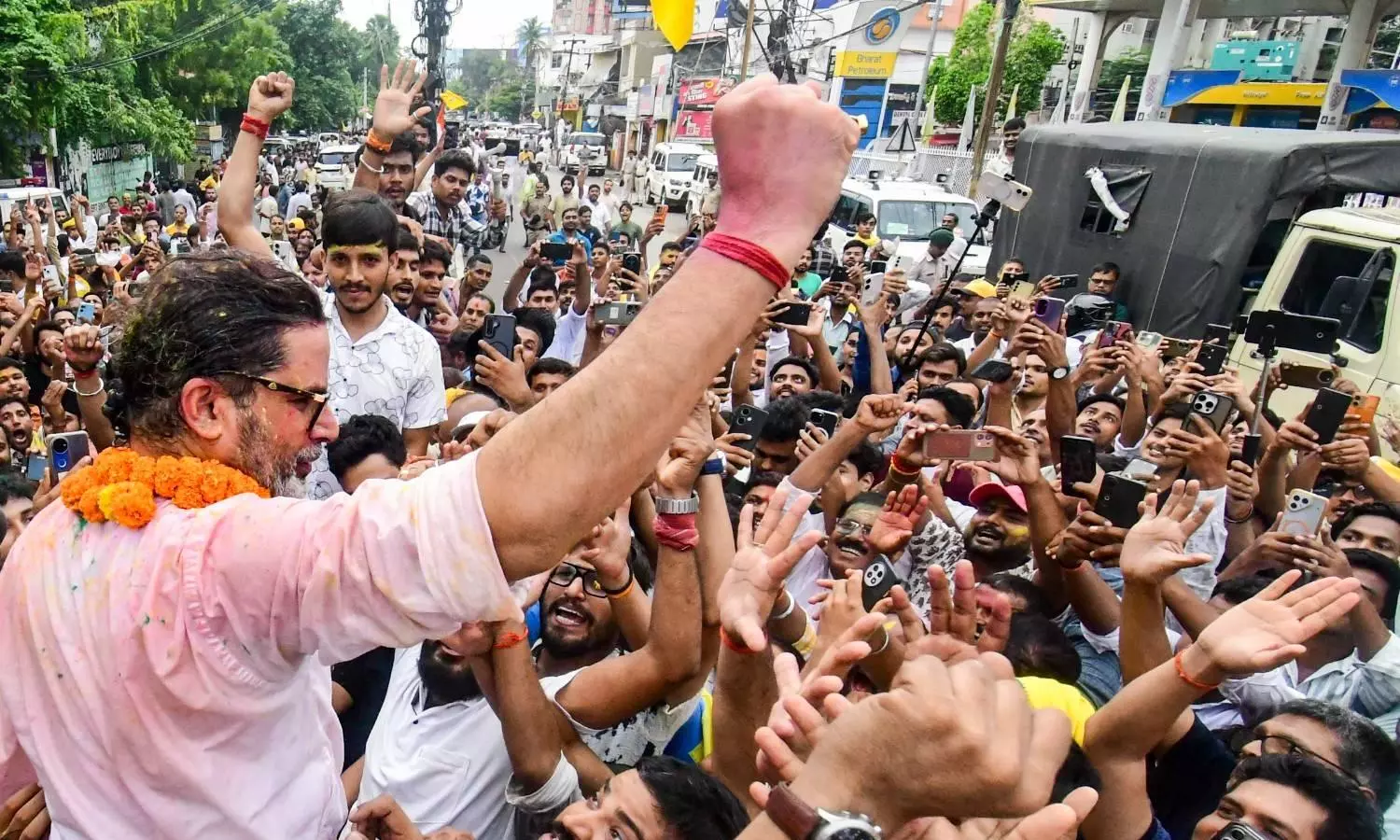
The biggest blow for the saffron party came from Bihar’s Bankipur seat, vacated by BJP national president Nitin Nabin following his election to the Rajya Sabha in June, where Jan Suraaj Party (JSP) chief Prashant Kishor recorded his first electoral victory.
Also read | Why did BJP lose Bankipur and Datia bypolls? What analysts say
The BJP also lost the by-election in Madhya Pradesh’s Datia, where it had denied a ticket to party strongman and former six-term MLA Narottam Mishra to field a little-known RSS worker, Ashutosh Tiwari. A predictable consolation came the party’s way from the Manjalpur Assembly seat in Prime Minister Narendra Modi’s home state of Gujarat, where the BJP maintained its dominance in a clearly bipolar election against traditional rival, the Congress.
How Bankipur turned tables
The factors that contributed to the BJP’s bypoll losses as also its lone win vary from one constituency to the other and may not necessarily provide any electoral trend. However, the nature of the three constituencies, the contests they witnessed and the results that they have now thrown up must give the BJP ample reason to introspect.
The political symbolism, and possibly also the consequences, of the Bankipur upset, for instance, go far beyond just the loss of a single bypoll.
Sure, Kishor’s victory in his debut electoral run by a margin of 19,324 votes against the BJP’s Neeraj Kumar comes as a personal embarrassment for Nitin Nabin, who had held the seat ever since it was carved out as a new segment from the erstwhile Patna West constituency after the 2008 delimitation. Before Nabin’s debut electoral win in a 2006 bypoll, the Patna West seat had been held by his father, Nabin Kishore Sinha since 1995.
Thus, Bankipur since 2008 and Patna West between 1995 and 2008, had been a family stronghold for Nitin Nabin. In fact, when Nabin retained the seat in last year’s Assembly polls, he had polled over 62 per cent in Bankipur while the then candidate from Kishor’s JSP had secured a paltry 4.92 per cent vote share and forfeited her deposit. Less than a year later, amid BJP’s tall claims of ensured victory for “even a dog or a cat” contesting from Bankipur on the party’s ticket, Prashant Kishor, or PK as he is popularly called, not only challenged this hegemony but also demolished it.
Warning signs for BJP
However, the loss isn’t just Nabin’s. That PK maintained a lead over the BJP in each of the 31 rounds of counting and secured nearly 50 per cent of the vote share shows he chipped away at nearly all segments of the BJP’s vote base in Bankipur while also absorbing a large chunk of the votes that Lalu Yadav’s RJD would have bagged here in a straight contest against the saffron party.
Politically, this is a bigger cause for worry for the BJP than the crumbling of Nabin’s electoral fief. Bankipur is famously referred to in Bihar politics as “the BJP’s safest seat in the state” because of its distinctly urban character and upper caste domination. Notorious for its historically low voter turnout – an almost universal trend across most urban constituencies with forward caste domination in India, Bankipur has an electorate of 14 per cent Kayasthas, eight per cent Bhumihars and Brahmins, seven per cent Rajputs and nine per cent Banias (classified as backward in Bihar but forward in the rest of India).
These are communities on which the BJP has, over time, come to hold near exclusive sway. In Bankipur they collectively account for an estimated 46 per cent of the electorate, giving the party a decisive edge over rivals. In addition, the seat also has an estimated 17 per cent votes of communities considered unwavering loyalists of ally Nitish Kumar’s JD-U: the extremely backward caste Kahars at 9 per cent, Kurmis at 5 per cent and Kushwahas at three per cent. Little wonder then that ever since Nabin began winning Bankipur in 2010, he consistently polled well over 50 per cent of the votes: 72 per cent in 2010, 60 per cent in 2015, 59 per cent in 2020 and 62 per cent in 2025.
Also read | Bankipur bypoll showdown: Why Nitin Nabin's home turf is turning into BJP's biggest test
PK and his fledgling Jan Suraaj may have faltered badly in the party’s debut electoral outing last October when Kishor backed out of contesting the poll and all 238 of his JSP candidates lost badly, polling collectively a vote share of just 3.34 percent. However, the Bankipur win is expected to considerably wash away that early embarrassment.
Opportunity knocks for PK
The only solace, if any, for the BJP from the Bankipur result is that PK’s rise has come on the utter ruin of the RJD, at least in this constituency. If as the chief of his party and as its lone MLA in the Bihar Assembly, PK manages to build a strong credibility for the JSP among Bihar’s voters, he could, in time, emerge as a magnet for many leaders from Nitish Kumar’s increasingly listless JD-U and the state’s legacy Opposition parties, the RJD and the Congress, which have repeatedly failed to humble the BJP at the hustings on their collective strength.
Bankipur, of course, could be a misleading case to gauge Bihar’s mood as the urban and upper caste dominated constituency is an outlier when contrasted against the predominantly rural state with a formidable backward caste and minority population.
However, RJD heir apparent Tejashwi Yadav’s grossly inconsistent politics, the continuing atrophy of the Congress and the nervousness within the JD-U over the party’s future under Nitish Kumar’s unimpressive son and political heir, Nishant Kumar, give PK and his JSP a huge opportunity. If harnessed well, PK, the poll strategist-turned-politician, can turn his JSP into an alternative to the BJP, which after decades of grassroots mobilisation had managed to become the state’s predominant political force only a year ago.
For the BJP, Monday blues weren’t confined to Bihar. They spanned to Madhya Pradesh too. Party candidate Ashutosh Tiwari’s loss in Datia against the Congress’s Ghanshyam Singh has exposed the chinks in the BJP’s much celebrated poll planning and also in the self-professed ‘party discipline’ of its leaders.
Datia exposes BJP miscalculation
That the BJP had an uphill task in Datia was known from the moment it benched former MP Home Minister Narottam Mishra and chose to field Tiwari instead. Mishra may have lost the Datia seat by over 7,700 votes in the 2023 polls to the Congress’s Rajendra Bharti but he had spent the past two years rebuilding his base and credibility among Datia’s voters. Understandably, when Mishra was overlooked for a ticket ostensibly on the insistence of Chief Minister Mohan Yadav who assured the party of a win, the headlines screamed about the massive protests his supporters in Datia staged across the constituency and in state capital Bhopal while also insinuating the possibility of the saffron party’s campaign heading for sabotage.
Mishra did try to play the disciplined party soldier. He campaigned extensively for Tiwari and repeatedly pledged fealty to the BJP and the RSS, yet, it was the tears that he shed on a rally stage while seeking support for the party candidate that many of his supporters in Datia saw as a tacit approval for sabotaging the election.
Also read | Prashant Kishor alleges Bihar police detained aides ahead of Bankipur bypoll
The BJP, however, can’t claim it lost the poll due to Mishra’s non-cooperation. For, by all visible public accounts, the former six-term MLA campaigned extensively whenever the party asked him to. In contrast, the Congress faced visible sabotage with supporters of former MLA Rajendra Bharti, whose disqualification as an MLA necessitated the bypoll, openly canvassing against the official party choice, Ghanshyam Singh.
Yet, unwilling to take any chances, the BJP unleashed its entire electioneering force in Datia for the past two weeks. Chief Minister Mohan Yadav along with deputy chief ministers Rajendra Shukla and Jagdish Devda made multiple rounds to Datia; visiting door-to-door seeking votes for Tiwari. BJP sources said as many as 70 of the party’s MLAs were put on campaigning duty to wrest this lone bypoll seat.
Hubris meets electoral reality
Additionally, the surprise entry of local political worker, Damodar Yadav as a candidate of the Azad Samaj Party (ASP) of Chandrashekhar Azad, the Lok Sabha MP from Uttar Pradesh’s Nagina seat, complicated matters further for the Congress, which had among its principal campaigners only former CM Digvijaya Singh and state party chief Jitu Patwari.
Damodar Yadav’s entry into the poll fray, Congress sources told The Federal, was meant to “split the traditional Congress vote among backward castes and Dalits”. The bypoll result on Monday proved those fears to be true as the ASP candidate polled over 22,500 votes, with the Congress’s Ghanshyam Singh telling The Federal that a bulk of Yadav’s support came from areas where the Congress had performed well in past elections, including the one in 2023, which Narottam Mishra had lost.
Yet, despite all of this, Singh won by a margin of over 6,000 votes – seemingly slender but much higher than Mishra’s last victory margin of 2,656 votes in 2018 and only slightly lower than Bharti’s lead of 7,742 votes over Mishra in 2023.
Taken together, the BJP’s defeat in Bankipur and Datia also, arguably, expose limitations of the saffron party’s electoral machinery when it’s overwhelmed by the hubris of leaders – Nabin in Bihar or Mohan Yadav in MP. More so, when this happens at a time when the party as a whole is at the receiving end of a combative Opposition and public anger on issues like paper leaks, brutish state-sponsored excesses on agitating youth and donation theft at the Ram Mandir in Ayodhya.