



Why UAE's choice to quit OPEC spells good news for India, other markets
The departure of the UAE, a major oil producer though comparatively small compared to Iraq, Saudi Arabia and Iran, is seen as a weakening of the oil cartel

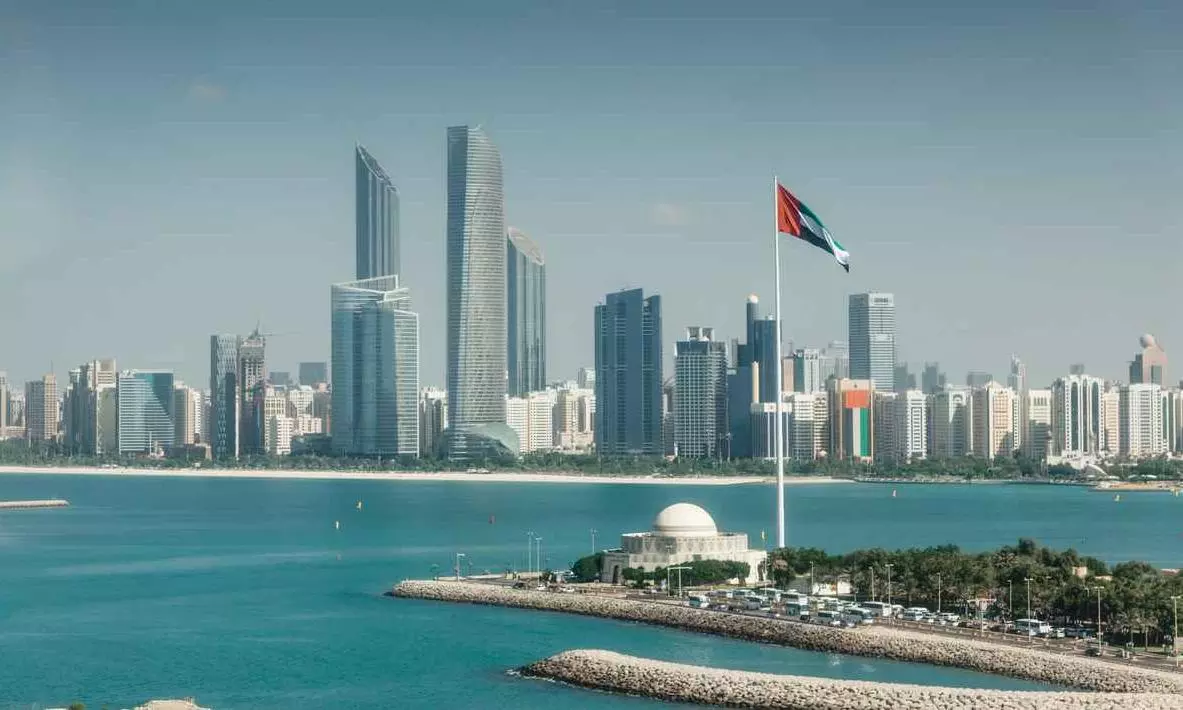
The United Arab Emirates’ (UAE) decision to leave the oil consortium, the Organisation of Petroleum Exporting Countries (OPEC), will be seen as a positive sign by the majority of oil-consuming countries.
There is a tacit resentment that the cartel of oil producers takes advantage of the world’s dependence on oil to flex its political and economic muscle. Indeed, OPEC first raised oil prices in 1973, during the Israel-Arab war, and the Arabs weaponized oil prices.
The departure of the UAE, a major oil producer though comparatively small compared to Iraq, Saudi Arabia and Iran, is seen as a weakening of the oil cartel. However, the impact of the UAE going its own way will not greatly affect OPEC’s bargaining capacity. In the last two decades, OPEC has acted as an economic lobby rather than as an Arab group exerting its political weight.
The statement by UAE Energy Minister Suhail Mohamed Al-Mazrouei that this was a “policy decision” and “that it was done after a careful look at current and future policies related to level of production” has to be accepted at face value.
The UAE-Saudi rivalry
There are, of course, simmering issues among the Gulf Arab states, and the rivalry between the UAE and Saudi Arabia has surfaced time and again, especially in Yemen, amid the UAE’s tacit support for the Houthi rebels. The UAE is also involved in supporting the rebels in South Sudan, which Abu Dhabi has denied.
Also read: Dubai’s safe-haven status tested as Iran war unsettles Asian investors
The UAE has developed an interesting profile of its own. The emergence of Dubai as an international business hub, where people from Europe, Asia and Africa meet, live and do business, has been an important factor in the UAE's rising influence in the region.
Saudi Arabia has woken up to the possibilities of globalization quite recently under Crown Prince Mohammed bin Salman Al Saud. Saudi Arabia remains an essentially conservative state, partly because it is home to the two holiest Islamic shrines in Makkah and Madinah. The new Saudi regime is trying to break away from the image of being the centre of Islam and is exploring ways to become the regional centre for culture, fashion and cinema in the complex run by Aramco (the country’s state-owned oil and natural gas company) at Dhahran, where oil was first discovered. But it will take time before Dhahran emerges as an established culture hub, or rivals Dubai as an attractive city on its own terms.
Saudi Arabia has to contend for influence as a soft power with the UAE’s Dubai and Abu Dhabi. The UAE capital has carved out a place of its own in the culture circuit with its branch of the famous French art museum, the Louvre. There is indeed competition between the capitals of the Gulf Arab states, even as Qatar’s Doha has been staking its own claim by hosting the 2022 FIFA World Cup. But Dubai is ahead in the race despite the financial vulnerability of building itself as a global business hub. Dubai remains a friendlier place for foreigners compared to all other Gulf urban centres.
It’s not only about oil
It can be argued that the UAE quitting OPEC has to do with its economic clout as an oil producer. It stands in the fourth position (2.9–3.6 million barrels per day) after Saudi Arabia (9–10 mbd), Iraq (4.3–4.4 mbd), and Iran (3.2–3.3 mbd). Iran is out of reckoning in global oil markets because of US sanctions. So that makes the UAE the third largest oil producer. Even if it breaks from the OPEC production quota constraints, it cannot make great gains in the global oil market given its relatively limited reserves. The UAE is looking beyond the economic clout it derives from its oil output.
Also read: UAE pulls out of Pakistan airport deal after President's surprise India visit
It takes immense pride and derives much satisfaction from the fact that Dubai ranks among the top 10 cities in the world. It stands first among the cities in West Asia in the Global Power City Index and eighth globally. And it is ranked fourth in the IMD Global Smart City Index. It is not surprising that Iran targeted Dubai in the war that broke out between the US-Israel and Iran. The aim was to shake the image of Dubai and the UAE as safe havens of global business.
Will the UAE become a more effective power player outside OPEC? The UAE policymakers seem to think so. The UAE is the lone Gulf Arab state with a functioning commercial nuclear power plant. The Barakah plant in Abu Dhabi produces 5600 MW of electricity, which meets 25 per cent of the UAE’s demand.
Politically, the UAE has shed inhibitions about its relations with Israel. That allows for greater economic exchanges with Israel, something that even Egypt and Jordan would not consider because of the Palestinian factor. The UAE will continue to support the two-state solution, but it will not make it conditional on other aspects of bilateral relations between the two.
How UAE has placed itself in the world
The UAE wants to place itself at the centre of global supply chain network, which keeps its relations with all the major powers—the US, China, the EU, Russia, India and South Korea—on an even keel. Pakistan, Oman and Turkiye may remain diplomatic channels between China and Russia on one hand and the US on the other. At the height of the war in Ukraine, as the EU and US sanctions against Russia were enforced, the UAE played a quiet and crucial role in the sale of Russian oil in Asian markets, including India.
Also read: India now UAE’s biggest LNG buyer with USD 3-bn deal; aims for mega trade, defence ties
The UAE has also made a strategic choice in connecting with India while Saudi Arabia made its defence pact with Pakistan. India remains the big market. There is wild speculation in some quarters in Pakistan that as Dubai becomes vulnerable due to the war with Iran, Karachi will emerge as the investment destination. But Karachi, as an overcrowded urban centre with its internal social stress points, cannot hope to afford the comforts of Dubai with its sparse population and its super-luxurious living quarters.
Dubai has created the ambience for a multi-national population which cannot be replicated anywhere in the region, from Cairo to Karachi. The UAE wants to be the Singapore of West Asia. It may not succeed in becoming the super-influential global hub it wants to be. But it has created the necessary social infrastructure to do so.
