



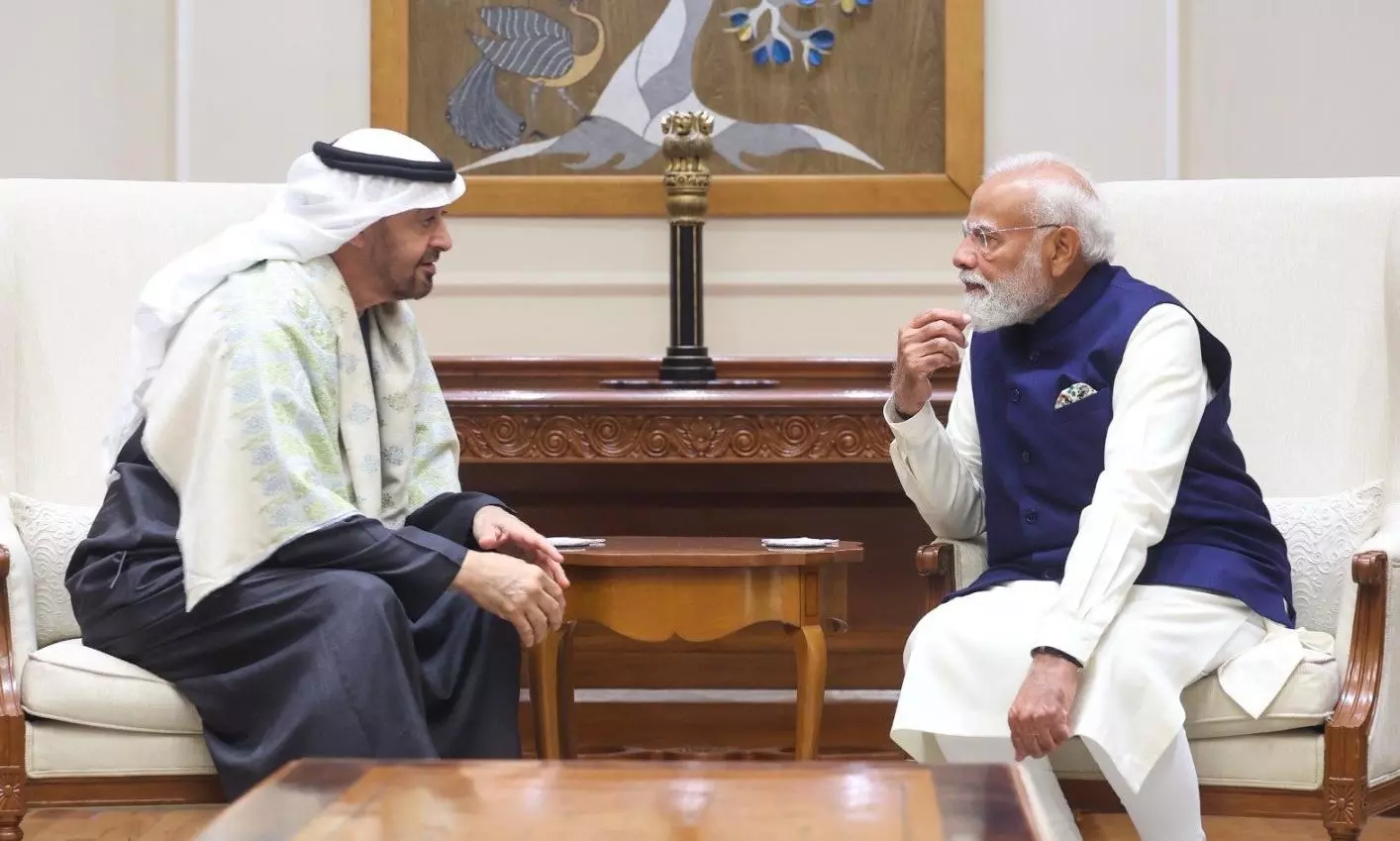
Prime Minister Narendra Modi (right) met UAE President Mohamed bin Zayed Al Nahyan in New Delhi on January 19 during the latter's 'surprise' visit to India. Photo: X/@narendramodi
UAE pulls out of Pakistan airport deal after President's surprise India visit
Development comes amid UAE's widening rift with Saudi Arabia and its deepening ties with India signalling a possible shift in South Asian geopolitical equations

The United Arab Emirates (UAE)'s decision to exit from its plan to operate the Islamabad International Airport has come in the wake of UAE President Sheikh Mohammed bin Zayed Al Nahyan's three-hour surprise official visit to India.
Talks were on between UAE and Pakistan to clinch the proposed deal since August 2025. But, according to a report in Pakistan’s The Express Tribune, the plan was shelved after the UAE lost interest in the project and failed to identify a local partner to manage outsourced operations.
The Pakistani media did not attribute any political reasons for UAE's withdrawal from the project.
Also read: India now UAE’s biggest LNG buyer with USD 3-bn deal; aims for mega trade, defence ties
However, this development gains significance as it comes amid UAE's widening rift with Saudi Arabia and its deepening ties with India.
Competing opinions
Gulf nations Riyadh and Abu Dhabi, who were once the closest of allies, now find themselves at odds pursuing competing interests across several fronts.
Both the countries are locked in an unusual public confrontation over support to rival groups in Yemen.
Also read: Taliban 2.0’s U-turn in ties with India, Pak, a game-changing moment for South Asia
As Riyadh and Islamabad move closer through a strategic mutual defence agreement and are pushing the idea for an “Islamic NATO”, involving Saudi Arabia and Turkey, Abu Dhabi has taken a different path by deepening its defence cooperation with India.
Pakistan-UAE fallout
UAE and Pakistan have been maintaining a long-standing relationship for over four decades. UAE was Pakistan's largest trading partner and has been a vital source of remittances, with thousands of Pakistanis employed across diverse sectors in the Arab nation.
The two nations collaborated closely in defence, energy, and investment projects. Over time, however, the relationship has come under strain, said reports, over safety concerns, licensing disputes, and Pakistan’s ageing infrastructure.
According to reports, Pakistan’s state‑owned enterprises are facing heavy losses and are being put up for distress sales at throwaway prices. Last year, Islamabad even moved to privatise Pakistan International Airlines (PIA).
One report said that while UAE has sufficient experience in managing airports in challenging environments, which includes Afghanistan, its move to step away from Islamabad Airport signals a clear loss of trust.
Also read: UAE suspends visas for 9 countries amid rising security concerns
Moreover, in the start of the new year, UAE imposed severe visa restrictions for Pakistani nationals entering its country, due to concerns over rising criminal activities and the misuse of visit visas.
UAE's withdrawal from the project, besides causing a setback for Pakistan, is signalling a possible shift in South Asian geopolitical equations, said reports.
UAE-India ties
UAE's strained relations with Pakistan has intensified as the former has moved closer to India on defence and economic cooperation, while Pakistan has increasingly tilted toward Saudi Arabia.
The UAE has strengthened strategic and nuclear cooperation with India, signing major long-term LNG and space infrastructure deals in January 2026.
Also read: Saudi Arabia will defend Pakistan if India attacks: Khawaja Asif
Following his lightning visit to Delhi last week, the UAE leader cleared the release of 900 Indian prisoners, a step seen as a major goodwill gesture towards India.
During the visit, Prime Minister Narendra Modi and President Mohamed bin Zayed reviewed the entire range of bilateral ties and agreed that the India-UAE Comprehensive Strategic Partnership has not only matured, but is now advancing into a more ambitious and multidimensional phase.
Arguably, the most politically significant outcome was the move towards a full‑fledged Strategic Defence Partnership. The visit saw the signing of a Letter of Intent, laying the groundwork for a comprehensive Framework Agreement on Defence Cooperation.