


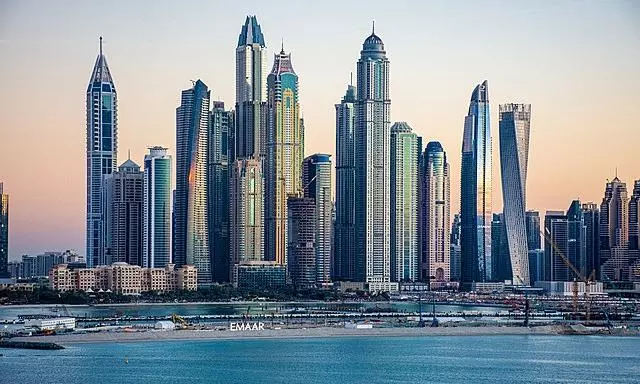
Dubai’s safe-haven status tested as Iran war unsettles Asian investors
Wealthy Asian families look at contingency and relocation plans as regional conflict raises concerns over stability in the West Asian financial hub

Dubai, generally considered as a safe haven for wealth management by several Asian investors, is now facing a test as the Iran-Israel war rattles the country.
Investors and many of Aisa’s richest families are exploring ways to reduce their investments in the Gulf nation, and those already in Dubai are working on contingency plans in the case of a further escalation of the war. Bloomberg News quoted several consultants as saying that they are getting calls from clients seeking to delay relocation plans.
Also read: Limited UAE-India flights resume amid conflict, bringing relief to stranded passengers
Asia investors who went to West Asia for investment opportunities and tax advantages "are re-thinking their decisions and probably moving their money back to Hong Kong or Singapore," Nick Xiao, chief executive officer of Hong Kong-based multi-family office Annum Capital, told Bloomberg News.
Dubai’s rapid growth
Dubai positioned itself as a global hub for wealth management and investment, attracting investors with its zero income tax policy, strong real estate yields, business-friendly regulations and high standard of living. The availability of long-term “Golden Visas” has also made the city appealing for families and entrepreneurs seeking a stable base for international growth. Compared with traditional financial centres such as London and Singapore, Dubai is often viewed as a more cost-effective and opportunity-rich destination.
Dubai’s rapid growth has attracted wealthy investors, global banks, and Wall Street money managers, helping position the United Arab Emirates, including Abu Dhabi, among the world’s fastest-growing hubs for financial assets in 2024, according to Boston Consulting Group. Notably, Asian wealth is one of the major contributor for the expansion. The firm estimates about USD 700 billion from overseas investors were booked in the UAE with Dubai alone home to family offices that control more than USD 1.2 trillion.
Also read: Iranian attack damages Dubai airport, Burj Al Arab; Gulf flights suspended
A quarter of the more than 2,270 foundations set up in the UAE are owned by Asian investors, according to wealth advisory firm M/HQ. Asia also accounted for 47 per cent of multinational companies attracted by the Dubai International Chamber in 2025. Firms from Tokyo-based Nomura Holdings Inc., as well as DBS Group Holdings Ltd., and Oversea-Chinese Banking Corp. — Singapore's two largest lenders — have also expanded their operations in Dubai to cater to rising demand from the wealthy.
The war impact
The war is now forcing a reassessment for many Asian families. The conflict between Israel and Iran intensified and has entered second week with violence spreading across the region. Fresh strikes hit Saudi Arabia and Bahrain, and last week, a drone attack sparked fire near the US consulate in Dubai. Thousands of flights remain cancelled due to the airspace curbs.
Many interviewed by Bloomberg News said they had prepared for occasional disruptions in the Middle East before moving, hearing explosions and watching drones and rockets being intercepted mid-air forced a review.
Felix Lai, principal of Hong Kong-based multi-family office JMS Group, said the situation was a wake-up call and people may have to reconsider their decision to move to the Middle East though it is an early decision to make.
Also read: Billions of dollars at risk as Dubai airport shuts down amid Iran missile threats
Lai said he arranged a private jet for 15 clients to fly from Oman to Hong Kong within a few days, at a cost of about USD 300,000. "They don't even care about the pricing," Lai said. "They just want to leave."
Patrick Tsang, who runs his own family office and founded Hong Kong’s Ambassadors Club in 2023 to strengthen ties with West Asia, said a prolonged conflict could damage the city’s reputation. He added that such a scenario might lead some expatriates to relocate, similar to the exodus seen in Hong Kong after pro-democracy protests several years ago.
Stronger comeback
The UAE has also emerged as a preferred destination for affluent residents from the UK, as Britain moves to increase taxes on the wealthy. Around five million company filings shows a sharp rise in business leaders relocating abroad, with the UAE among the most popular destinations alongside traditional wealth centres such as Switzerland.
Also read: Why did Iran bomb its neighbours? Do Dubai, Abu Dhabi have US military bases?
While some investors are looking to reduce their exposure in the region as a precaution, may see this as a buying opportunity. Although the attacks have tested the UAE’s image as a stable commercial hub, some investors and residents believe the country’s strong infrastructure and governance will help it recover and potentially emerge stronger.