- Home
- India
- World
- Premium
- THE FEDERAL SPECIAL
- Analysis
- States
- Perspective
- Videos
- Sports
- Education
- Entertainment
- Elections
- Features
- Health
- Business
- Series
- In memoriam: Sheikh Mujibur Rahman
- Bishnoi's Men
- NEET TANGLE
- Economy Series
- Earth Day
- Kashmir’s Frozen Turbulence
- India@75
- The legend of Ramjanmabhoomi
- Liberalisation@30
- How to tame a dragon
- Celebrating biodiversity
- Farm Matters
- 50 days of solitude
- Bringing Migrants Home
- Budget 2020
- Jharkhand Votes
- The Federal Investigates
- The Federal Impact
- Vanishing Sand
- Gandhi @ 150
- Andhra Today
- Field report
- Operation Gulmarg
- Pandemic @1 Mn in India
- The Federal Year-End
- The Zero Year
- Science
- Brand studio
- Newsletter
- Events

Why in Tamil Nadu, elections are busy, happy times for look-alikes of actors-turned-politicians
For Tamil Nadu, films and politics have often overlapped, with many actors taking to politics over the years. The look-alikes thrive in this shared space, catering to the public’s unwavering obsession with their beloved stars. Political parties maintain a list of professional look-alikes, using them on the campaign trail.

Kumar ‘Vijayakanth’, a 56-year-old actor from Namakkal, Tamil Nadu, has been campaigning for the Desiya Murpokku Dravida Kazhagam (which translates to the National Progressive Dravidian Federation, commonly known by its abbreviation DMDK) ahead of elections in the state for more than 15 years now. His USP? He is a look-alike of the late party founder and chief Vijayakanth, and can...
Kumar ‘Vijayakanth’, a 56-year-old actor from Namakkal, Tamil Nadu, has been campaigning for the Desiya Murpokku Dravida Kazhagam (which translates to the National Progressive Dravidian Federation, commonly known by its abbreviation DMDK) ahead of elections in the state for more than 15 years now. His USP? He is a look-alike of the late party founder and chief Vijayakanth, and can even imitate the voice and mannerisms of the ‘Captain’, as Vijayakanth was fondly known.
When Vijayakanth passed away in 2023, it left Kumar shaken. “I was used to getting prominence as Captain’s look-alike. I wondered how his death would affect me professionally,” admits the actor.
All such fears have been put to rest in the lead-up to the 2026 assembly elections in Tamil Nadu, scheduled to be held on April 23.
Led by Vijayakanth’s wife, Premlatha Vijayakanth, the DMDK has joined hands with the ruling Dravida Munnetra Kazhagam-led front for the upcoming polls and Kumar is back on the campaign trail.
“Party units in various parts of Tamil Nadu have started inviting me to campaigns. I get regular programmes and am earning about Rs 5000 per day,” he says.
For look-alikes of actors, political leaders and actor-turned-political-leaders in Tamil Nadu, election seasons are like festivals, bringing with it the opportunity to make some extra earnings.
If Kumar is known for his skills in impersonating Vijayakanth, Rathna, is known for her resemblance to late All India Anna Dravida Munnetra Kazhagam (AIADMK) leader and chief minister J Jayalalithaa, Antony has been impersonating two actor-politicians (former CM, late MG Ramachandran, or MGR as he is more popularly known, and the late Sivaji Ganesan) for more than 20 years and Salem 'Stalin' Syeed started out impersonating superstar Rajinikanth, but later transitioned to being a look-alike of Tamil Nadu chief minister MK Stalin and Senthil bears a striking resemblance to actor-turned-politician Vijay, whose Tamilaga Vettri Kazhagam (TVK) is all set to make its inaugural appearance in the upcoming elections — to name a few. Most of the look-alikes identity by a single name, or have added the names of the stars they impersonate to their own names (like Kumar and Salem).
Also read: Why a Chennai professor has made it his mission to search for a ‘missing’ singer in Gaza
For Tamil Nadu, films and politics have often overlapped, with many actors taking to politics over the years. While matinee idols like MG Ramachandran (MGR) and J Jayalalithaa became chief ministers of the state, renowned actors such as Vijayakanth — who held the position of leader of the Opposition in the Tamil Nadu Legislative Assembly between 2011 and 2016 — Kamal Haasan (who launched the Makkal Needhi Maiam party in 2018, but is not contesting this election) and Khushbu Sundar, too made the shift to politics. Vijay is the latest addition to the list. Superstar Rajinikanth too had voiced political plans, but later dropped the idea, purportedly because of health reasons.
Parties like the DMK and AIADMK have long used cinema as a medium to propagate politics as well as social messages, with DMK founder CN Annadurai and former chief minister M Karunanidhi being the pioneers in this.
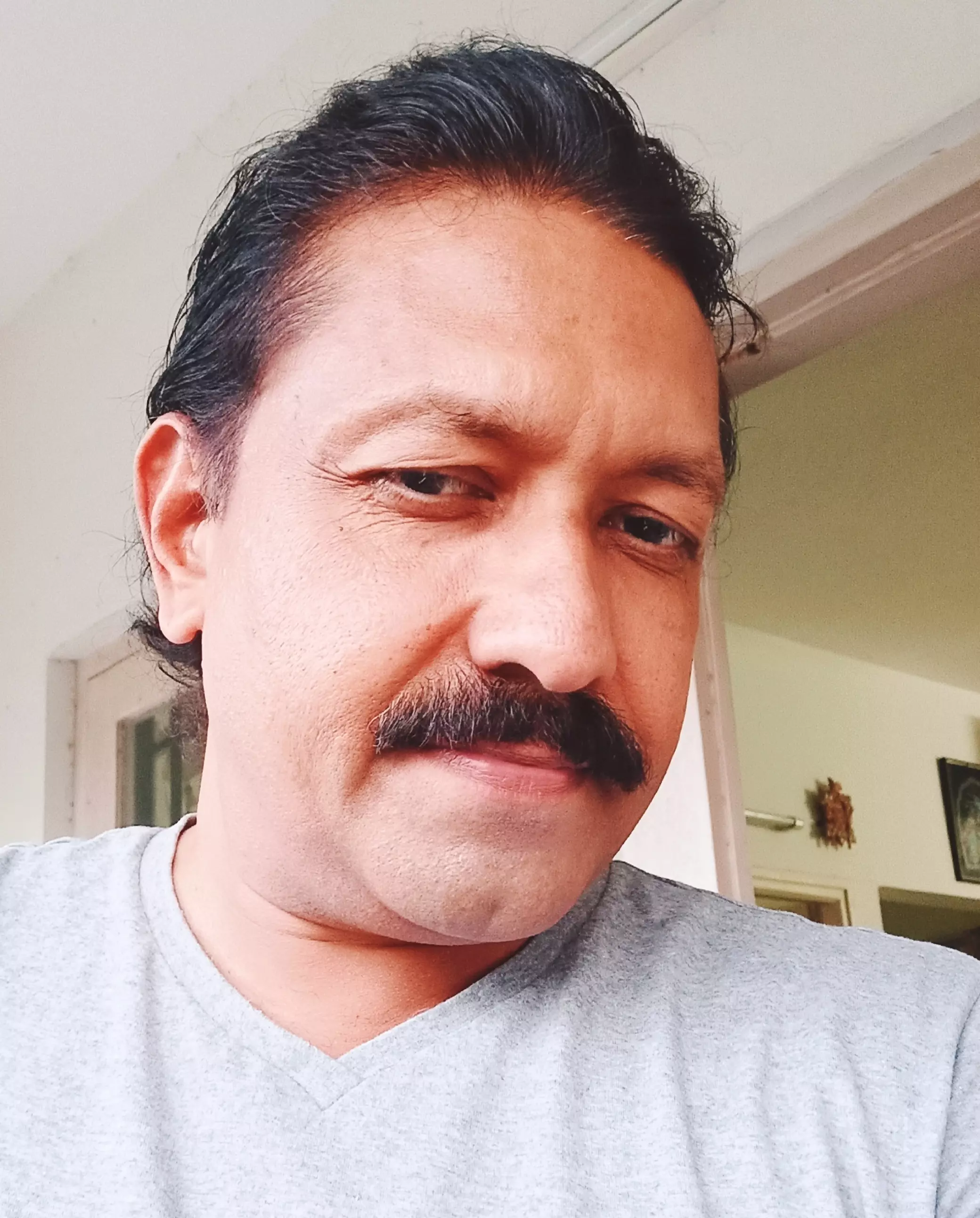
MK Stalin look-alike Salem. Photo: By special arrangement
The look-alikes thrive in this overlapping space between cinema and politics, catering to the public’s unwavering obsession with their beloved icons.
Political analysts like K Murugan believe, however, that the appeal of the look-alikes today work more in rural Tamil Nadu than in the urban areas.
“Political parties primarily employ look-alikes of actors in remote areas. Urban locations do not elicit the same enthusiasm for look-alikes. Individuals residing in rural areas maintain a strong fascination for film stars, which is the primary reason look-alikes of actors are widely accepted in these rural regions of the state,” says Murugan, a retired professor of politics and social science.
Political parties say they maintain a list of “professional look-alikes” of their leaders.
“The responsibility of a look-alike is high, so we don’t compromise on it. We normally recruit senior artistes only as they know how to behave. We don’t have to tell them what to do. Look-alikes add colour to the overall campaign,” explains B Velmurugan, a former district secretary of the DMK in Madurai.
Agrees Sampathkumar, AIADMK’s organising secretary in Thirunelveli: “We normally hire regulars. Senior leaders of the party decide who should be in the list and we invite them on that basis. Some look-alikes can work wonders with their performance.”
The parties employing the artistes give them a brief, say the look-alikes.
“We don’t speak much, mostly imitating the actor-politicians’ gestures and movements,” explains Kumar.
The look-alikes take their jobs very seriously.
For Rathna, 50, a resident of Tenkasi district, impersonating Jayalalithaa goes beyond mannerisms. “I am very particular about make-up and costume; I have curated a unique collection of outfits and cosmetics. Look is important for a look-alike. It is essential to achieve perfection in both attire and appearance; otherwise, one may not receive the recognition they deserve. I have honed the skill of impersonation through years of dedication and effort,” she says.
Her husband, 56-year-old G Selvaraj, is a Vijayakanth look-alike since 2005. “I have appeared at numerous events. People approach me, shake my hand and occasionally touch me as if I were the real actor-politician. I continue to feel the immense affection from the public even after his (Vijayakanth's) passing,” he says.
Interestingly, the couple’s daughter-in-law, 28-year-old Gauri, is now starting out as a Jayalalithaa look-alike. “We are a family of look-alikes. My wife and I have been look-alikes of actors for a long time, but my daughter-in-law is new to the field,” says Selvaraj with a smile.
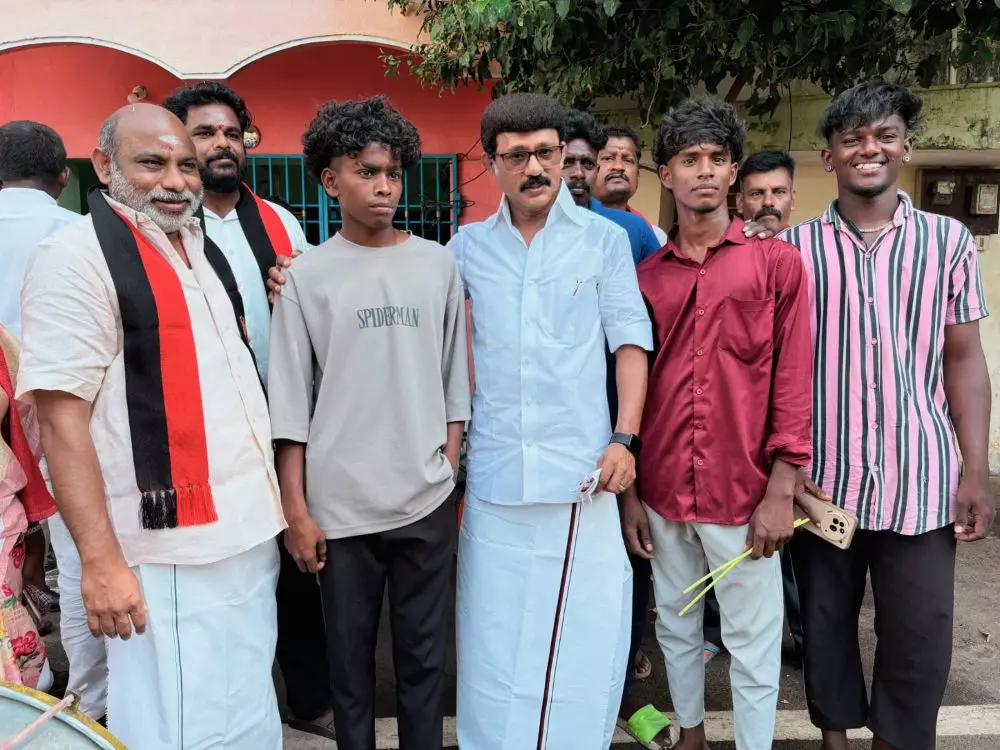
Rathna, a J Jayalalithaa look-alike. Photo: By special arrangement
Often, professional considerations can dictate a look-alike’s looks and impersonation.
Sixty-year-old Chennai resident, Antony, can impersonate both MGR and Sivaji Ganesan, and has been doing it for more than 20 years. “I normally concentrate on temple festivals, weddings, and birthday celebrations, but now, during the election season, artists like me have the opportunity to earn a substantial income. I receive around Rs 5000 for a day's campaign,” he says.
And so, while he is more adept at impersonating Ganesan, he has been concentrating on his MGR act at present, because that is what the parties want. “I have a fondness for both MGR and Shivaji Ganesan. I am more recognised for my portrayal of Shivaji Ganesan. Political parties reach out to me for MGR's impersonation as the elections approach.”
Also read: Why rush to appropriate late Kanshi Ram in UP reflects broader lack of unifying Dalit face
Just being a good impersonator is not always enough to get work during the election season. The political clout of your star also matters.
A Senthil Kumar, 42, is a Vijay fan and impersonator, but since the TVK leader is a new entrant to politics, Senthil says he has few election engagements. “While my friends are engaged in full-day events as look-alikes hired by both DMK and AIADMK factions, I am struggling to find sufficient work. The dominance of DMK and AIADMK in the electoral landscape is likely the reason for my lack of opportunities,” says Senthil, who has been impersonating Vijay since 2014.
At times, practical demands may even change the course of one’s artistic expression.
Sixty-two-year-old Salem Stalin Syeed had started out as a Rajinikanth look-alike. “I was a dancer and an admirer of Rajinikanth. It was my deep admiration for the actor that prompted me to first emulate his style. However, I later transitioned to impersonating MK Stalin. Given that Rajinikanth is not involved in politics, the demand for a lookalike of Stalin is significantly higher during election campaigns,” explains Salem, who is currently campaigning for the DMK in Puducherry and is scheduled to travel to Chennai in a few days.
Spending hours on the campaign trail is not always easy.
“As look-alikes, we are required to accompany the candidate to the houses of voters. We try to visit as many homes as possible on foot in the blistering sun throughout the day. The responsibilities do not end there. We also need to engage with voters at night, for which we are transported in a van,” adds the Stalin look-alike.
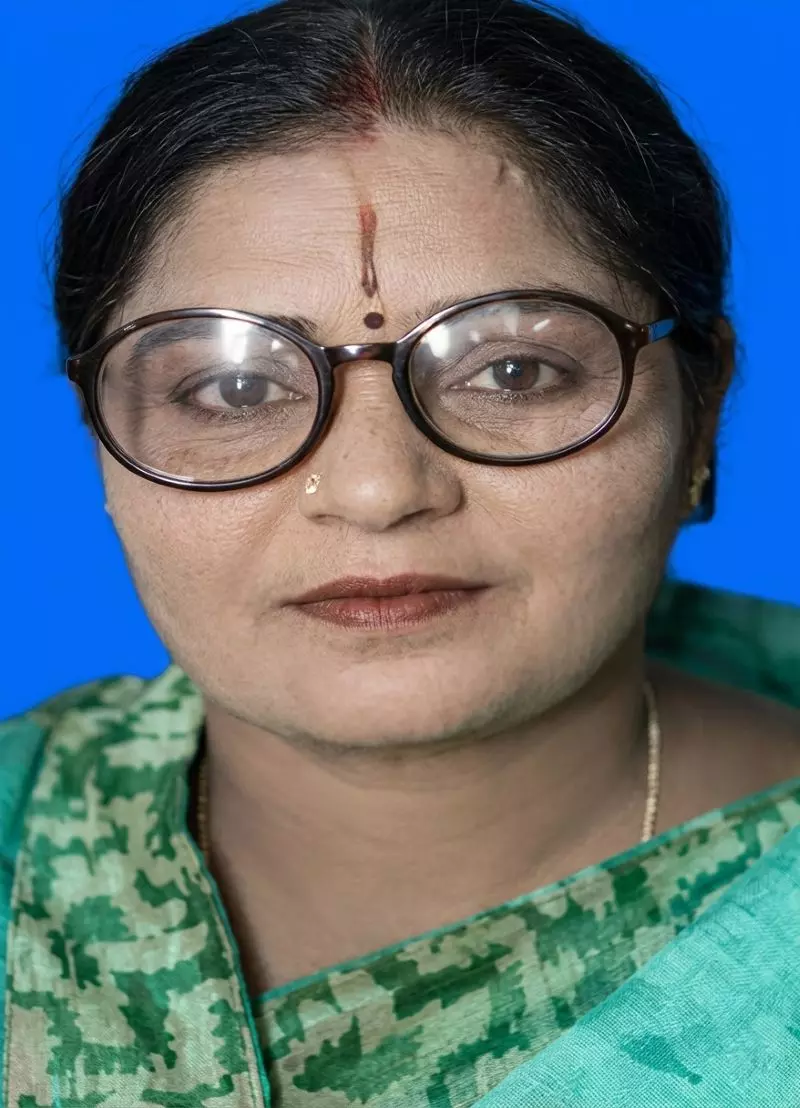
Selvaraj, a Vijayakanth look-alike. Photo: By special arrangement
While the artists are often fans of those they impersonate, their political opinions play little part in their work.
“I have ideological disagreements with several parties, but when I am offered a role as a look-alike, I will accept it because it is my source of income,” says Kanagaraj, a look-alike artist, as he boards a bus to Madurai for another round of campaigning as a Vijayakanth look-alike. “I do not genuinely support any political party. For a look-alike artist, politics takes a backseat. Earning a living is what matters most. This is the right time to make some additional income.”
At the back of their minds is the awareness that the election-triggered work peak is but seasonal. When the polls end, so do their association with the political parties. It is back to performing at temple festivals, weddings, birthday parties or brand promotions, where earnings can vary between Rs 3000-4000, depending on time and venue, or even Rs 10,000 if it is an entire day’s engagement.
But there is no guarantee of when the next gig will land, making the extra earnings during elections a much-needed relief.
Also read: Why Karnataka announcing revival of student union elections has reopened talks on campus democracy
Survival demands perseverance and family support.
Senthil’s wife is a dancer, and the look-alike says supports him as she is aware that he chose this path because of his admiration for Vijay. “She helps when I don’t have regular programmes, when I don't have enough money to pay the school fees of my children,” he says.
Often, families share the artistes’ admiration for the stars they impersonate.
For Salem’s family, the fact that he is a CM look-alike is what matters. Meanwhile, Antony’s family share his love for MGR and Sivaji Ganesan films, and thus, of his work as an impersonator of the stars.
As for Kumar’s family, his homemaker wife and two children — a son who is a BSc student and daughter pursuing a computer science course — they too are happy with his work, he says, “because they like Vijayakanth”.