- Home
- India
- World
- Premium
- THE FEDERAL SPECIAL
- Analysis
- States
- Perspective
- Videos
- Sports
- Education
- Entertainment
- Elections
- Features
- Health
- Business
- Series
- In memoriam: Sheikh Mujibur Rahman
- Bishnoi's Men
- NEET TANGLE
- Economy Series
- Earth Day
- Kashmir’s Frozen Turbulence
- India@75
- The legend of Ramjanmabhoomi
- Liberalisation@30
- How to tame a dragon
- Celebrating biodiversity
- Farm Matters
- 50 days of solitude
- Bringing Migrants Home
- Budget 2020
- Jharkhand Votes
- The Federal Investigates
- The Federal Impact
- Vanishing Sand
- Gandhi @ 150
- Andhra Today
- Field report
- Operation Gulmarg
- Pandemic @1 Mn in India
- The Federal Year-End
- The Zero Year
- Science
- Brand studio
- Newsletter
- Events

Why rush to appropriate late Kanshi Ram in UP reflects broader lack of unifying Dalit face
The community has produced electoral warhorses – leaders who have won elections, served as CMs and Union ministers, floated political outfits espousing Dalit identity assertion or led national parties like Congress and BJP. Yet, since the passing of BR Ambedkar, it remains a community struggling to produce a sustained, pan-Indian or pan-state political leadership.

Earlier this month, Uttar Pradesh saw all its political parties trying desperately to outshine each other in marking the birth anniversary of Bahujan Samaj Party (BSP) founder Kanshi Ram. If the BSP, led by Ram’s political heir and former UP chief minister Mayawati, had, so far, been the only party in the state that unfailingly marked March 15 each year with events across the state to...
Earlier this month, Uttar Pradesh saw all its political parties trying desperately to outshine each other in marking the birth anniversary of Bahujan Samaj Party (BSP) founder Kanshi Ram. If the BSP, led by Ram’s political heir and former UP chief minister Mayawati, had, so far, been the only party in the state that unfailingly marked March 15 each year with events across the state to honour its founder, this year saw the Samajwadi Party (SP), the Bharatiya Janata Party (BJP) and the Congress party, which hitherto would issue only perfunctory tributes to the late Dalit icon, scrambling to do so with greater aplomb. .
Elections to the UP Assembly are due early next year. The rush among BSP’s rivals to vie for the largest chunk of the state’s nearly 22 per cent scheduled caste (SC) population, which many saw as Mayawati’s captive vote bank until just a decade ago, is all too palpable. As such, the aggressive competition to appropriate Kanshi Ram is, perhaps, par for the course.
There are, however, larger questions that these manoeuvres in Lucknow raise; questions that can’t be limited to Ram’s legacy, the prospects of BSP’s electoral revival or the ability of other parties to wrest the SC vote, but those that travel well beyond the geographic contours of UP.
The paradox of Dalit politics in India is stark. With a population of over 200 million, Dalits constitute, as per the 2011 Census, roughly 17 per cent of the country’s population, with sizeable concentrations in states such as Punjab, UP, Maharashtra, Tamil Nadu, West Bengal, Himachal Pradesh, Rajasthan and Bihar. With a few exceptions, such as the states in north-east India, the community is embedded in nearly every electoral constituency across the country in varying numbers. Over the decades since independence, the community has produced electoral warhorses across the political spectrum – leaders who have won multiple elections to the Lok Sabha or State Assemblies, served as chief ministers and Union ministers, floated political outfits espousing Dalit identity assertion and others who have led national parties like the Congress and the BJP. And yet, since the passing of its most venerated icon – BR Ambedkar – in 1956, it remains a community that’s still struggling to produce a sustained, pan-Indian or even a pan-state political leadership.
“The absence of a pan-India political leadership, of a leader of party who is as acceptable to a Dalit in UP as he or she is to a Dalit in Tamil Nadu, Maharashtra or Punjab, is not because of a lack of political consciousness but because of a lack of cohesiveness in the very structure of the community, which is compounded further by the social and political constraints that have fragmented Dalit assertion, limited leadership consolidation, and either repeatedly absorbed or neutralised leaders who have emerged from the community,” believes Lucknow-based Dalit ideologue professor Ravikant (identified by first name only).
The idea that Dalits are a political or ideological monolith is itself a “myth”, says Ravikant, explaining that while “historical oppression of the Dalits by forward castes or even backward castes that are placed above them in the social hierarchy is a common denominator across the community, there are massive differences based on sub-castes, region, language and culture, which no one, since Dr Ambedkar, has even attempted to bridge.”
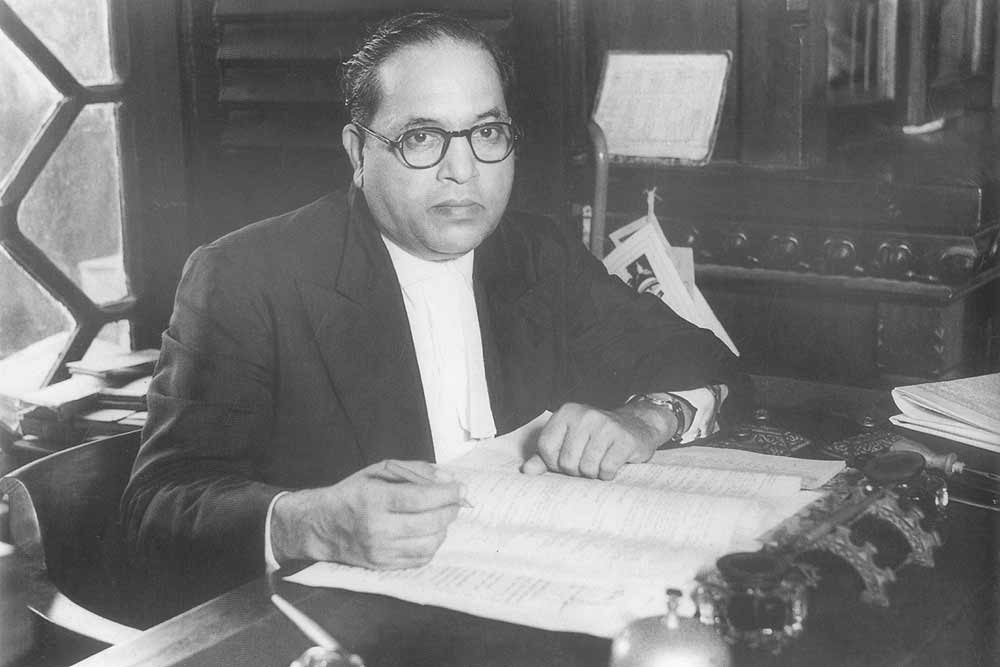
File photo of BR Ambedkar. Wikimedia Commons
A Dalit-rights activist from Maharashtra, who has worked closely with Ambedkar’s grandson, former MP and Vanchit Bahujan Aaghadi founder Prakash Ambedkar, told The Federal on condition of anonymity, “Babasaheb Ambedkar was no doubt an intellectual giant and a social reformer with no equal in or after his lifetime but he too was never an electoral giant… please remember that he contested only two elections (the 1952 Lok Sabha election from Bombay North and the 1954 Lok Sabha by-poll from Bhandara) before his untimely demise and he lost both. The results to both these elections, especially the Bhandara bypoll in which Babasaheb came third, says a lot about how complex Dalit leadership is in India.”
The activist added: “Despite Babasaheb’s towering legacy, no one from his family has been able to emerge as a leader of the Dalit masses in the past 70 years; Prakash won two Lok Sabha elections, but he is still struggling to establish himself even at the age of 70 years.”
Ravikant says that between Dr Ambedkar’s demise in 1956 and the emergence of Kanshi Ram on India’s political landscape in the early 1980s, the problem with Dalit political representation in India had less to do with an inadequacy of Dalit leaders and was rather the result of “marginalisation of Dalit leaders within mainstream political outfits either by design or because they belonged to the Congress party, within which the personality of Jawaharlal Nehru or later, to a lesser degree and for different reasons, Indira Gandhi, dwarfed everyone else”.
Also read: Why DU protest ban and police action against Youth Congress leaders have libertarians concerned
Kanshi Ram, in his book The Chamcha Age: An Era of the Stooges, argued that in the decades following India’s independence, while Dalit leaders did emerge from various political parties, including the Congress party, they acted largely as “stooges” of the upper castes, which dominated these parties.
Ram argued that mainstream political parties used Dalit leaders merely as “instruments and ornaments” to appeal to the SC community but gave them no say in what really mattered: taking concrete measures for Dalit emancipation. He claimed that such ‘stooges’ often worked for self-preservation instead of working for the Dalit community and, to rest his case, would often cite the examples of late Babu Jagjivan Ram, the former Congress stalwart who went on to briefly serve as India’s deputy Prime Minister in the short-lived Janata Party government under Prime Minister Charan Singh, or of the late Ram Vilas Paswan, the Lok Janshakti Party founder, known particularly for his ability to read the political winds and shift allegiances to the winning side just in time.
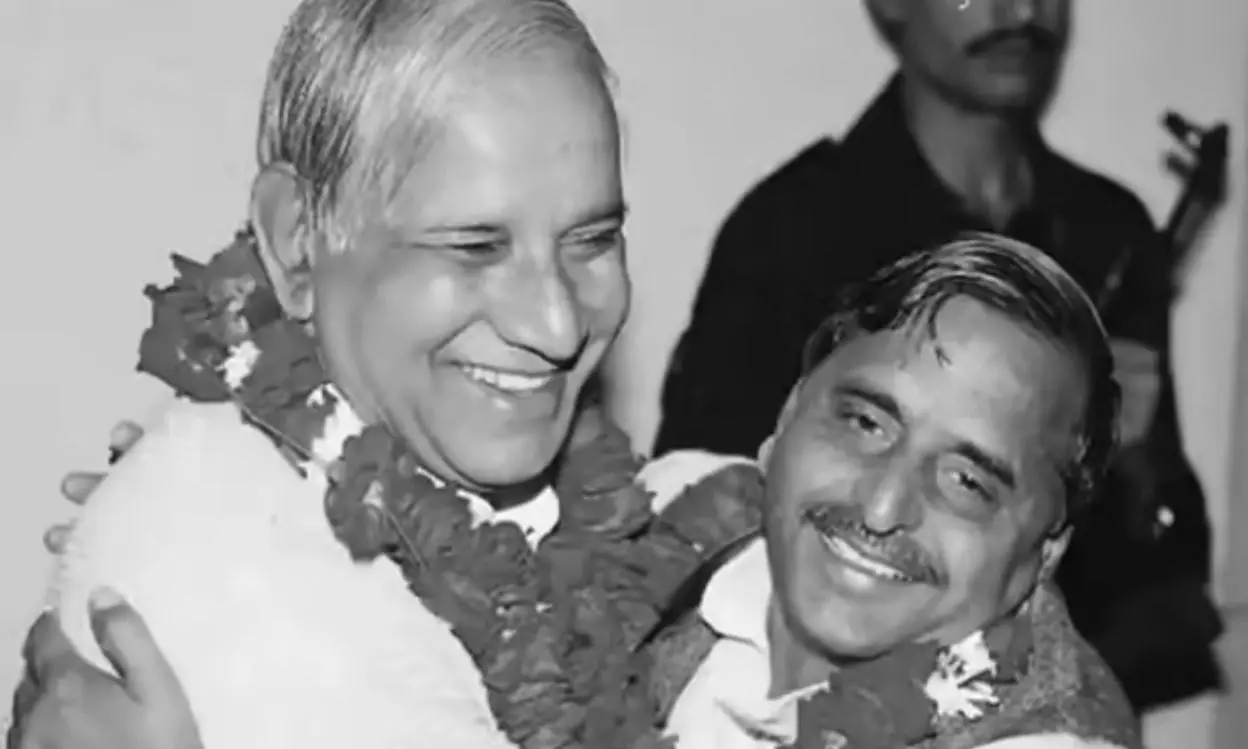
File photo of BSP founder Kanshi Ram and SP founder Mulayam Singh Yadav in happier times.
In the current context, Ram may have used his stooge analogy for scores of other prominent Dalit faces that are routinely pushed to the frontlines to make their respective parties more appealing to the SC community, while the reins of decision-making, ticket distribution and doling out patronage remains firmly in the hands of non-Dalits. The Congress party can pat itself on the back endlessly for electing Mallikarjun Kharge, a Dalit, as its chief, but by all accounts and Kharge’s own repeated admissions, decision-making in the party firmly remains with the “high command” (or the Nehru-Gandhi family). Likewise, the Samajwadi Party can draw plaudits for defeating the BJP in Ayodhya in the 2024 Lok Sabha polls through its Dalit face, Awadhesh Prasad, and for championing the cause of PDA (Pichhda, Dalit, Alpsankhyak), but the command centre of the party continues to be Akhilesh Yadav.
To Rajasthan-based Dalit activist Bhanwar Meghwanshi, the brand of politics that Kanshi Ram espoused was an “insurgency of Dalits in the political mainstream, wherein they would not be mere ornaments but real catalysts of change for the community” as opposed to “leaders like Ram Vilas Paswan or our former President Ram Nath Kovind who represented politics of tokenism and co-option”. However, Meghwanshi also believes that if Ram’s mission derailed, it was “at least partly because of his own mistakes”.
“Manyavar Kanshi Ram must be credited with constructing an independent political consciousness among Dalits. His Bahujan politics was geared towards uniting a massive but fragmented community into a political majority and within the first decade of founding the BSP, he was moving in that direction, but then I think he became impatient. He used to say that Dalit should mobilise and unite as a political force instead of compromising with other mainstream parties but while he succeeded with the first, he failed on the latter… after he named Behenji (as Mayawati is popularly called) as his successor, compromising with other parties to somehow stay in power became the driving force of the BSP; in the process it not only lost all credibility but also decimated the movement that Kanshi Ram had painstakingly built,” says Meghwanshi.
The meteoric rise of Mayawati, who went on to serve as chief minister of UP for four terms of varying lengths, including one with a clear majority for the BSP in the UP Assembly, may have marked a significant moment in Dalit assertion, combining symbolic representation with administrative authority. However, her equally swift fall underscores the fragility of Kanshi Ram’s vision. Under Mayawati, the BSP’s internal structure became increasingly centralised around her. Her shift from a ‘Bahujan’ to a ‘Sarvajan’ strategy, which saw her aggressively seek support from upper castes, particularly Brahmins, may have been borne out of electoral arithmetic that paid dividends momentarily, but it also diluted the BSP’s ideological distinctiveness and alienated sections of her core base the moment her stars were on the decline.
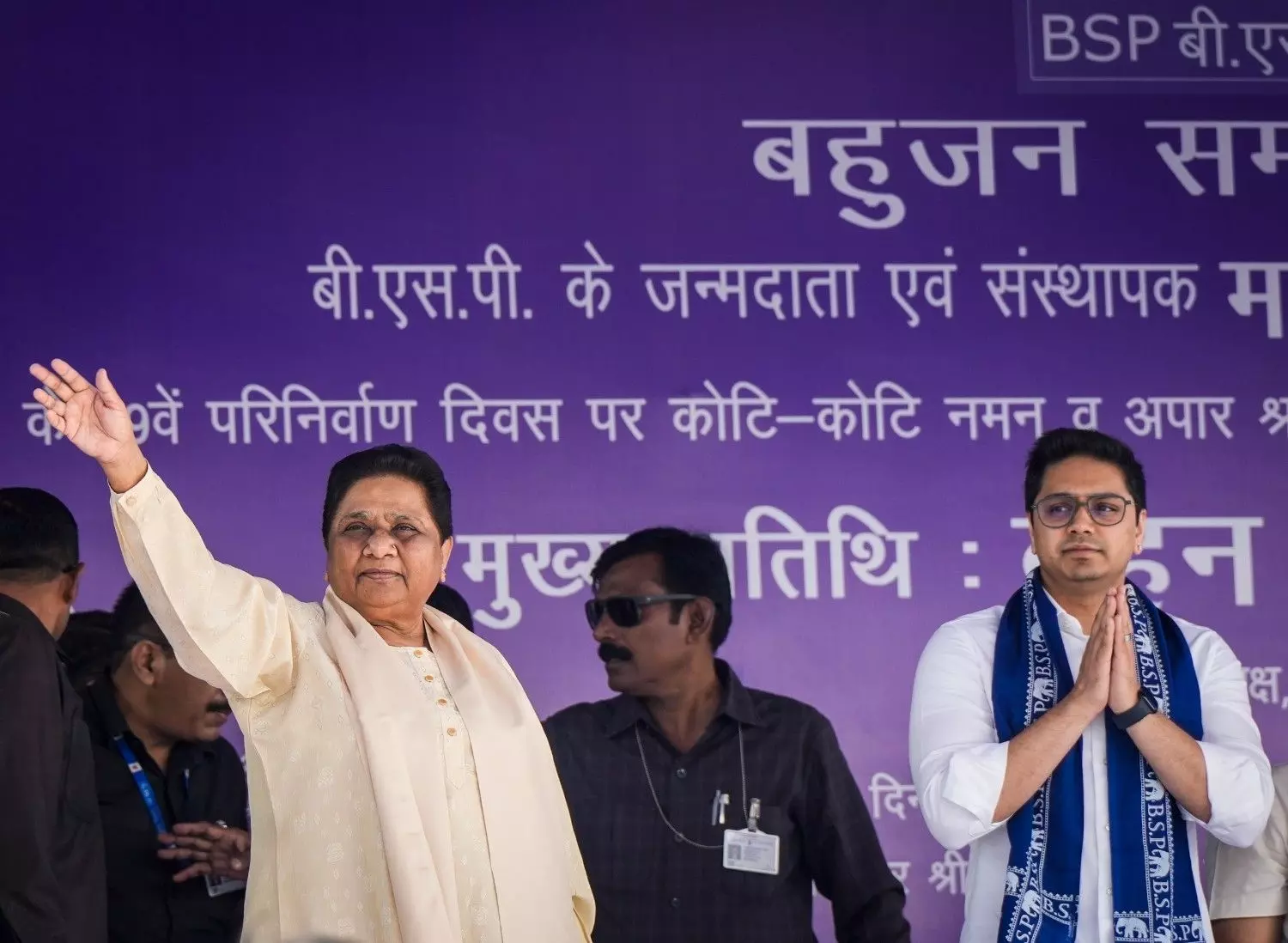
File photo of BSP chief Mayawati at an event in Lucknow to mark party founder Kanshi Ram's death anniversary in October. Photo: PTI file photo
As the BSP declined electorally, its rivals came swooping in; chipping away first at her base among non-Jatav Dalits and then even among the Jatavs. When Ravikant says that Dalits are not an electoral monolith and are difficult to consolidate behind one party or leader, the BSP’s current condition, thus, sounds relatable. It holds just as true for Dalit outfits beyond UP too.
Also read: 10 years of Constitution Day: Why it risks becoming a masking ritual for a backsliding democracy
That the Dalits are not a homogeneous bloc is evident in the countless sub-castes of the community one finds across different states and in the fragmentation in their political allegiances, social consciousness and economic situation even within the wider community in the same state. The Jatavs in Uttar Pradesh, Mahars in Maharashtra, Madigas in Andhra, Ad-dharmis in Punjab are all Dalit communities, but within the much wider SC net, they also form an elite bloc by themselves on account of being larger than the rest in number.
This status of being the electorally formidable sub-group within a larger and fragmented community may allow these sub-castes greater electoral representation and political heft, but also dents social unity under the Dalit umbrella. The political limitation of this isn’t hard to fathom – leaders emerge from specific sub-castes but struggle to gain legitimacy beyond them. The result is a pattern of regional leaders rather than a single figure capable of articulating a distinct Dalit political vision.
It is within this context that mainstream parties have found it relatively easy to appropriate the legacy of Dalit icons like Ambedkar and Kanshi Ram. The appropriation works on multiple levels. Figures like Babasaheb Ambedkar occupy a constitutional and moral space that transcends party lines. As the chief author of the Indian Constitution, Babasaheb’s legacy is foundational to the Indian Republic. This allows parties across the spectrum – from the Congress to the BJP – to invoke his name without necessarily engaging with his ideas on caste annihilation and social democracy.
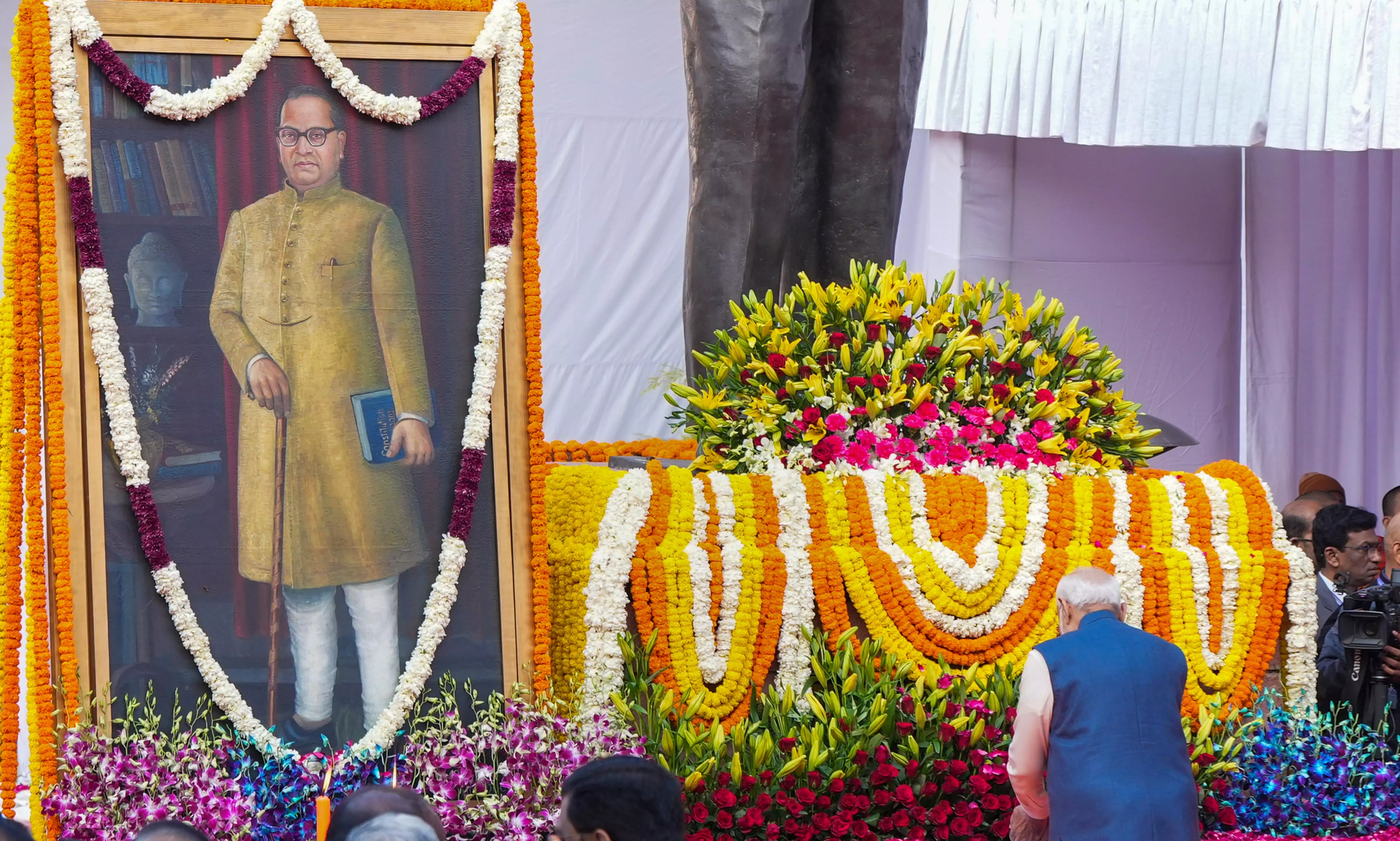
File photo of Prime Minister Narendra Modi paying tribute to BR Ambedkar on the latter's death anniversary in December. Photo: PTI file photo
The fragmentation of Dalit politics makes symbolic appropriation electorally effective. When there is no single dominant Dalit leader or party controlling the narrative, multiple parties can compete for ownership over Dalit icons. The BJP, as has been evident over the past 12 years of Narendra Modi’s rule, has invested significantly in commemorating Ambedkar through memorials and public messaging, while simultaneously integrating sections of Dalits into a broader Hindutva framework.
All of this while Dalit leaders and parties face inherent limitations in adhering strictly to an ideology of emancipation or the mission of increased political representation for their community.
“Electoral politics in India has become fundamentally coalition-driven, even if the BJP and the Congress are the principal foundation of the ruling and opposition blocs, and so broad social alliances are necessary to secure power. No party can achieve electoral dominance in any state by relying exclusively on Dalit votes; in fact, there is no guarantee that they will do well even in SC-reserved seats minus other social alliances. This compels Dalit-led parties to seek alliances with other caste groups, often requiring compromises on core ideological positions,” says a senior Congress leader who has also served as chief minister of a state with a huge Dalit population.
Individual ambition further complicates this dynamic, says Ram Kumar, co-founder of Dynamic Action Group (DAG), a collective of nearly five dozen UP-based Dalit rights NGOs.
“Dalit leaders of today, irrespective of the party they may be in, prioritise political advancement over independent ideological agendas. Name any major Dalit leader of the past 10-15 years – Sushil Kumar Shinde, Mayawati, Meira Kumar, Ram Vilas Paswan, Chirag Paswan, Jitan Ram Manjhi – has their personal success translated into collective empowerment of the Dalits,” says Kumar.
The Dalit rights activist adds: “The BJP made so much noise about getting Ram Nath Kovind, a Dalit, elected as President but can Kovindji name one good thing that the government did exclusively for Dalits upon his suggestion in the five years he was President of India… as unfortunate as this may sound, some of the biggest names among Dalits that we have seen emerge as leaders in recent years have been the biggest roadblock to real Dalit emancipation because the compromises they have made, or their inability to speak up for Dalits, fearing how their parties or allies or the government may react to it has eroded the faith of ordinary Dalits.”
Also read: How the fatal attack on Anjel Chakma is symbolic of a growing bloodlust in 'Devbhoomi' Uttarakhand
What is evident in the oscillations of the Dalit leadership, the appropriation of Dalit icons and the limitations of Dalit political outfits is a cyclical pattern. Dalit leaders emerge, mobilise support, and articulate a vision only to gradually lose it all. As their stars become politically ascendant and their agendas dilute, their organisation either weakens or becomes tethered to self-preservation and their symbolic capital gets appropriated by larger allies.
This interplay of caste fragmentation, electoral compulsions, ideological appropriation, and institutional constraints ensures, ironically, that Dalit politics remains both vibrant and diffused.