- Home
- India
- World
- Premium
- THE FEDERAL SPECIAL
- Analysis
- States
- Perspective
- Videos
- Sports
- Education
- Entertainment
- Elections
- Features
- Health
- Business
- Series
- In memoriam: Sheikh Mujibur Rahman
- Bishnoi's Men
- NEET TANGLE
- Economy Series
- Earth Day
- Kashmir’s Frozen Turbulence
- India@75
- The legend of Ramjanmabhoomi
- Liberalisation@30
- How to tame a dragon
- Celebrating biodiversity
- Farm Matters
- 50 days of solitude
- Bringing Migrants Home
- Budget 2020
- Jharkhand Votes
- The Federal Investigates
- The Federal Impact
- Vanishing Sand
- Gandhi @ 150
- Andhra Today
- Field report
- Operation Gulmarg
- Pandemic @1 Mn in India
- The Federal Year-End
- The Zero Year
- Science
- Brand studio
- Newsletter
- Events

Meaning, originality, ease of pronunciation — what's dictating baby names for Indians
The Rajasthan govt last month shelved its plan to rename school kids if they were found to have confusing or embarrassing names. While that exercise failed, Indian parents have in recent years been going to great lengths to pick increasingly innovative names for their kids. Helping them in the task are professionals — naming consultants, numerologists and astrologers.

Writers and filmmakers sometimes avoid naming their protagonists to give them a universal identity. A name, be it anything, invokes a bias. There is a scene in the animated adult series Rick and Morty, where the eccentric scientist grandfather screams at his grandson not to name his unplanned alien son. Morty, however, quickly names him "Morty Jr", making Rick exclaim, "Sh**, you named it." It...
Writers and filmmakers sometimes avoid naming their protagonists to give them a universal identity. A name, be it anything, invokes a bias. There is a scene in the animated adult series Rick and Morty, where the eccentric scientist grandfather screams at his grandson not to name his unplanned alien son. Morty, however, quickly names him "Morty Jr", making Rick exclaim, "Sh**, you named it." It is a throwaway moment, but it implies something profound about what a name does — it paints a picture; of the person’s caste, community, at times even their character and nature, however unfairly. While prejudices are discouraged, thoughts are involuntary.
And an unusual name could potentially lead to a child being bullied at school (remember the protagonist’s long discomfiture with his name, Gogol, in Jumpa Lahiri’s The Namesake?).
And it was precisely this concern that had reportedly prompted the Rajasthan government, earlier this year, to wade into one of the most intimate decisions a family can make.
The Bhajan Lal Sharma-led Bharatiya Janata Party government launched the Sarthak Naam Abhiyan, loosely translated as, the ‘Meaningful Names Campaign’, directing all government and private schools in the state to identify students from Class 1 to 9 whose names sounded, in the government's own framing, "derogatory, meaningless, or embarrassing". Names like Sheru, Kalu, Tinku, Shaitan — often given affectionately at home, often caste-coded, often just nicknames that stuck — would be flagged for replacement. The government even prepared a list of over 3,000 alternative names for parents to choose from, with changes to be affected through parent-teacher meetings and written parental consent. Explaining the move, education minister Madan Singh Dilawar was quoted in the media as saying, "A name is not just an identity. It is directly linked to a child's respect and dignity."
The opposition pushed back hard. Congress and other parties reportedly argued that names are a deeply personal and cultural matter, that what sounds "derogatory" in one community may carry traditional weight in another, and that deploying schools as the enforcement arm of a state naming policy amounts to government overreach into domestic life. The scheme was put on hold last month, in no small part perhaps because the government's own 3,000-name list turned out to be its undoing. Reports indicate that many of the suggested names were AI-generated and several were stranger than the names they were meant to replace.
But the debate the Sarthak Naam Abhiyan triggered — about what a name is, what it does, and who gets to decide — has only deepened. Because the truth is, Indian families have already been rethinking naming for years now. And the forces shaping the exercise today look nothing like they once did.
Also read: How communities of urban Indians are ditching the screen to bond over board games
Prathibha Parthiban, who works at a multinational company in Chennai and recently named her newborn daughter Mahira Disha, offers a window into just how layered the process has become. Her husband is Christian; she is Hindu. The naming itself became a careful negotiation between two religious traditions, between two families, and between memory and modernity. "I wanted to start with M if it was a girl, because my grandmother's name was Maheshwari and she had recently passed away," explains Parthiban. "We both [she and her husband] liked Mahira. After that, we wanted the second name to feel flowy."
Where once family elders and friends would have shaped the choice, parents like Parthiban now also have help from AI tools and baby name websites. Still, she was still changing the name as late as two days before the naming ceremony.
Then came another complication: several relatives pointed out that Mahira sounded like a Muslim name. "The people who said that were mostly from the generation of moms and dads," she recalls. "My friends didn't feel that way at all." Mahira, she explains, means an energetic, radiant soul; Disha means one who creates a path toward positivity. Together, the name captures exactly the kind of personality she hopes her daughter will grow up to have.

Names now are often harder to place religiously or regionally, many of them sitting in a neutral, cosmopolitan middle ground. Photo: iStock
From baby products brand Pampers to platforms like baby360 and bachpan.com, the list of online sites offering baby names to new parents is limitless. Lifestyle brands also have listings of the most popular names of the year, while astrologers and numerologists offer advice on names that would be ‘lucky’ for the baby.
The online platform ‘imeuswe’, which identifies itself as a site to promote family bonding, came out with a report last year on top Indian names by the decade, between 1947 and 2025. “Through every decade, these names mapped India’s transition from spiritual to aspirational, from silent sacrifice to self-expression, from scarcity to startup culture. They are not just names. They are India’s autobiography, written one child at a time,” states the report.
It further clarifies that it “is not a baby-naming book”. What it claims to be is “a cultural time capsule. A people’s history. A timeline not marked by wars and treaties but by what parents across India, knowingly or unknowingly, whispered into their newborn’s ears”.
It looks at “Names that disappeared. Names that survived everything. Names that were influenced by gods, politicians, cricketing heroes, matinee idols and sometimes, simply, by love”.
If names like Lakshmi, Gita, Shanti, Ram, Mohammed, Krishna, Ramesh were the pop picks in the years between 1947 and 1960, by the 1980s, the preference had shifted towards Sanjay, Santosh, Sunita and Anita. Lakshmi and Ram, once the top choice for girls and boys, respectively, had been pushed to the third slot. Between 1991 and 2025, Rahul topped the chart for boys — a name many Bollywood fans would forever associate with Shah Rukh Khan. Was it the matinee idol dictating trends or a case of reel aping the real? For girls during this period, Pooja was the preferred choice.
The report also includes a list of ‘all-time favourites since 1947’, which includes names like Ram, Santosh, Sanjay, Lakshmi, Sunita and Gita…
Also read: Why the rise of AI-powered spiritual leaders has raised questions of trust, authority and copyright
For TJ Priya, a high school teacher in Chennai, teaching classes 5 to 9, the transformation in naming is visible every single time she calls attendance. "At one time, we used to have S Vignesh and R Vignesh in the same class. And they went by SV and RV to stop confusion," she says. "Now, we don't even need the initials. Each child has a different name. It is hard to come across a classroom with two students with the same names" What is equally striking, she notes, is that names which once dominated Tamil classrooms — Ramesh, Suresh, Vignesh, her own name, Priya — have practically vanished.
In their place have come names harder to place religiously or regionally, many of them sitting in a neutral, cosmopolitan middle ground. "Even Hindu families have names now that we once associated with Christian children," she says. "You can't always tell from the name anymore." Older, traditionally Tamil names like Shakthivel, Balamburugan, Tamil Selvan, are now a rarity, sometimes drawing puzzled looks from younger students when they do surface on a register, Priya adds.
Akshaya Dharmar, a numerologist with three decades of practice based out of Trichy, has a front-row seat to this transformation. "Earlier it was Dinesh, Ramesh, Suresh... Now it is Dhanvik, Dushyanth," he says. He also sees a different kind of client walk through his door now, he says, not just new parents seeking auspicious names for infants, but older individuals wanting to shed names that feel like a burden. "There are people like Mariyappan, Venduthal, who feel their names no longer fit the world they live in," he says. "They want to change."
Which is what makes a 68-year-old man named Tamil Nadu, reached over the phone from his village near Mayavaram, such an extraordinary figure. "My father was a friend of Periyar [social reformer and politician Erode Venkatappa Ramasamy, popularly known as Periyar]," he says. "When Madras was renamed Chennai, there were many protests. My father participated in those. I was told by my father that Periyar was the one who asked him to name me Tamil Nadu." He has lived with that name for nearly seven decades, through school registers that baffled clerks, postmen who held his letters up in disbelief, and job interviews where his name alone became the first, and often longest, topic of conversation. "Having such a name is an identity. I am not going to reduce mine."
If Tamil Nadu's story is about pride in a rare name, Paralogam's is about learning to own one. At 30, Paralogam works as an anchor with Pa Ranjith's Neelam YouTube channel, a field that rewards distinctiveness, which is precisely what his name delivers. Derived from the Tamil paralokam, meaning heaven or the world above, the name came from his grandmother, Paralokam Mary, whom his parents wanted to honour.
"Growing up in my village, there were many such names around me, so it wasn't a big deal," he says. "When I went for higher studies, that's when people started to look at me strangely. But no one ever forgot me once I introduced myself." His mother's nickname for him, Pulfi, stuck through everything.
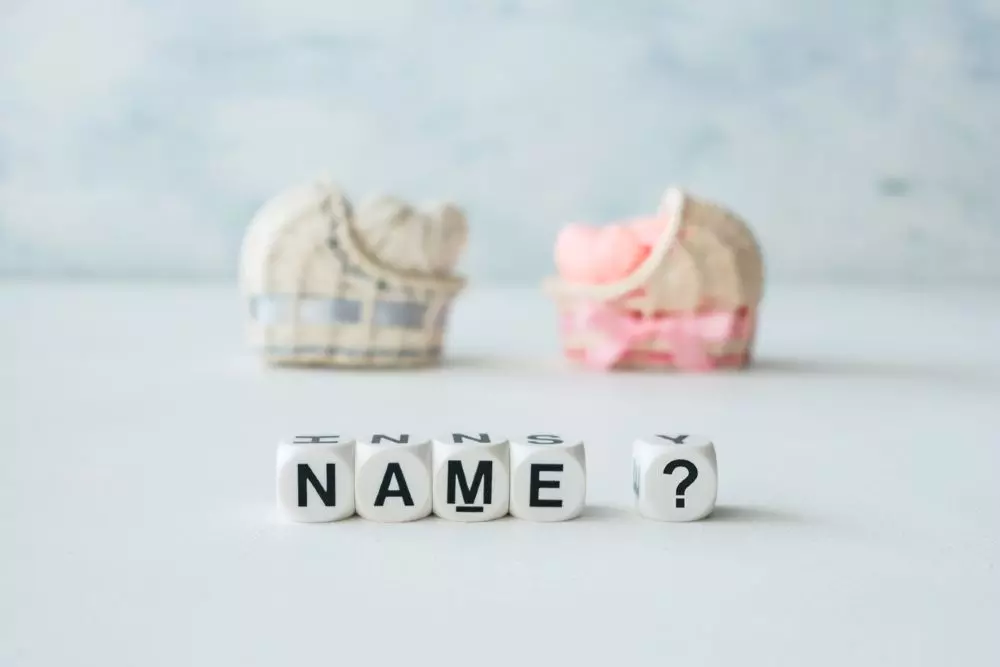
Modern names, with their creative spellings and ambiguous pronunciations, have created a new headache for teachers. Photo: iStock
For those who cannot make peace with their names, the legal route exists, but it is neither quick nor simple, requiring extensive government paperwork, say lawyers The Federal spoke to. And after it is done, every individual document, Aadhaar card, bank passbook, and property records, must be separately updated.
The fact that parents are now going to great lengths to ensure they have the ‘perfect’ name for their little ones might, over the years, reduce adult dissatisfaction over names. Or the fancy identifications, may just want the child crave for a simpler name as they grow up.
Also read: In India, why being vocal about relationships is not easy for adolescents in love
Some parents, on their part, are trying to cover all bases.
A 30-year-old data analyst based in Berlin, speaking on the condition of anonymity, says she wanted something traditional for her eight-month-old daughter, but at the same time a name which could be pronounced easily globally, since the child would be growing up in Berlin. A new mom, whose family is from Patna, sought professional help. “My daughter’s name is related to the Hindu deity Saraswati,” she adds.
For Shivangi Varshney, founder of the online platform Babynames, it was her own experience of naming her first born in 2019 which gave her the idea of taking it up professionally. Her seven-year-old daughter was eventually named by the baby’s uncle, Harshali. For her second child, now two years old, she chose Ishvandya, meaning God’s prayer. “I focus on names with a strong Sanskrit tradition. Sometimes clients tell of their numerological or astrological requirements and I work according to those. My clients are mostly from the southern states, Maharashtra, Gujarat and non-resident Indians,” says National Capital Region-based Varshney, who charges Rs 11,000 for a set of 16 names from which the client can make their choice.
Meanwhile, the classroom continues to be where the tension between old and new names plays out most visibly. Priya says that while bullying over unusual names is far less common than it once was — "in a class, only one person may have an old-fashioned name now; It is so different from everyone else's that it just seems new to them" — the challenge has shifted rather than disappeared.
Modern names, with their creative spellings and ambiguous pronunciations, have created a new headache for teachers. "There is a name like Sashank, the spelling is the same, but different families pronounce it differently. When I take attendance, I have to be corrected every time," she says. "It takes a while for the right pronunciation to register. And if the teacher mispronounces it, it is the one with the name who ends up on the receiving end of laughter, not the one who mispronounces it.”
And yet, names do not make a person.
Take, for example, the name of Google CEO Sundar Pichai. In Tamil, the word pichai means alms: what you give to a beggar, derived from the Sanskrit bhiksha. It is a word that carries, etymologically, the full shadow of want and destitution. But Pichai is today one of the most powerful people in the technology world. He did not become remarkable because of his name. He simply became remarkable, and the name followed him there.
Because beyond all prejudices, it is not what a name brings to the person, but what the person brings to the name. And as the bard Shakespeare had concluded ages back, “What’s in a name? That which we call a rose/By any other name would smell as sweet”.