- Home
- India
- World
- Premium
- THE FEDERAL SPECIAL
- Analysis
- States
- Perspective
- Videos
- Sports
- Education
- Entertainment
- Elections
- Features
- Health
- Business
- Series
- In memoriam: Sheikh Mujibur Rahman
- Bishnoi's Men
- NEET TANGLE
- Economy Series
- Earth Day
- Kashmir’s Frozen Turbulence
- India@75
- The legend of Ramjanmabhoomi
- Liberalisation@30
- How to tame a dragon
- Celebrating biodiversity
- Farm Matters
- 50 days of solitude
- Bringing Migrants Home
- Budget 2020
- Jharkhand Votes
- The Federal Investigates
- The Federal Impact
- Vanishing Sand
- Gandhi @ 150
- Andhra Today
- Field report
- Operation Gulmarg
- Pandemic @1 Mn in India
- The Federal Year-End
- The Zero Year
- Science
- Brand studio
- Newsletter
- Elections 2024
- Events

Why Kerala seeing a shrink in its marine fish catch has cultural implications beyond business
In Kerala, fish remains deeply embedded in the state's food culture. Daily meals, regional cuisines and community traditions continue to revolve around seafood. Even as consumption patterns evolve, the preference for local marine species remains strong.

Kerala’s food memory is inseparable from fish. From the carefully wrapped ‘karimeen pollichathu’ (pearl spot fish wrapped in banana leaf and grilled or roasted) served at festive meals, or ‘fish nirvana’ a dish on five-star menus invented by celebrity chef Suresh Pillai, to the everyday ‘mathi mulakittathu’ (sardines cooked in a spicy red chilli gravy) that anchors an...
Kerala’s food memory is inseparable from fish. From the carefully wrapped ‘karimeen pollichathu’ (pearl spot fish wrapped in banana leaf and grilled or roasted) served at festive meals, or ‘fish nirvana’ a dish on five-star menus invented by celebrity chef Suresh Pillai, to the everyday ‘mathi mulakittathu’ (sardines cooked in a spicy red chilli gravy) that anchors an ordinary lunch, seafood has long defined the Malayali plate. Across income groups and regions, fish remains central to diet and identity. Prices vary widely, from seer fish that can touch Rs 1,800 a kilogram in urban markets to sardines that sell for about Rs 100 a kilogram and sustain working-class households. Yet beneath this culinary continuity lies a serious and practical question. Is Kerala still self-sufficient in the fish that is the mainstay of its daily food culture?
Current data suggest otherwise. According to data shared in the state assembly by fisheries minister Saji Cherian this month, Kerala requires roughly 2,541 tonnes of fish each day for consumption, while average daily availability is around 2,049 tonnes. The gap is bridged through supplies from other states and through imports that reach local markets through established trade networks. The deficit is not the result of a single cause but a combination of ecological, climatic, economic and regulatory factors that have been reshaping fisheries for years, said Cherian.
“On examining the figures for 2024–25, it can be seen that marine fish production has reached close to its maximum potential. In 2022–23, Kerala required an additional approximately 1.80 lakh metric tonnes of fish [brought in from other states] over and above what was locally available. The possibility of obtaining such additional quantities from the marine sector is very limited. Kerala can achieve self-sufficiency in fish availability only if this shortfall is bridged through inland fish production. Steps are being taken in this direction,” Cherian stated.
The estimated maximum sustainable yield, or the upper potential for marine fish production in Kerala, is generally placed between 6.63 lakh and 6.99 lakh tonnes a year, based on studies by the Central Marine Fisheries Research Institute (CMFRI). Annual output continues to fluctuate and often remains around 5 to 6 lakh tonnes. Research findings suggest that the coastal waters are already fully exploited and any further increase in production would depend on tapping deeper sea resources and strengthening sustainable management practices.
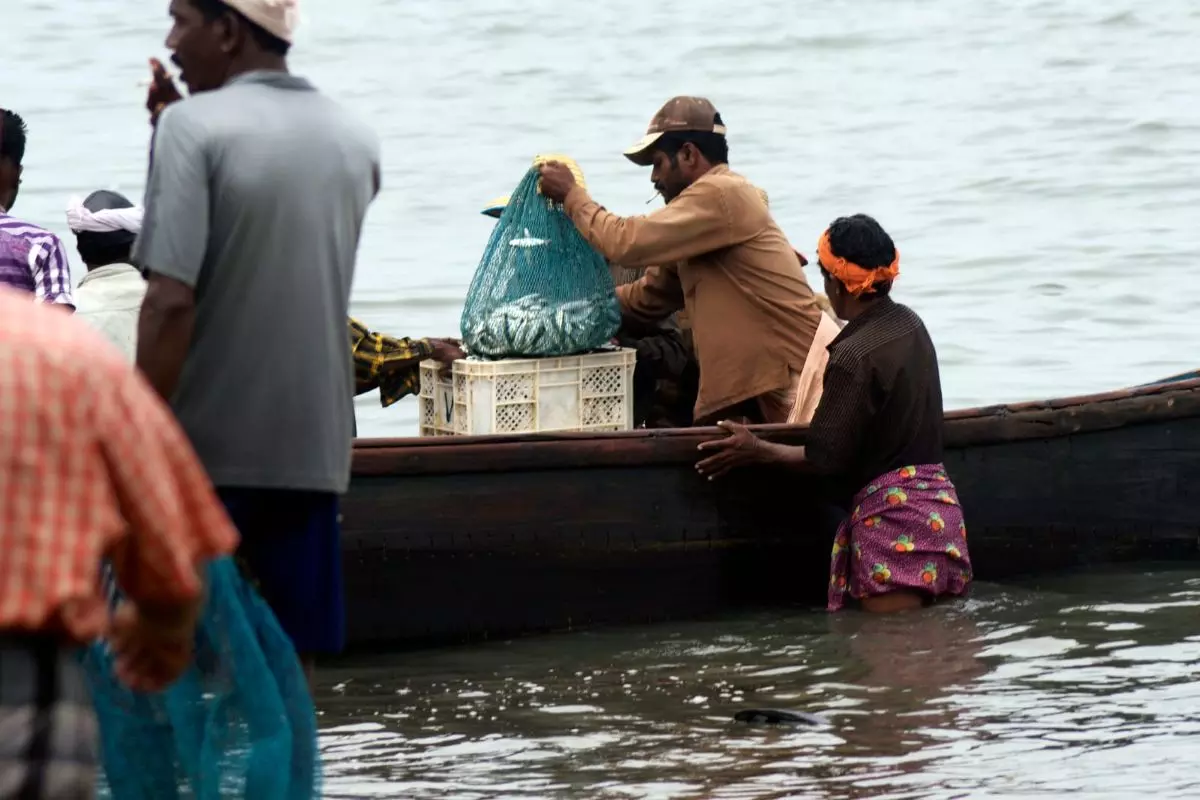
Fishermen return with the catch. Photo: Ima Babu
Marine fisheries have historically supported both livelihoods and nutrition in Kerala. Nine of Kerala’s fourteen districts are coastal. According to the fisheries department, about nine lakh fishers live in more than 300 coastal villages spread along the 590-km coastline of Kerala
Sardines, mackerel, anchovies and prawns formed the backbone of everyday diets and coastal economies. There are numerous references to fish and seafood in Malayalam cultural life, especially in literature, cinema and music. From the late 1950s writings of Jnanpith award winner Thakazhi Sivasankara Pillai, including the novel Chemmeen, to its film adaptation of the same name that won the first National Award for Malayalam cinema in 1966 and the 1991 film Amaram starring Mammootty, the sea and fishing life have remained enduring themes. Songs from these films vividly evoke fish-based meals and coastal rhythms. In more recent times, bands such as Thaikkudam Bridge have carried this cultural thread forward with music that celebrates Kerala’s fish-eating traditions. Across Kerala, the culinary landscape reinforces this identity, with hundreds of seafood-focused restaurants and a strong everyday culture built around fish consumption.
Also read: Why, in coastal Karnataka, toddy tapping, once part of legends and ballads, has few takers today
Over time, however, the marine ecosystem has been subjected to multiple pressures. Increased fishing intensity, capture of juvenile fish, unscientific fishing practices, water pollution and the loss of mangroves have contributed to resource stress. Climate change and global warming have added another layer of uncertainty, altering ocean conditions and affecting breeding cycles. Natural disasters such as cyclones and floods have also had measurable effects on fishing activity and habitat stability, say marine researchers.
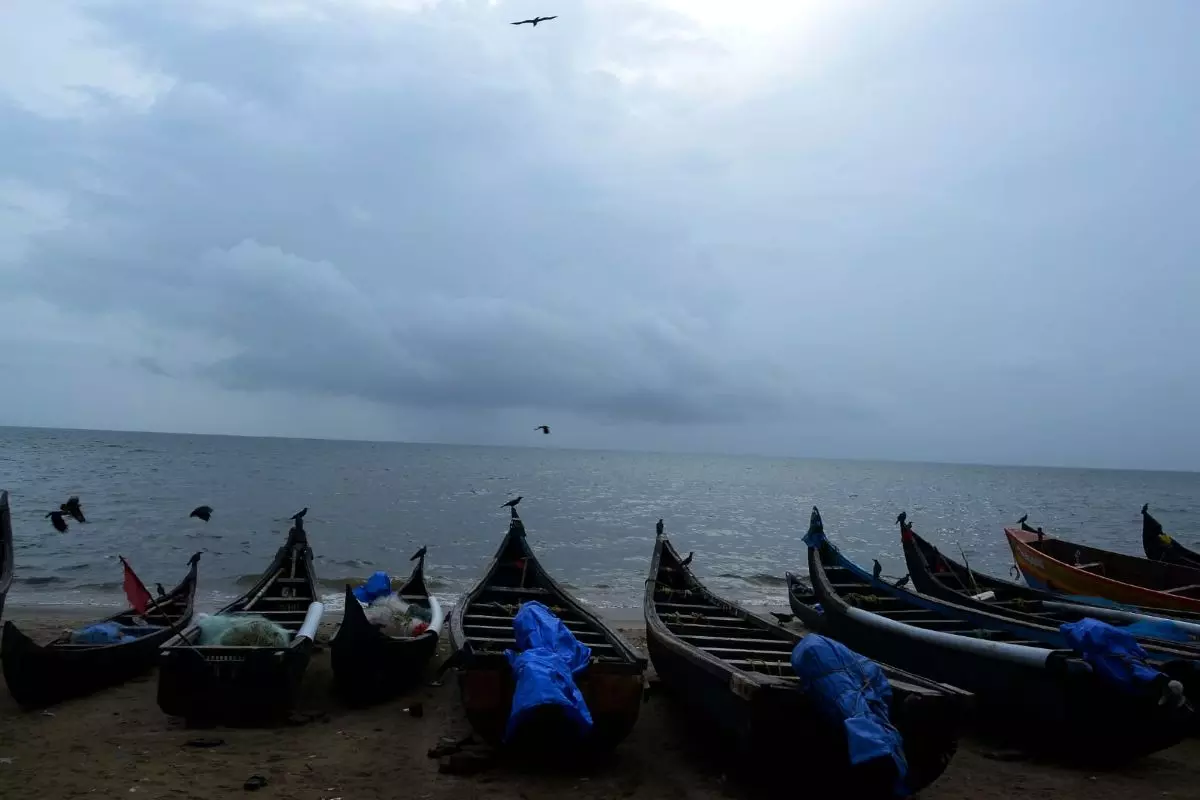
Fishing boats at shore. Photo: Ima Babu
“Mathi (sardine) is the fish most commonly caught by small-scale fishermen who use vallams (traditional fishing boats) fitted with inboard engines. These fishermen largely depend on sardines for their livelihood. Their fishing methods are very different from those using large mechanised boats. From vallams, fishermen can often spot the shoals they are targeting and set their nets accordingly, which is why sardine remains their primary catch,” says 54-year-old Jamal Azheekkal. A resident of Ponnani village in Malappuram district, he has over 35 years of experience in both vallam and large boat fishing in the Kerala coast, as well as in the Gulf Cooperation Council (GCC) countries.
“Over the past 10 to 15 years, the size of sardines has clearly declined. We do not know the exact reason, but it is a visible change. The minimum legal catch size is 10 centimetres [which is what they are getting]. Earlier, sardines measuring 15 to 17 centimetres were common, but such sizes have now become rare,” says Jamal.
Government interventions have attempted to address these pressures on the marine produce through regulation and conservation.
Kerala has progressively strengthened its fisheries laws to shift the sector from production-driven practices to long-term sustainability. Amendments to the Kerala Marine Fishing Regulation framework have introduced minimum legal-size norms for dozens of species, tighter gear regulations such as larger mesh sizes, bans on destructive practices like pair trawling and LED-assisted fishing, and mandatory vessel tracking to prevent illegal operations. Licensing controls for vessels operating in coastal waters and seasonal trawl bans have all been implemented.
Environmental measures such as the Suchitwa Sagaram initiative require fishers to bring plastic waste back to shore, while supporting industries like boatyards and net units now come under regulatory oversight. Parallel changes to inland fisheries laws enabled the declaration of fish sanctuaries, stricter protection of breeding habitats, and promotion of scientific aquaculture with controls on exotic species. Conservation steps such as extended monsoon trawling bans and prohibition on the sale of juvenile fish aim to protect stocks during breeding seasons. Together, these measures reflect a policy shift in Kerala toward sustainable fisheries management, informed by scientific inputs, including studies by the Central Marine Fisheries Research Institute.
These steps have helped stabilise production at different points. Kerala continues to figure among the top three states in marine fish production, but the pattern has been marked by fluctuations rather than steady growth.
“Sardine is almost a monocrop in Kerala’s seas. For more than a lakh fisherfolk here, it is the backbone of livelihood, once seen as an unending marine resource. A single sardine can lay between 12,000 and 200,000 eggs in its lifetime. Yet production has been declining since the record 3.99 lakh tonnes in 2012, touching a historic low of just 3,297 tonnes in 2021 after the Covid period. There were signs of revival last year with better catches, but the size of the fish has reduced significantly. We are now compelled to divert much of the catch to poultry farms in Tamil Nadu as feed. Ironically, larger sardines from Tamil Nadu are making their way back into Kerala markets,” says Charles George, state president of the Kerala Fishworkers Coordination Committee.
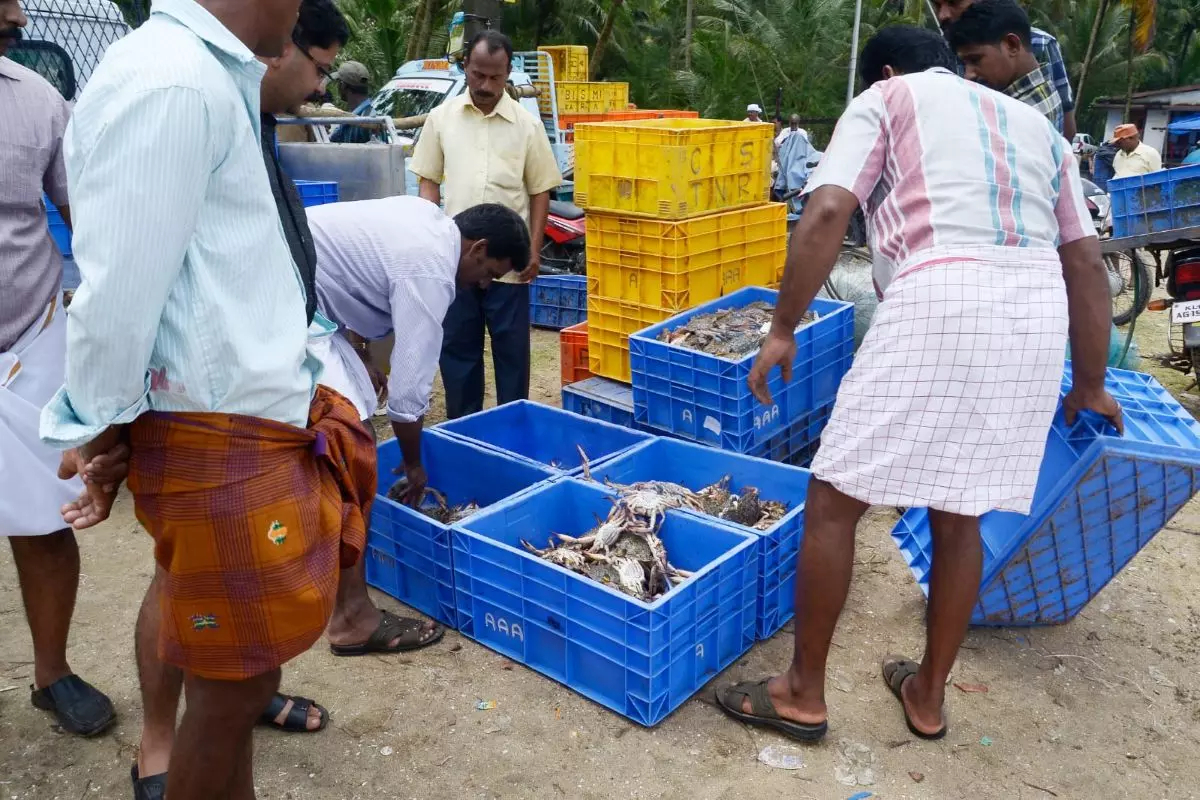
A fresh catch being sorted. Photo: Ima Babu
The dynamics of fish availability in Kerala are closely illustrated by the case of the Indian oil sardine (mathi), as it is one of the state’s most widely consumed fish. Studies conducted by the Central Marine Fisheries Research Institute, examining sardine fisheries along the Kerala coast between 2021 and 2024 shows that fluctuations in availability are shaped strongly by environmental factors. In 2024, there was a significant increase in the number of juvenile sardines entering the fishery, particularly along northern parts of the coast, even though spawning stock levels were relatively low. This indicated that recruitment was influenced more by favourable ecological conditions than by the number of adult fish alone.
Ocean productivity, plankton availability, rainfall and sea surface temperature played important roles. Increased rainfall and nutrient flow supported plankton growth, which improved larval survival. Conversely, higher temperatures and marine heatwaves affected productivity during certain phases. Recruitment patterns varied across coastal regions, reflecting differences in local environmental conditions. These findings demonstrate that fish availability cannot be explained solely through fishing pressure or stock size. It is closely tied to ecological processes in the marine environment.
Also read: Smell, stigma and supremacy: How 'food racism' shapes everyday life in India
The surge in small-sized sardines also created new challenges. Large numbers of young fish competing for food slowed growth and resulted in smaller body sizes. Smaller fish affected market acceptance and pricing, and in some areas, fishers reduced their catch because it was not economically viable. Abundance did not necessarily translate into higher income or a stable supply.
“The economic impact was severe, marked by a sharp crash in sardine market prices and the eventual suspension of fishing for sardines below the minimum legal size,” said U Ganga, principal scientist, CMFRI, who led the study. “Within a broader fisheries management framework, dynamic and locally responsive harvest-control measures are crucial for a fishery like sardine that is strongly driven by environmental factors. Such approaches are essential to safeguard both livelihoods and food security,” Dr Ganga added.
According to researchers, climate variability is now an important factor shaping fisheries. Changes in monsoon patterns, rainfall distribution, ocean currents and sea temperature affect plankton cycles and marine productivity. Since small pelagic species such as sardines depend heavily on plankton, their population levels respond quickly to these environmental shifts. Rainfall influences nutrient availability in coastal waters, while temperature changes affect productivity and breeding conditions. These factors introduce variability that conventional fisheries assessments based only on catch statistics cannot fully capture.
Fish availability is also shaped by economic and market forces. Urban demand, export markets and price fluctuations influence what reaches local consumers. Premium species often move beyond everyday consumption, while sardines and anchovies remain essential for affordable nutrition. When local landings decline, prices rise and imports increase. When catches rise sharply, especially with fish below the minimum legal size, prices fall, but quality may be affected. These cycles influence both fisher incomes and household consumption patterns.
“For a boat with seven or eight workers on board, a typical two-night, three-day trip costs around Rs 2.8 lakh under normal circumstances, including wages for the crew during the voyage. The profit is usually shared in a 55:45 ratio between the owner and the workers, so we need at least a Rs 3.5–4 lakh worth catch just to stay on the safer side. That often does not happen [in the past 10 years]. At times, the catch brings in only half the expense. So, the economics remain bleak even when fish availability appears reasonable,” says Kabeer K M, a boat owner in Ponnani.
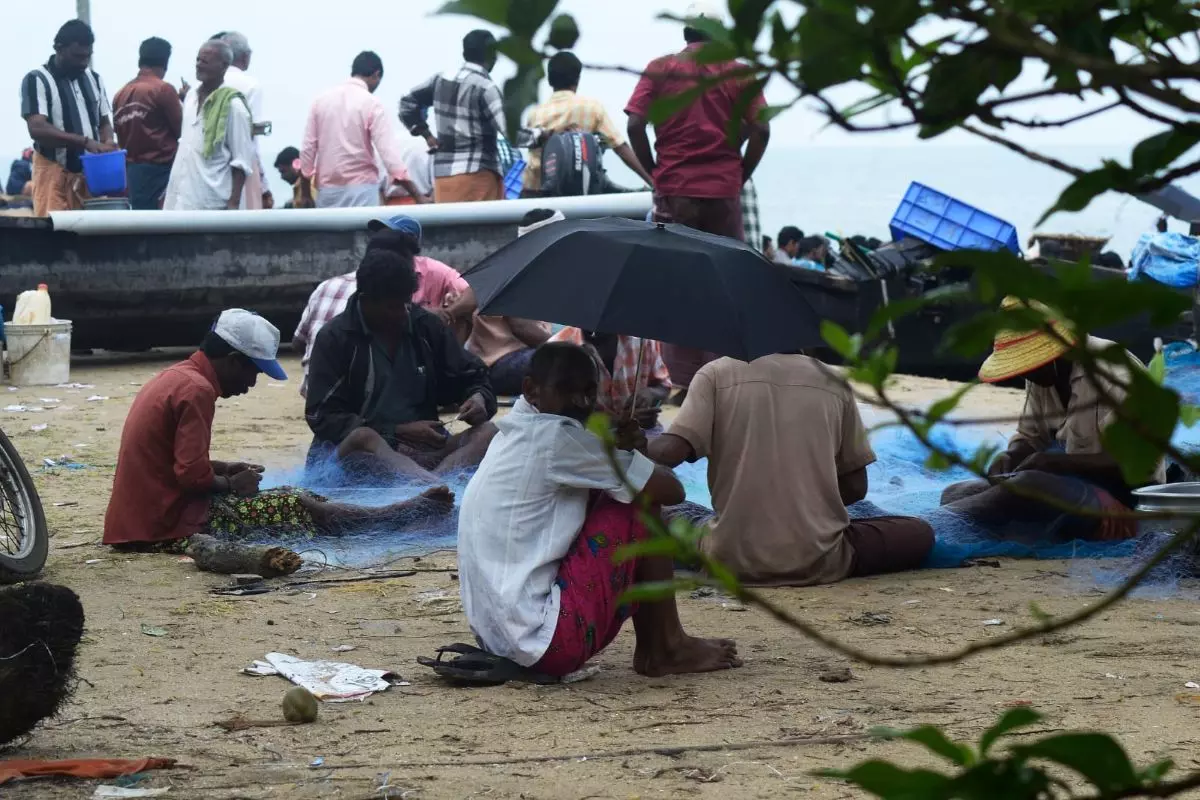
Fishermen repair nets on shore. Photo: Ima Babu
A key assessment emerging from recent years is that marine fisheries may have reached their practical limits in terms of expansion. The sea cannot indefinitely produce higher volumes to match rising demand. As the fisheries minister stated in the assembly, in 2022–23, this reality has shifted attention to inland fisheries as the principal area for future growth.
Inland fish production has shown consistent improvement. Aquaculture, pond-based farming, backwater fisheries and reservoir cage culture have expanded gradually. According to 2026 assembly documents, production increased from about 2.51 lakh metric tonnes in 2023–24 to 2.80 lakh metric tonnes in 2024–25. Over a decade, inland output has not shown the volatility seen in marine fisheries. Policymakers view this sector as central to reducing dependence on marine landings and improving food security. However, inland expansion requires sustained investment, water management, feed supply, disease control and farmer participation. It also cannot entirely replicate the diversity of marine species that shape everyday food habits.
On the other hand, in marine fisheries, conservation measures have become stricter over time, reflecting the need to protect resources. Restrictions on certain fishing methods, limits on vessel size and engine power in territorial waters, enforcement of minimum mesh sizes in nets and extension of seasonal trawl bans are part of this regulatory framework. These steps are intended to protect breeding cycles and prevent overexploitation. At the same time, they affect fishing operations and incomes, making the balance between conservation and livelihood a continuing policy challenge.
However, local fishermen and small boat owners narrate a very different reality from the official position. They argue that most regulatory restrictions are enforced almost entirely on traditional and small-scale operators who fish close to the shore, largely within the 25-nautical-mile zone. These are the fishermen who depend on vallams, fibre boats, and modest outboard engines, and whose daily income is tied to nearshore catch.
According to them, monitoring is tighter and penalties are quicker in these coastal stretches, while larger mechanised vessels operating farther out at sea often remain beyond effective scrutiny. This, they claim, creates an uneven playing field where the burden of conservation and compliance falls disproportionately on artisanal communities. Many among them feel they are being held responsible for declining stocks despite having a limited range, limited gear, and far lower extraction capacity compared to deep-sea fleets.
“These days, our catch has reduced, while large boats from outside the state, equipped with Chinese nets and advanced gear that can cover vast stretches at a time, are making big hauls. They operate in deeper waters with larger crews and anchor offshore for extended fishing. Enforcement rarely reaches that far, and they function with near impunity. But when local fishers cross the line even slightly, we are quickly penalised, as the easiest targets,” says Kabeer.
According to the fisheries and marine departments, however, while there are challenges related to jurisdiction and the lack of adequate facilities to carry out searches and enforcement, officials maintain that their work is being carried out in a fair and unbiased manner.
Also read: Why in Tamil Nadu, Pongal celebrations unite Hindus and Muslims in common 'thanksgiving’
Fish remains deeply embedded in Kerala’s food culture. Daily meals, regional cuisines and community traditions continue to revolve around seafood. Even as consumption patterns evolve, the preference for local marine species remains strong. Self-sufficiency, therefore, carries cultural significance beyond nutrition. It is linked to the continuity of coastal livelihoods, local markets and culinary identity.
The state is not facing an immediate shortage of fish, but the balance between demand and supply is under strain. Marine fisheries are showing ecological limits. Climate variability is influencing recruitment cycles. Inland fisheries are expanding but require sustained support to meet future demand. Consumption continues to grow, shaped by population, income and market access.
The question of self-sufficiency is therefore not only about production numbers. It is about how Kerala manages its marine ecosystems, expands inland fisheries and adapts to environmental change. The future of fish availability will depend on conservation, scientific management and sustainable aquaculture rather than on increased exploitation of marine resources.
Fish will remain central to Kerala’s food culture. What is changing is the system that brings fish from water to plate. Whether the state can sustain its staple fish dishes from its own waters will depend on how effectively it balances ecology, economy and consumption in the years ahead.