Smell, stigma and supremacy: How 'food racism' shapes everyday life in India
A report about an Indian couple securing a $200,000 settlement from a US university over an alleged remark about the “smell” of palak paneer has gone viral online, sparking conversations about "food racism". Even back home, however, biases against certain dietary preferences continue to divide people.

The first time Sneha Lata Saikia, a home chef recalls facing clear judgment and prejudice over ‘food’, it was on social media. “The online abuse began when I joined Facebook and started sharing my passion for cooking. I was met with derogatory comments about my food and culture [Sneha Lata is from Assam], including remarks that mocked me for “eating insects”. Rather than engaging...
The first time Sneha Lata Saikia, a home chef recalls facing clear judgment and prejudice over ‘food’, it was on social media. “The online abuse began when I joined Facebook and started sharing my passion for cooking. I was met with derogatory comments about my food and culture [Sneha Lata is from Assam], including remarks that mocked me for “eating insects”. Rather than engaging in arguments, I chose a different response: cooking more, learning more, and using social media to explain the cultural and medicinal reasons behind certain foods,” says Saikia, who runs ‘Table For Six Luncheon’, where guests sign up for a sit-down meal at her home.
A recent incident, where an Indian couple reportedly secured a $200,000 settlement from a US university over an alleged remark about the “smell” of palak paneer, has gone viral online, sparking conversations about "food racism" — being judged, targeted or discriminated against for one’s dietary or culinary choices and traditions. According to reports, it all started when Aditya Prakash allegedly faced an objection from a staff member at the University of Colorado, Boulder, against heating his palak paneer lunch in the campus microwave because of the way it smelt. Prakash and his fiancée, Urmi Bhattacheryya, both research scholars at the university at the time, were quoted in the media as claiming that they finally filed a civil rights lawsuit against the university when the incident escalated into a “series of microaggressions and retaliatory actions”, including alleged loss of research funds, teaching assignments and PhD advisors.
Unfortunately, however, what the couple allegedly faced can hardly be termed an isolated incident, at least the initial trigger over food. While Aditya has been quoted in the media as saying that he had faced discrimination over food in the past too — while growing up in Italy, he reportedly claimed classmates would sit at separate tables during lunch breaks because they were allegedly put off by the smell of his food — many other Indians living abroad would have faced similar judgment or censure over what had been in their pot, or plate.
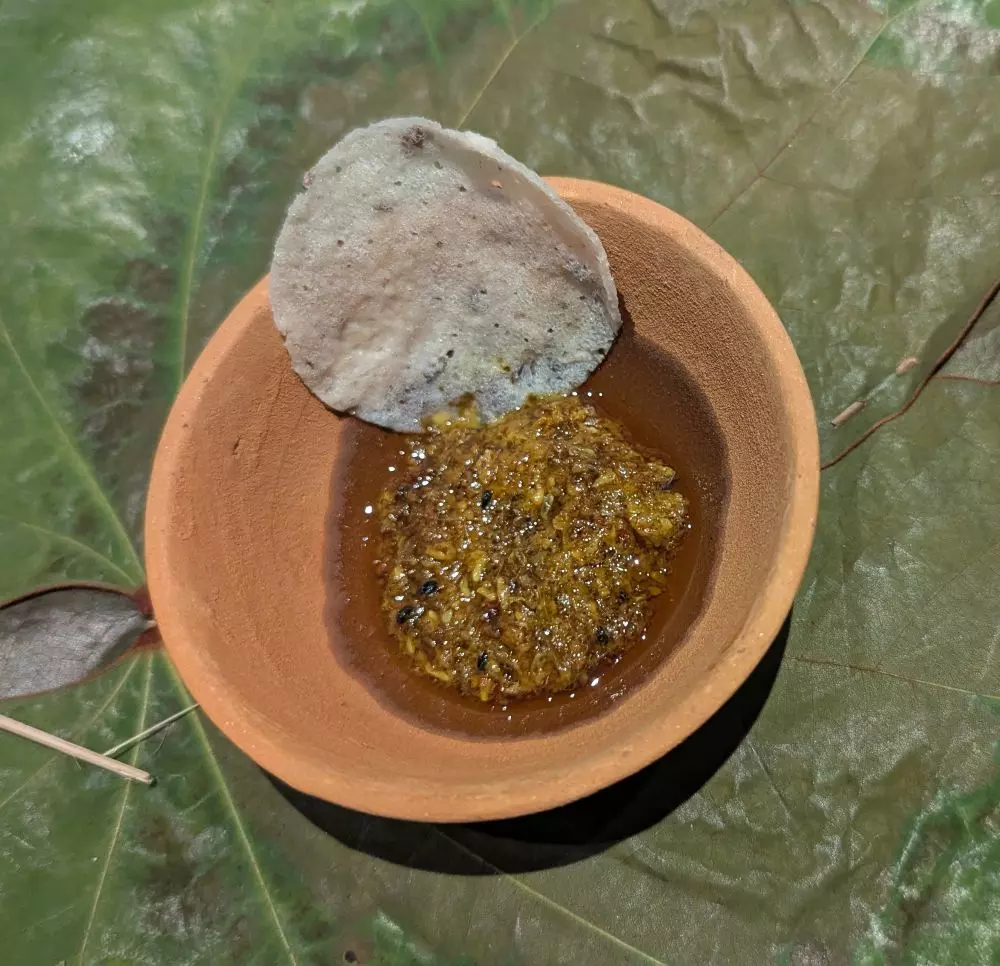
Red ant chutney. In India people of one region are known to be judgmental about those from another, with the prejudices extending to culinary habits. People from the Northeast have often been at the receiving end of such bias. Photo: Ayandrali Dutta
Raja Rymbai moved to Delhi from his native Shillong sometime in 2005-6, before shifting base to Italy in 2017 and from there to Finland in 2019. “When I moved out of India and settled in Europe, food often became one of the first sites of quiet racism,” recalls Rymbai, a ‘slow food’ activist and chef at the US Embassy in Finland. “Most European countries have a fixed idea about Indian food — what it should smell like, taste like and how much of it is acceptable. Finland is no different. It has created its own domesticated version of Indian cuisine, with supermarkets packed with sauces like ‘korma’. These versions are altered to suit local sensibilities, especially to minimise smell within shared living spaces,” he explains.
And so for migrants and diasporic communities, while on the one hand eating the food one grew up with becomes a way of preserving continuity, of asserting presence, history and belonging in unfamiliar spaces, when this practising is questioned, mocked, or stigmatised, when there is policing of what is ‘acceptable’ and in what amounts, food also becomes symbolic of race, ethnicity and difference. Slowly, immigrants learn to live with the knowledge that certain identities must be muted to be accepted.
When Rymbai first moved, he stayed in an apartment building largely occupied by elderly residents. “I cooked my everyday food — dal, sabzi, chicken, mutton — carefully so that nothing smelt too pungent. Still, I was met with disapproving stares and pointed comments from older neighbours, often expressed through gestures or language I could partially understand. The issue was always the smell. Over time, I realised this resistance is largely generational. Younger Finns tend to be far more open and curious about Indian flavours. It is the older generation, shaped by cultural homogeneity, that struggles to make space for difference,” he says.
Also read: Why in Tamil Nadu, Pongal celebrations unite Hindus and Muslims in common 'thanksgiving’
Even back home, however, food divides as often as it brings people together at the table. The censure Saikia faced came not from foreigners, but people from her own country. And it was not restricted to online trolling alone. “One painful instance of prejudice came from someone whom I had known since school, a classmate and close friend. When I invited her to a pop-up that I was hosting, she bluntly said she couldn’t tolerate the pungent smell of bamboo shoots [Lata used in her cooking] or my cuisine,” recalls the chef.
In India, with its vast cultural and culinary diversity, people of one region are often known to be judgmental about the appearances of and customs and practices followed by those from another, with the prejudices extending to culinary habits. People from the Northeast have repeatedly been at the receiving end of such bias.
A 2020 film, Axone, starring Sayani Gupta, Vinay Pathak and others, revolved around a group of migrants from the Northeast living in Delhi and their struggle to prepare Axone, a Naga dish known for its distinctive smell and taste, at the wedding of one of their friends. The sense of smell plays a significant role in shaping culinary interactions across urban India, where masalas and fermented foods are integral to many regional cuisines and naturally carry strong aromas.
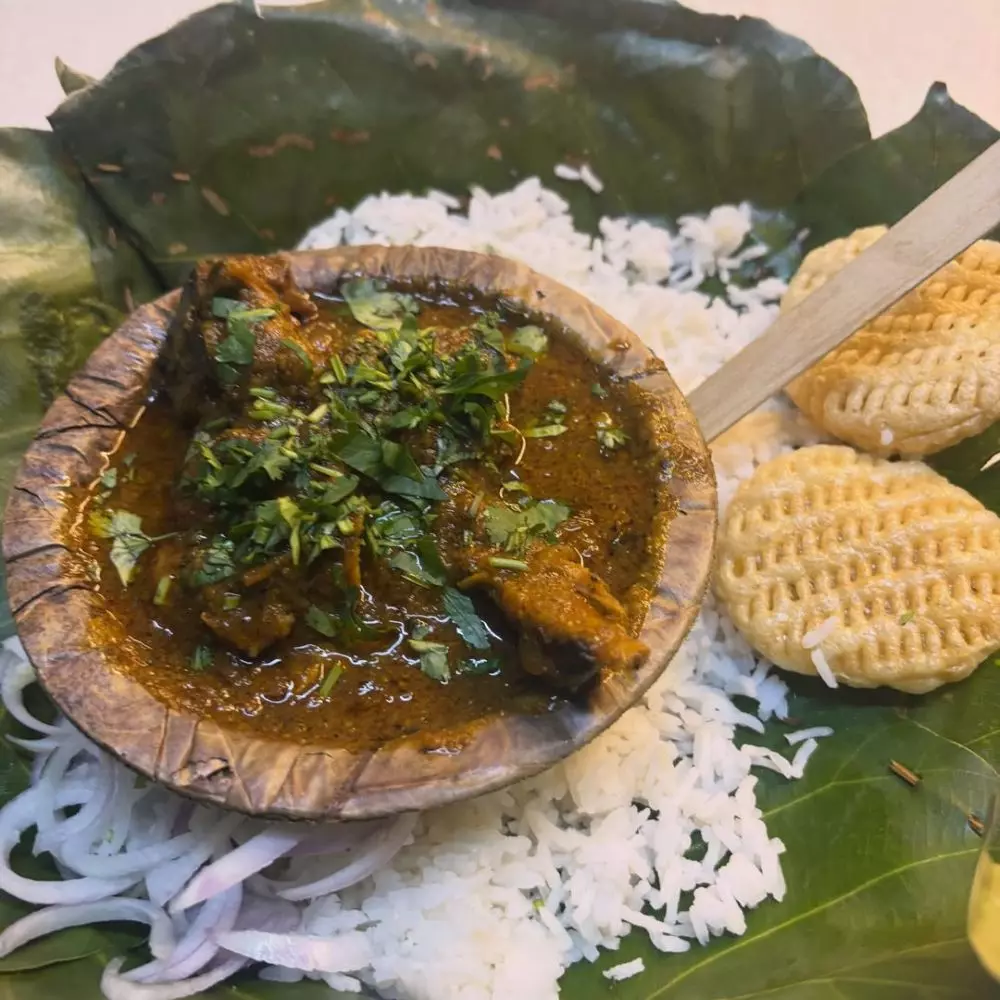
A plate of mutton curry. The most common and persistent divide, perhaps, is between vegetarian and non-vegetarian eaters. Especially with a vegetarian diet being increasingly associated with a more ‘satvik’ lifestyle. Photo: Ayandrali Dutta
The most common and persistent divide, perhaps, is between vegetarian and non-vegetarian eaters. Especially with a vegetarian diet being increasingly associated with a more ‘satvik’ lifestyle — symbolic of moral integrity and spiritual uplifting, rooted in traditional Hindu customs — those who prefer meat, or fish, find themselves being viewed through a prism of condescension, or at times, outright hostility.
“Owing to my work, I get many opportunities to try different cuisines, but somehow most people assume I am vegetarian because of my last name [she is from Madhya Pradesh], at times resulting in raised eyebrows when they discover otherwise. Sometimes I have also faced prejudice when surrounded by staunch vegetarians, and they judge me for choosing non-vegetarian food,” says Nivi Shrivastava, a food and travel writer.
Often, biases may exist within the same family, extending across generations, and rooted in gender and rituals.
“Growing up in a conservative joint family, I watched how food became a tool of control and adjustment,” says Joyadrita Raghavendran Chatterjee, a Bengali home chef settled in Chennai. “My ghoti grandmother was mocked for adding sugar to dishes and forced to adapt to others’ tastes.”
In Bengal, ghoti is a term used to refer to those with roots in West Bengal, while baangals are those from the erstwhile East Bengal, now Bangladesh. The food preferences of both vary greatly and ghotis are often said to prefer a sweeter flavour in their food.
Chatterjee adds: “With multiple widows in the household, meat was banned [traditionally Hindu widows were banned from eating non-vegetarian]; even fish was cooked outside [the kitchen] and followed by mandatory bathing. My baangal mother was shamed for eating fish and shutki [dried fish, a delicacy among baangals, but avoided by ghotis because of its strong smell], learning to hide her preferences.”
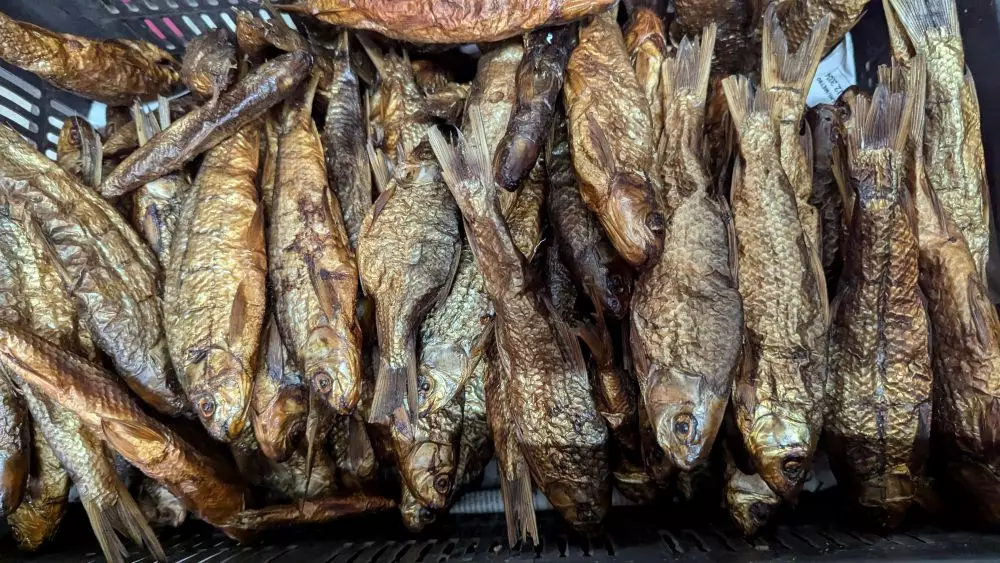
Dried fish being sold in market. A delicacy for many, it is avoided by others who complaint of its strong smell. Photo: Ayandrali Dutta
In a country as diverse as India, food cultures vary widely across Dalit and tribal communities across the country, shaped by region, ecology, and lived histories. Yet a common thread persists: the bias of mainstream, caste-dominant Indian society against Dalit and tribal food practices, often dismissed as “primitive”, or even looked down upon as “unclean”.
Dr Manisha Oraon, an expert in Jharkhand's tribal culinary traditions and co-founder of The Open Field, a sustainable supply chain for forest produce, has experienced this firsthand. “I am from Jharkhand and have always made sure that I showcase Jharkhand’s tribal cuisines on the table. During a fine-dining catering event, someone casually remarked, ‘So now we’re primitive, huh?’, suggesting that eating our food was a step back. We responded calmly, reminding them that they were experiencing a living tribal food heritage, not something to be dismissive of.”
Oraon adds: “On another occasion, our use of fermented ingredients — especially bamboo shoots — was described as ‘smelly’ and even nauseating, with the claim that such food did not align with their idea of Hindu tradition and should not be promoted. These were not critiques of taste but expressions of hierarchy and exclusion. They reflected discomfort with cultures that fall outside narrow definitions of refinement and purity. For us, these moments reaffirm why this work matters. One needs to understand that tribal food is memory, ecology, and identity — and dismissing it reveals prejudice, not inferiority.”
Also read: Globally recognised, why Kolkata’s kathi rolls continue to rule over the city’s heart
Unlike the rigid vegetarian–non-vegetarian divide, these labels do not merely describe taste or habit; they reinforce caste hierarchies. In the book ‘Beef, Brahmins and Broken Men,’ Kancha Ilaiah recollects the beef-themed food festivals organised by Dalit students at Osmania University, stating how narratives frame the public consumption of a particular type of meat as inherently anti-Indian and culturally subversive.
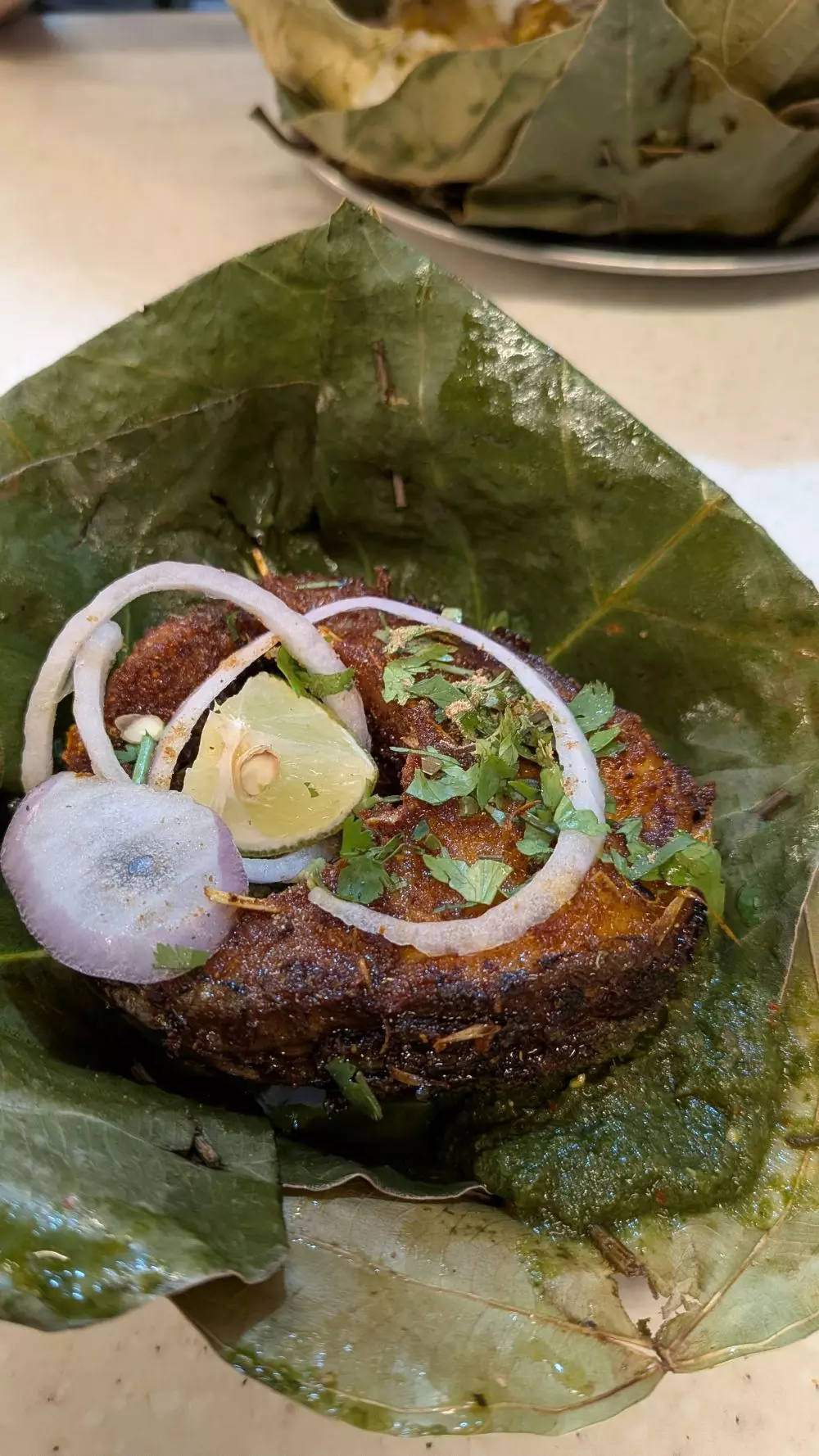
Dehati style fish fry. Mainstream, caste-dominant Indian society often displays a bias against Dalit and tribal food practices. Photo: Ayandrali Dutta
Often, Indians carry these biases beyond the nation’s borders with them.
Around 2019, Nikhil Merchant, co-founder Elevenses Hospitality and a food and beverages writer, was running a restaurant in Los Angeles, specialising in Indian cuisine. “I consciously chose not to serve British-Indian food — the kind most Americans, especially on the West Coast, are used to. Dishes like chicken tikka masala, vindaloo and overly spiced curries,” recalls Merchant, who returned to India in 2023.
Instead, he says, he focused on cooking Indian food the way it is meant to be — “layered, nuanced, and rooted in technique, lineage and respect for ingredients”.
Merchant adds: “While non-Indian diners largely appreciated this approach, the strongest resistance came from our own Indian community. Many felt the food was ‘not right’, ‘not punchy enough’, or ‘not spicy’, even for dishes like butter chicken, which is traditionally balanced, mildly sweet and rich rather than hot. I would say that rather than engage endlessly, I chose to stay true to my philosophy. The discrimination I faced wasn’t racial — it was cultural, driven by familiarity, nostalgia, and resistance to authenticity that challenged deeply ingrained habits.”
What we eat is inseparable from who we are: our histories, cultures and claims to space.
For generations, the kitchen has been witness to the power struggle between the women of the family. Similarly, the dining table — presided over by the patriarch of the house and often catering to his comfort and preferences — has never been a neutral territory. It is where power circulates, hierarchies are rehearsed and belonging is negotiated; the place where conversations take place and ideas about family, gender, social and political dynamics are shaped. Food, even as it nourishes the body, frames our beliefs, legitimising some tastes and denying others.