



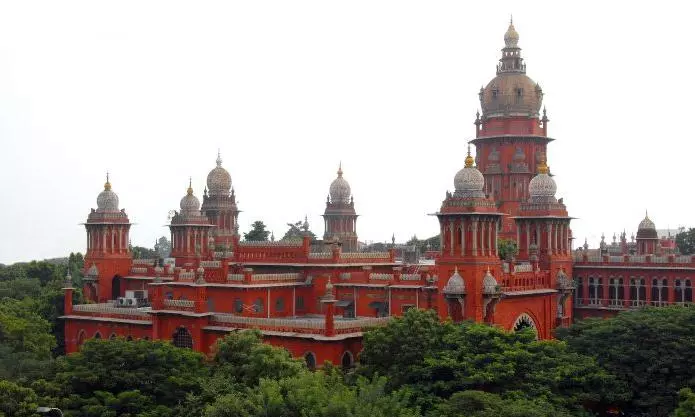
Madurai Kamaraj University: Madras HC orders CBI probe into graft charges
Slamming the anti-corruption wing for acting as a 'post office', the court seeks the federal inquiry into bribery, fake certificates, and a staffer’s unexplained wealth

The Madurai Bench of Madras High Court has asked for a Central Bureau of Investigation (CBI) probe into serious corruption charges at Madurai Kamaraj University (MKU), Tamil Nadu, highlighting alleged failures by the university administration and the state anti-corruption wing.
The ruling comes amid a public interest litigation filed by Venkatesan from Kulasekarankottai village near Vadipatti town in Madurai district, which has escalated scrutiny of the state’s higher education institutions.
Controversies not new for MKU
MKU is not new to irregularities, including those related to fake certificates issued via digital alterations in its ‘distance education’ wing, affecting over 500 students, as revealed by vigilance probes.
Also read: SC refuses to intervene with Madras HC order on Thirupparankundram Karthigai Deepam
Recent issues include alleged irregularities in PhD enrolment and mark manipulation in 2024, prompting government inquiries and court notices. The current case builds on this pattern, highlighting systemic lapses in addressing complaints. A university staffer named Gomathi, appointed compassionately as a junior writer in 2013, allegedly rose to the position of controller through influence-peddling with officials. Charges include illegal certificate issuance, document leaks, bribery for research admissions and affiliations, plus over Rs 35 lakh in UPI deposits to her account from April 2024 to July 2025, the purchase of a Rs 2 crore house in Gomathipuram-Vandiyur, and unauthorised loans exceeding Rs 2 crore to the staff members.
Post her “punishment” transfer to another department, she allegedly continued extorting PhD students and faculty in the maths department.
Also read: Board exam anxiety? A clinical psychologist's pointers for students, parents
Venkatesan filed complaints with the anti-corruption bureau in August 2025 on behalf of fearful students and staff, but received no action; an RTI revealed the complaint was forwarded uninvestigated to MKU. Despite anonymity requests, his identity was exposed, causing distress.
MKU's registrar dismissed it in January as having “no substance”, without a proper inquiry.
Justices Jayachandran and KK Ramakrishnan of the HC criticised the anti-corruption wing for acting as a “post office” by passing the complaint without preliminary verification, and MKU for shielding the accused.
They stressed universities’ accountability to future generations and ordered the CBI to probe fully, with the anti-corruption bureau transferring all documents to the central agency. The case underscores the need for impartial probes when local probing bodies falter.
MKU, established in 1966 as Madurai University, was renamed in 1978 in memory of former Tamil Nadu chief minister and Congress leader K Kamaraj, three years after his death.
Varsity professors complain
Senior professors at the university told The Federal that administrative negligence, unfilled vacancies, and syndicate member positions remaining vacant for 15 years have had a crippling effect on the university's operations. Audit reports clearly show that government funding due since 2007 has not been released until 2024, with dues escalating from Rs 7.74 crore in the 2007-08 academic year to Rs 300 crore now. They argued that had the government fulfilled its duty, the university would today flourish with over Rs 500 crore in funds.
Also read: Higher education at a crossroads: NEP, equity and UGC rules under scrutiny | Interview
Professor A Srinivasan, president of the MKU’s retired employees’ association, said, “Madurai Kamaraj University is one of the state-aided universities eligible for government funds, and 1,155 retirees here are severely affected. Rectifying this is no big task for the Tamil Nadu government — it requires just Rs 6 crore monthly, or Rs 72 crore annually. Since November 2021, we’ve been protesting continuously for nearly four-and-a-half years, relying on monthly agitations just to secure the next month's pension.”
When govt officials were accused of fraud
In 2024, the Madurai unit of the Directorate of Vigilance and Anti-Corruption (DVAC) registered a case alleging that four senior government officials committed fraud. They allegedly submitted fraudulent certificates claiming they had studied through the Tamil medium (PSTM or Persons Studied in Tamil Medium) to secure appointments in the Tamil Nadu government services via the Tamil Nadu Public Service Commission (TNPC) examination conducted in 2019.
Also read: Why in Bengal, govt-recognised madrasas aren’t isolated religious hubs as portrayed by BJP
Officials from MKU were named as accused in the case for allegedly issuing these certificates. The DVAC booked them (along with the four officials and three private individuals) under charges such as cheating, forgery, and provisions of the Prevention of Corruption Act, 1988.
This case came to light during a DVAC probe into 22 candidates who had used PSTM certificates from MKU for TNPSC Group-I appointments between 2012 and 2019 — four of them with fake certificates.The university's Directorate of Distance Education was specifically implicated in issuing the bogus Tamil-medium study certificates.
