The emotional cost of media fear-mongering over West Asia crisis
War reporting requires urgency, but also proportion; it demands clarity, accuracy, context; it demands awareness that audiences are families with real stakes

When Israeli and US forces began bombing Iran, the first thought in many Kerala homes was not about geopolitics. It was about the Gulf. In a state where almost every family has someone working in West Asia, the conflict instantly became personal. There would hardly be a journalist in Kerala who did not receive calls from anxious relatives asking about the situation in Dubai, Doha, Riyadh or Abu Dhabi.
Follow our Live updates on Day 4 of the West Asia conflict here
On Saturday (February 28) morning, I got a call from Jameela, who was my teacher in school. Her voice was shaking. She said television discussions were claiming that Palm Jumeirah in Dubai had been nearly “destroyed”. Channels were running visuals of fireballs, smoke and people running, with dramatic music in the background. Her son Jubin, his wife Sameera, and their three-year-old child live near that area. They were not answering their phones. She wanted to be sure they were safe.
The price of panic-driven reportage
It took another a couple of hours to reach Jubin. He was stuck in an emergency meeting at the construction corporation where he works, in the wake of the Iran attack. Sameera, a communications engineer, was tied up with internal protocol at her office as well. Contrary to what the TV channels were suggesting, they were safe, with only some additional safety and security protocols in place.
“Palm Jumeirah is intact. There was a drone strike somewhere, in a building nearby. From what we understand, the government had anticipated it and most people were evacuated. I am not aware of all the details and I cannot comment on casualties, but it is certainly not on the scale that our channels are portraying,” said Sameera.
Also read: Iran war graphics: Indian diaspora population in West Asia
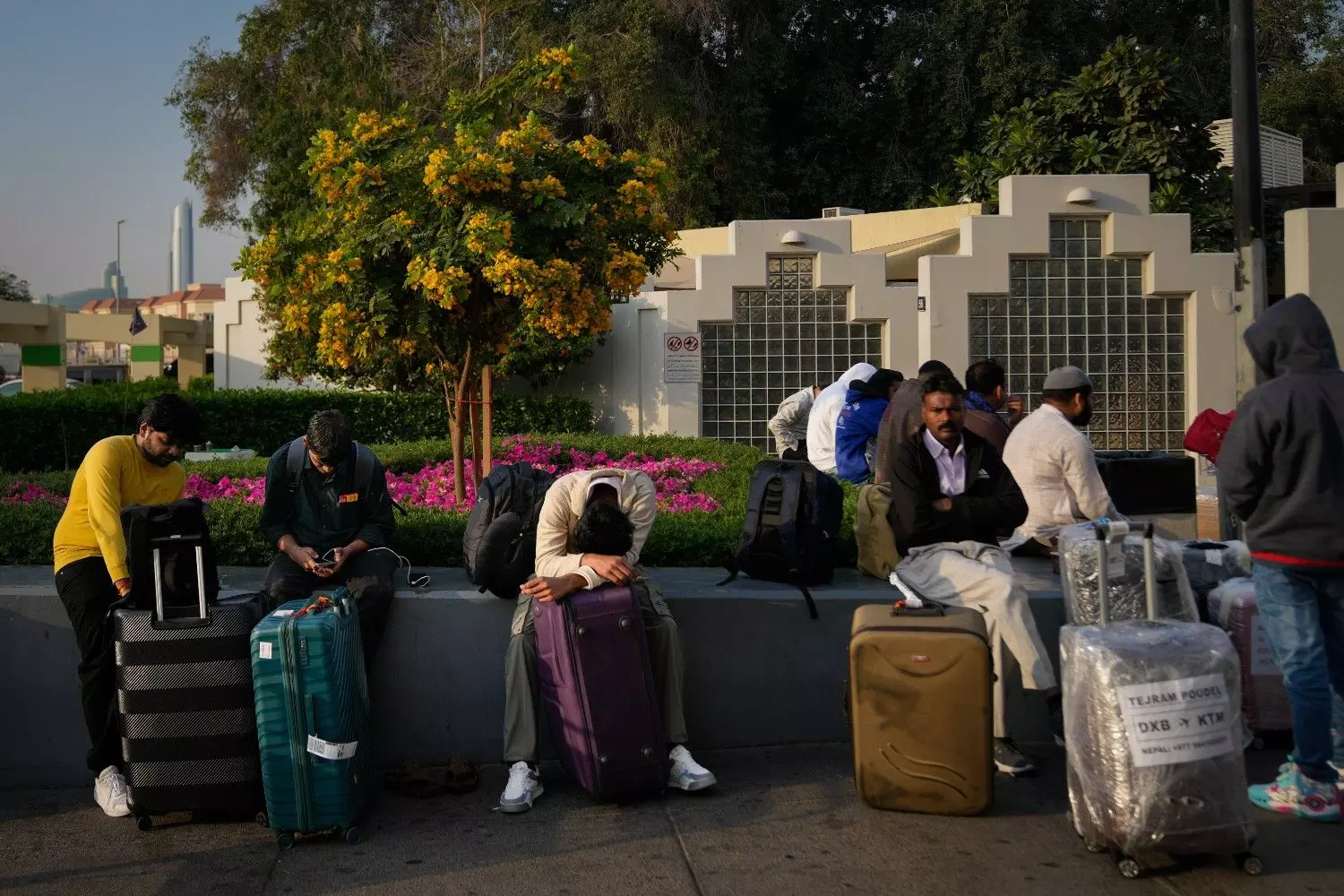
By the end of the day, Jameela was able to speak to them on a video call and even see her grandchild. But the fear she endured was immense. Stories like hers are no longer isolated. Panic-driven reportage, particularly on sections of Indian television news, is unsettling expatriates across the Gulf Cooperation Council countries.
Fear-mongering media reportage
Many say the relentless war-cry tone, complete with flashing graphics, countdown clocks and speculative missile maps, is amplifying fear far beyond the ground reality. For workers already dealing with visa regulations, documentation requirements and shifting travel advisories, this heightened narrative only adds another layer of stress. This near-war-mongering tone adopted by sections of Indian television and YouTube media is having a direct emotional impact on expatriates and their families back home.
Nisha Ratnamma, a journalist-turned-tutor based in the UAE, described what she witnessed over the weekend. “On Saturday evening, fear was everywhere. I could hear it in the voices of women around me, my own family and friends. They were talking about worst-case scenarios. The tone of some Malayalam channels was dramatic, almost like a war cry. It did not feel like information. It felt like panic.”
She says she had to intervene.
Also read: Limited UAE-India flights resume amid conflict, bringing relief to stranded passengers
“I literally asked them to switch to international news. We put on the BBC, Al Jazeera and CNN. The difference in tone was immediate. It was calmer, more measured. They were reporting verified developments without theatrics. We are fortunate that we have not lived through war in recent decades. Maybe that is why seasoned war reporting is still rare in our context. But in moments like this, responsible language matters as much as speed.”
Newsroom culture here and there
In Doha, Anil Anand, a senior broadcast technician working with an international news organisation, pointed to the structural differences in newsroom culture.
“Even before this war, the media here never followed the kind of sensational reporting style we often see in Indian television. Whether it is print or television, they have not dramatized or exaggerated news. That approach has remained the same during this conflict. There has been no sudden shift in tone.”
“When news broke about Iran’s Supreme Leader Ali Khamenei being killed, Reuters flashed it as breaking news. We did not run it immediately. It took almost an hour before we carried it. We verified it independently through our own reporters and sources. I experienced this firsthand during my duty hours. There is no visible competition here to break news first. Publishing unverified information can invite serious legal consequences,” said Anil.
Avoiding sensationalism
He also pointed to coverage of incidents that could have easily been sensationalised.
“When there were concerns about Qatar’s LNG production facilities, it was potentially a serious development because that supply chain affects multiple countries, including India. In another media ecosystem, that could have triggered dramatic coverage. Here, it was handled in a measured way. Only verified information was presented calmly and clearly. There was no sensationalism.”
Also read: Strait of Hormuz gridlock: India braces for energy shock as global oil flows freeze
For expatriates like Noufal Memadan, who works in the hospitality sector in Doha, the most overwhelming part of the crisis has been the reaction from Kerala.
“In the last few days I have received more than 70 calls and messages from friends and relatives. They say that when they watch Malayalam channels, they get no peace of mind. Some channels are amplifying isolated visuals, like smoke from falling debris, and presenting it as if the entire region is under continuous bombardment.”
Gap between perception and reality
Noufal said the gap between perception and reality is wide.
“The truth is that people in Kerala seem far more frightened than we are here in Qatar. We understand the ground reality. International media outlets report developments with seriousness and restraint. They present the status clearly without dramatization. But some regional media back home create an impression that bombs are falling 24 hours a day. That narrative is misleading and deeply distressing for families.”
Noufal said relatives have even urged him to return home immediately.
“They do not always understand that airport closures are preventive safety measures. Once the situation stabilises, operations will resume. This is unlikely to be a prolonged conflict here. We are going to work in the morning and returning home in the evening. Life is cautious, but it is not collapsing,” he said.
Two extremes
There is also a broader media debate at play. A senior international journalist now stationed in Dubai offered a more layered view of the Gulf coverage.
Also read: How Iran war will stoke inflation, even if oil supplies do not dry up
“In war situations, when people need to follow government directives strictly, this model of reporting works. Media here largely sticks to official sources and verified information. That reduces panic. At the same time, this is not a fully democratic media ecosystem in the Western sense. The idea of speaking truth to power is different. So the restraint you see comes with its own structural limits.”
The contrast highlights two extremes. On one side is a tightly controlled, verification-driven model that prioritises stability. On the other is a hyper-competitive television culture where breaking news banners, studio debates and dramatic visuals often dominate.
The Kerala story
In Kerala, where remittances from the Gulf underpin household economies, media tone has real consequences. Elderly parents, unfamiliar with how ratings and digital algorithms work, take visuals at face value. A looping clip of flames can become evidence of widespread devastation. A speculative studio discussion can sound like confirmed fact.
The emotional cost is borne quietly in living rooms. Mothers call sons and daughters repeatedly. Wives stay awake through the night. Children overhear adults whispering about evacuation. For expatriates, workdays are interrupted by the need to reassure family members that they are safe.
Also read: Iran war: PV Sindhu back home from Dubai; All England missed
War reporting requires urgency, but it also requires proportion. It demands clarity about what is confirmed and what is not. It demands geographical accuracy and contextual explanation. Above all, it demands awareness that audiences are not abstract numbers. They are families with real stakes.
Jameela’s trembling voice is a reminder of that. Her panic did not come from a missile strike. It came from a television screen. In a state so deeply connected to the Gulf, sensational war coverage does not remain within studio walls. It travels across oceans and settles in homes, shaping fear in ways that are impossible to ignore.