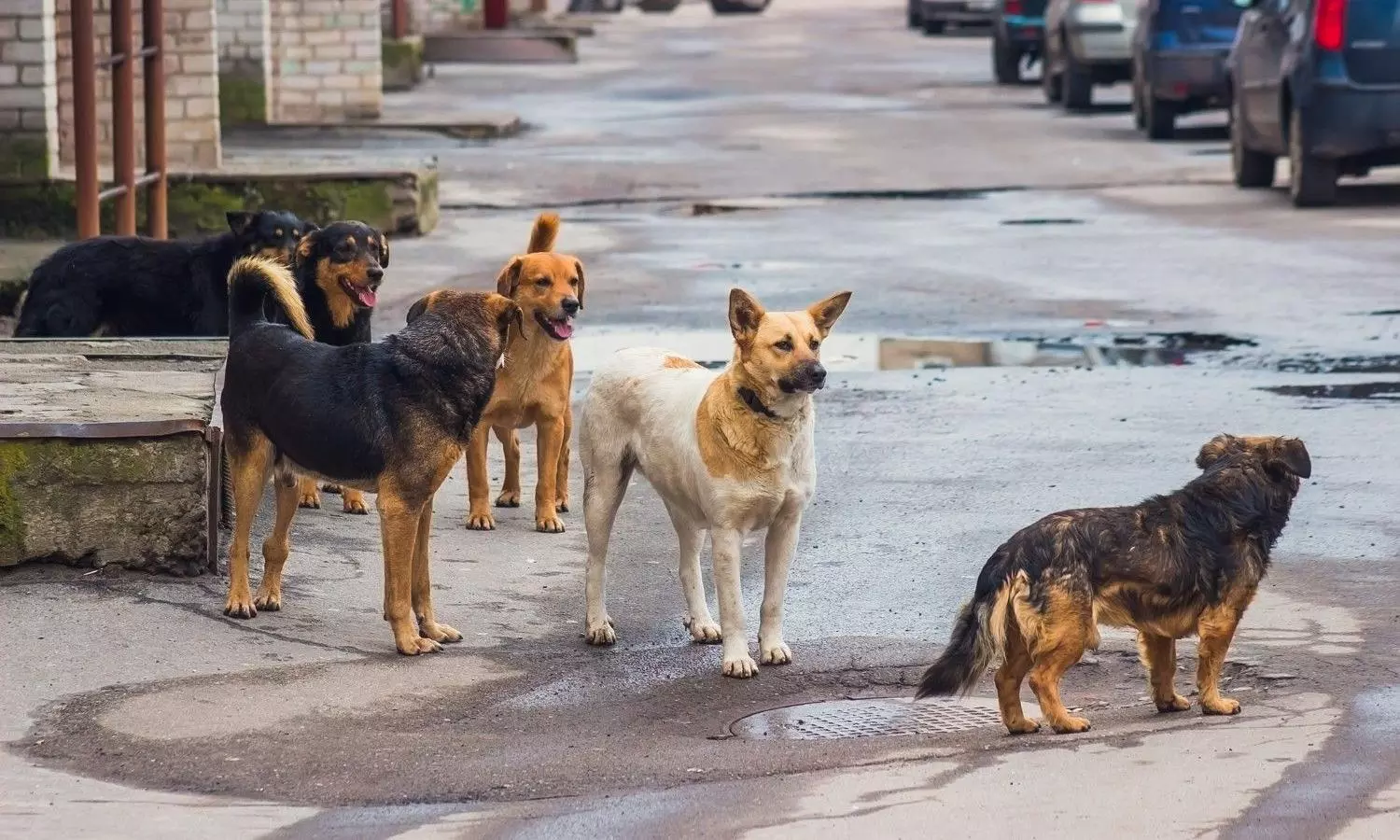
Kerala: LDF poll promise of stray dog shelters faces land-crunch challenge
Local bodies will find it tough to implement SC order to shelter stray dogs due to scarcity of land in a state with high population density and limited resources

The LDF’s manifesto for the Kerala local body elections makes a pointed promise on the stray dog menace in the state.
“The current crisis stems from the Union government’s stray dog protection law, which requires sterilised dogs to be released back to the same spot. With the Supreme Court now directing that stray dogs must not be released but housed in shelters, the LDF pledges to set up shelters in every local body with the help of voluntary organisations” reads the manifesto.
Scarcity of land
However, the promise appears difficult to realise.
For years, the state government has been trying to find a workable middle path between controlling the growing stray dog menace and avoiding a backlash from the state’s influential animal rights groups. Every attempt at stricter measures has triggered protests, while public pressure has increased over rising bite cases and rabies deaths, leaving the government caught between two firmly-opposing sides.
Also Read: SC directs stray dogs be moved from institutional areas to designated shelters
The main roadblock before local bodies will be finding land for dog shelters in every district, let alone in every panchayat. Animal Welfare Minister J Chinchurani has already admitted the scale of the problem, telling the media that “identifying land for dog shelters in every district is extremely difficult in a state like Kerala.”
Mobile ABC units
As a practical alternative, the Local Self Government Department announced in July that it would introduce mobile and portable ABC units across all 152 blocks in the state, a model that avoids permanent land acquisition but still allows sterilisation and vaccination programmes to continue.
“Kerala’s high population density makes it difficult to find land for shelters. Some regions have already opposed building ABC centres or shelters. The state requires more practical directions suited to its geographic and demographic realities” says MB Rajesh, Minister for Local Self-Government.
Also Read: 'Country’s image at stake’: SC raps states over stray dog case
This is where the LDF’s election promise gains significance and raises serious questions about its practical feasibility.
“We understand how complex this situation is, and it needs wider discussion that takes into account both the vulnerability of the general public and the concerns of animal lovers. The LDF is taking this seriously, and we hope to arrive at a workable solution, including steps like a mass vaccination drive for schoolchildren along with strengthened dog control measures,” said a senior LDF leader who is part of the government.
Vaccination
Local self-governments are responsible for nearly 80 per cent of stray dog management, including animal birth control (ABC) centres and shelters. At present, 19 ABC centres, launched to control rising stray dog population, operate in the state. Between September 2025 and now, 53,401 dogs have been vaccinated. Thiruvananthapuram Corporation reported the highest number of vaccinations. According to department figures, 9,736 dogs have been sterilised this financial year.
However, as per the 2019–20 Livestock Census, Kerala had 2,89,986 stray dogs (no post-2020 data is available). This shows that only a small fraction of the dog population has been sterilised or vaccinated.
Steady rise in rabies infections
Government data shows a steady rise in rabies infections as well.
In an affidavit filed in the High Court, TV Anupama, Special Secretary, Local Self-Government Department, stated that rabies infections increased sharply between August 2024 and July 2025. The government informed the court that 3.63 lakh dog-bite cases were reported, of which 99,323 (32 per cent) involved stray dogs.
Also Read: SC order on stray dogs: Key points you should know
In the first seven months of 2025, Kerala recorded 23 rabies deaths and 11 of these victims had been bitten by stray dogs. Health department records show that 22 people died of rabies in 2024, 17 in 2023, and 15 in 2022, after being bitten by stray dogs.
SC order
The Supreme Court order dated 7 November 2025, mandates that stray dogs and other animals wandering around educational institutions, hospitals, bus stands, railway stations, and sports complexes must be immediately captured and moved to shelters. The objective is to create a unified and rational system to address the rising number of rabies deaths.
The order has drawn sharp criticism from animal rights activists. Several organisations are preparing to approach the Court with review or curative petitions and are even calling for the matter to be placed before a larger bench.
Need for law allowing culling
However, critics argue that India continues to face a major challenge of the lack of a law permitting controlled culling to curb the rising stray dog population. Under the existing ABC rules, killing animals is prohibited, leading to an abnormal increase in the number of free-roaming animals on public roads, posing an ongoing threat to public safety.
Also Read: Our streets are meant for walking, not for dogs
The Supreme Court too, in its order, noted that most deaths caused by animal attacks in India result from rabies. It relied on scientific studies conducted by the World Health Organisation and the National Centre for Disease Control. Over 90 per cent of human rabies cases are caused by pet dogs or stray dogs, the court said, faulting authorities for negligence.
‘The most vulnerable groups’
Children, the elderly, and economically-weaker sections are the most vulnerable groups, the court observed. Citing instances of foreign tourists being attacked by stray dogs, the court added that this has also affected India’s global image. It also criticised the poor implementation of the 2023 Animal Birth Control Rules across the country.
Until now, stray dog management in India functioned under the ABC rules, which mandated that captured dogs be sterilised, vaccinated, and returned to the same locality (Capture–Sterilise–Vaccinate–Return or CSVR). Under the new direction, however, captured cattle and other stray animals must be kept in proper shelters or gaushalas after sterilisation and vaccination.
Also Read: Animal welfare should be guided by reason, not emotion: Activist Muralidharan
The court emphasised that adequate food, water, and care must be ensured as required under the Prevention of Cruelty to Animals Act, 1960, and the Animal Birth Control Act, 2023. Chief Secretaries of states will be responsible for compliance.
The challenge
With limited shelters and ABC centres currently available, the local self-government department faces the major challenge of accommodating lakhs of dogs permanently. The department also maintains that appointing trained dog catchers and veterinarians within eight weeks is not feasible. Animal welfare organisations too fear that existing shelters are insufficient to house India’s millions of stray dogs.
Animal welfare groups argue that dogs are territorial animals and do not live in large groups, making mass sheltering impractical. They say that creating small enclosures for thousands of dogs is unworkable in a state with limited land.
Ball in Centre’s court
The Local Self-Government Department considers scientific, legally-regulated culling the most effective long-term solution to control the stray dog population. In July, the government decided that sick stray dogs could be euthanised humanely, based on certification by a veterinary expert. This decision, taken at a meeting of ministers of the animal welfare and local self-government departments, gave local bodies permission to carry out mercy killing in compliance with central rules.
However, the Kerala High Court stayed this decision, stating that the Prevention of Cruelty to Animals Act does not permit such a measure. Neither the animal welfare department nor the local self-government department currently has the authority to legislate on this matter.
Also Read: Why PETA, animal activists are protesting SC order to 'cage' stray dogs
“No proposal for law-making on this issue has yet been submitted to the commission. Since the matter falls under the concurrent list and is linked to the Wildlife Act, the state government cannot independently frame a policy. The Union government must also take a decision. Unscientific protests against law-making in this area are also contributing to delays,” says K Sasidharan Nair, vice-chairman of the State Law Commission.
While the Supreme Court’s order is aimed at ensuring public safety, states like Kerala face major practical challenges in implementing its directives. In this context, the LDF’s manifesto promise becomes significant because it at least opens the door for a wider conversation and pushes the issue into the policy space. This could eventually lead to a solution acceptable to all stakeholders, including ordinary citizens, who remain the most vulnerable and are often the ones bitten by stray dogs on the streets.