Blackstone in Kerala healthcare: Why global investment giant’s hospital push matters
As Blackstone expands its hospital network in India, Kerala’s healthcare ecosystem faces a growing tension between infrastructure expansion and the financialisation of healthcare

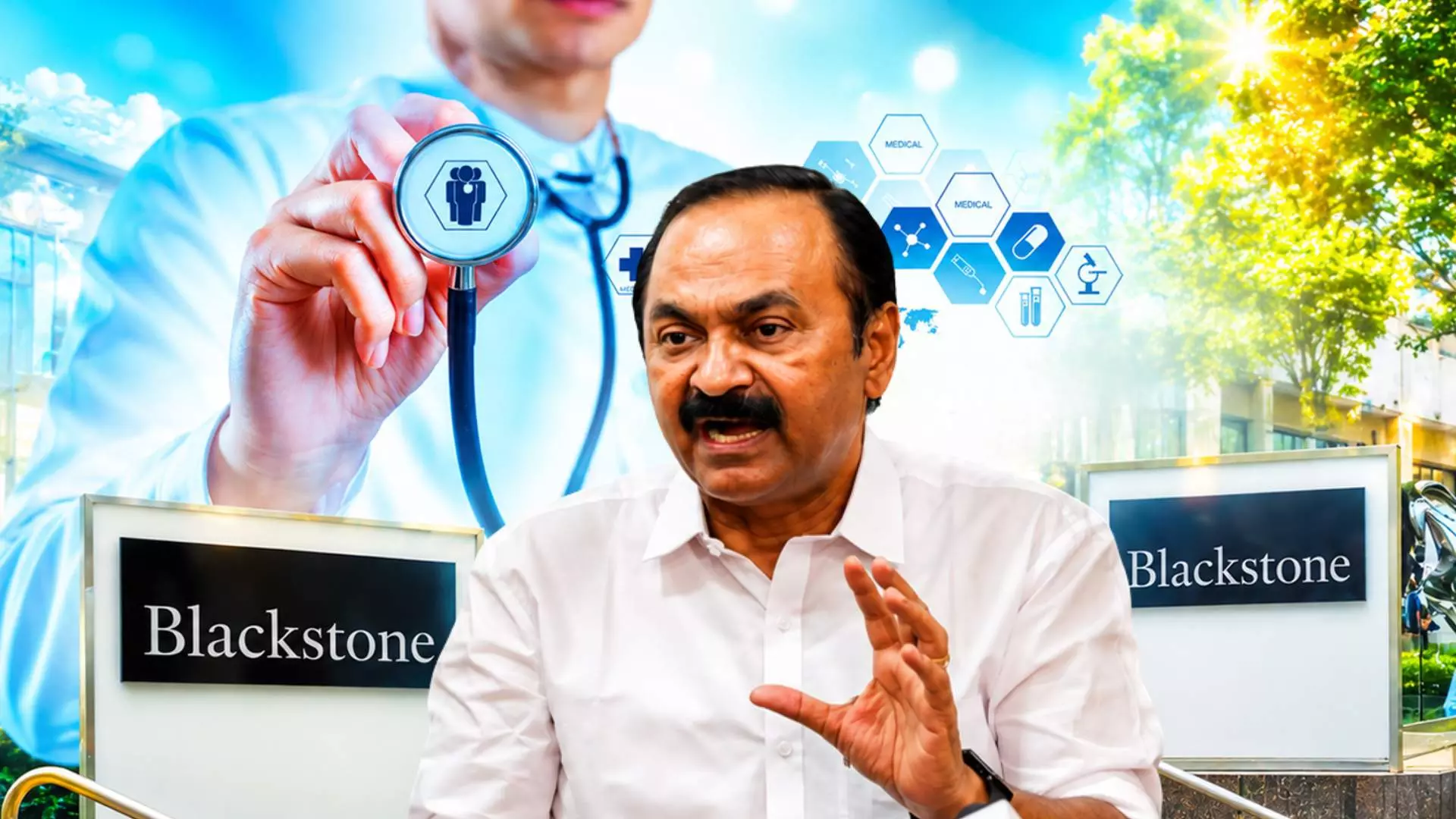
Blackstone has quietly become one of the biggest names in Kerala's private healthcare sector. Through its acquisition of Quality Care India and KIMSHEALTH, and its proposed merger with Aster DM Healthcare, the American investment giant is steadily expanding its influence in one of India's strongest healthcare markets.
Also read: Welfare state to market reforms? Kerala white paper signals economic shift
While supporters see this as a vote of confidence in Kerala's healthcare ecosystem, critics argue that it raises important questions about corporate ownership, affordability and the future of patient care.
Large investments in Kerala's healthcare sector would ordinarily be welcomed. Hospitals require continuous capital to expand infrastructure, introduce new technology, increase bed capacity and improve specialised medical services. However, when that investment comes from one of the world's largest private equity firms, the conversation extends beyond its sheer size. It also raises questions about who ultimately shapes the future of healthcare.
Blackstone's rise
Over the past few years, Blackstone has emerged as one of the most influential investors in India's healthcare sector. Through Quality Care India and its acquisition of KIMSHEALTH, one of Kerala's largest hospital networks, the firm has secured a major presence in the state's private healthcare landscape.
Also read: Kerala's famed healthcare model becomes election flashpoint
Its influence is expected to grow further through the merger of Quality Care India and Aster DM Healthcare, which would create one of India's largest hospital groups under the proposed name Aster DM Quality Care Limited.
The merged entity would bring together Aster DM, CARE Hospitals, KIMSHEALTH and Evercare, with more than 10,000 beds across 38 hospitals in 27 cities. The merger has already received approval from the Competition Commission of India.
The question is no longer whether Blackstone has entered Kerala's healthcare sector. It already has.
The larger question is what this means for a state that has long been recognised for its strong public health system.
Investment giant
Founded in New York in 1985, Blackstone today manages assets worth well over one trillion dollars. Its investments span real estate, infrastructure, financial services, technology, data centres and healthcare.
It is not a hospital operator in the traditional sense. Nor is Blackstone a healthcare charity. It is a global investment firm whose primary responsibility is to generate returns for investors.
That distinction is significant because healthcare differs from most other industries. While profitability is an important consideration for any business, healthcare also involves affordability, accessibility and public welfare.
Two perspectives
Supporters of private investment argue that large pools of capital are essential for modern healthcare. Advanced medical equipment, digital technologies and specialised treatment facilities require enormous investment, and private equity can help hospitals expand faster while improving infrastructure.
There is merit to this argument. However, concerns have also emerged globally about the growing role of private equity in essential public services.
Also read: Budget 2026-27: Biopharma gets big boost, public health left behind
Blackstone itself has faced criticism in sectors such as housing, where activists, researchers and even United Nations officials have questioned the financialisation of residential properties and aggressive rent practices.
Healthcare is clearly different from housing. But the broader concern remains similar.
What happens when services that directly affect people's lives increasingly operate according to investment logic?
Kerala market
Kerala represents one of India's most attractive healthcare markets. The state has among the country's highest life expectancies, an ageing population and rising cases of lifestyle diseases. Demand for advanced medical treatment continues to grow steadily.
Another important factor is healthcare spending. Government data consistently shows that Kerala has among the highest levels of out-of-pocket health expenditure in India, meaning residents spend significant amounts of their own money on medical treatment rather than relying entirely on public healthcare.
For investors, this represents a growing market opportunity. Blackstone is not the only global investment firm to recognise this trend. Foreign investment has been flowing into Kerala's private hospital sector at an unprecedented pace.
Public interest
This raises a larger question. Is Kerala attracting investment because of its globally respected healthcare model, or is it increasingly becoming a profitable healthcare market?
The answer may lie somewhere between the two. Private investment is not inherently negative. It can improve efficiency, increase hospital capacity and introduce world-class medical infrastructure.
At the same time, healthcare cannot be viewed purely as a commercial business. A patient is not simply a customer. A hospital is not simply a business. And public health cannot be left entirely to market forces.
Also read: Why BJP is on the brink of losing its only Kerala civic body
That is why regulation becomes especially important. As global capital expands its role in Kerala's healthcare sector, governments and regulators face the challenge of ensuring that investment benefits patients as well as investors.
Kerala's healthcare success was built over decades through strong public investment, community health programmes and an extensive primary healthcare network. The arrival of Blackstone marks a significant new chapter.
Whether it ultimately strengthens healthcare delivery or accelerates its commercialisation will depend not only on the company's investment strategy but also on the regulatory safeguards and public policy choices that Kerala puts in place.
The content above has been transcribed from video using a fine-tuned AI model. To ensure accuracy, quality, and editorial integrity, we employ a Human-In-The-Loop (HITL) process. While AI assists in creating the initial draft, our experienced editorial team carefully reviews, edits, and refines the content before publication. At The Federal, we combine the efficiency of AI with the expertise of human editors to deliver reliable and insightful journalism.