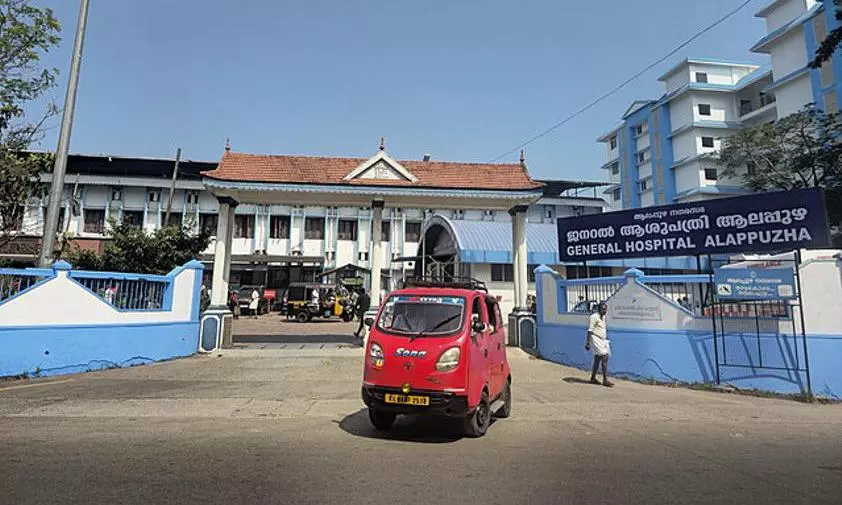
Kerala has long been known for its strong public healthcare network that relies on primary health centres and govt hospitals at secondary and tertiary levels rather than an insurance-driven system dominated by private hospitals. Representative image: Wikimedia Commons
Congress vs Left: Kerala's famed healthcare model is now an election flashpoint
Rahul's ₹25 lakh health promise triggers debate; Left warns of private sector takeover

A political debate over the future of Kerala’s healthcare model has been triggered by the election promise of Rs 25 lakh health insurance announced by Congress leader Rahul Gandhi. The proposal, which the United Democratic Front says will ensure comprehensive medical coverage for families in the state, has drawn sharp criticism from the ruling Left Democratic Front.
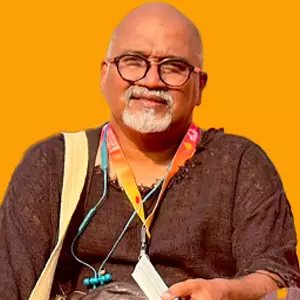
The sharpest response has come from senior CPI(M) leader and former finance minister Thomas Isaac, who argues that the proposal could weaken Kerala’s long-established public healthcare framework. Isaac’s criticism has placed the debate over health insurance at the centre of the state’s political discourse, with both fronts presenting sharply different visions of how healthcare should be financed and delivered in Kerala.
For a very high coverage that is needed by only about one percent of patients, the state will have to pay enormous insurance premiums. This is sheer extravagance
Kerala has long been known for its strong public healthcare network that relies on primary health centres and government hospitals at secondary and tertiary levels rather than an insurance-driven system dominated by private hospitals. The Left government argues that this model has ensured relatively affordable access to healthcare for large sections of the population and prevented the excessive dependence on private hospitals seen in many other states.
Isaac’s criticism of Congress proposal
Thomas Isaac argues the Congress proposal risks pushing Kerala towards an insurance-based healthcare system that relies heavily on private players. In a detailed social media post responding to Rahul Gandhi’s announcement, he said the promise reflects a lack of understanding of the state’s healthcare structure.
“Rahul Gandhi’s guarantee to Kerala is that he will dismantle our world-renowned public healthcare system. His guarantee is health insurance coverage of Rs 25 lakh,” Isaac wrote.
He argued that most medical treatments in Kerala cost far below the level of coverage being promised and therefore such a scheme would result in the government paying massive premiums for coverage that only a small fraction of patients would actually require.
Also Read: Rahul Gandhi announces 5 guarantee schemes if UDF comes to power in Kerala
Citing health sector data from the state, Isaac said that if corporate luxury hospitals are excluded, around 99 per cent of treatments cost less than Rs 5 lakh. According to him, heart surgeries generally cost between Rs 1.5 lakh and Rs 3.5 lakh while cancer treatment ranges from Rs 2 lakh to Rs 4 lakh. Only a small number of cases such as organ transplantation require expenses above Rs 5 lakh.
“For a very high coverage that is needed by only about one percent of patients, the state will have to pay enormous insurance premiums. This is sheer extravagance,” he said, arguing that a targeted scheme for such high-cost cases would be more practical.
Isaac also warned that a large-scale insurance scheme would divert public funds toward private hospitals rather than strengthening the government healthcare system. Kerala’s health model, he said, has historically focused on providing care through public hospitals in a manner similar to the National Health Service in the United Kingdom.
Long-running ideological debate
His comments have revived a long-running ideological debate in Kerala about the role of insurance and private hospitals in the healthcare system. While the Left argues that public healthcare should remain the backbone of the system, the Congress-led United Democratic Front believes that a stronger insurance mechanism involving private hospitals is necessary to ensure wider access and financial protection.
Also Read: Is Kerala's celebrated healthcare model weakening? Doctor's post sparks debate
The Congress says Rahul Gandhi’s announcement is not a sudden poll promise but is based on the recommendations of a health commission constituted by the United Democratic Front last year. The commission submitted its report last month after examining the challenges faced by the state’s healthcare system.
Congress’s health commission report
The report signals a healthcare approach that places private hospitals at the centre of an expanded insurance-driven system. It argues that Kerala’s current public insurance architecture has weakened provider participation due to delayed reimbursements, underpriced treatment packages, and mounting payment arrears.
The Oommen Chandy Health Insurance Scheme, which will provide treatment coverage of up to Rs 25 lakh for every family, will become a major milestone in the history of social welfare schemes in Kerala
According to the report, several private hospitals empanelled under public health schemes have either discouraged patients from seeking treatment or have stopped admitting beneficiaries altogether because of payment delays and low reimbursement rates. The commission says timely payments and realistic treatment packages are essential to sustaining a mixed public-private healthcare network.
Also Read: Kerala beats US in infant mortality, but home births pose ‘last mile’ challenge
At the same time, it argues that greater private sector participation must be accompanied by stronger regulatory oversight to prevent excessive billing and ensure transparency.
Another concern highlighted in the report is the limited financial protection currently available to many families. Despite Kerala’s relatively strong public health system, the report says out-of-pocket spending on healthcare remains high for several households.
Taken together, the report makes the political case for expanding insurance coverage, strengthening financial risk pooling, and ensuring a regulated but central role for private healthcare providers within the state’s health system.
Congress defends proposal
Senior Congress leader Ramesh Chennithala defended the proposal and said the scheme would mark a major expansion of welfare protections in the state.
“The Oommen Chandy Health Insurance Scheme, which will provide treatment coverage of up to Rs 25 lakh for every family, will become a major milestone in the history of social welfare schemes in Kerala. The objective of this scheme is to ensure quality medical treatment for every family in Kerala without financial burden,” he said.
Also Read: Family clinics to swanky super speciality hospitals, the story of Kerala’s healthcare
The Congress has named the proposed programme after former chief minister Oommen Chandy, presenting it as a continuation of the welfare legacy associated with his tenure. Party leaders say the scheme would ensure that no family is forced into debt due to medical expenses while also enabling patients to access treatment in both public and private hospitals.
Kerala’s hybrid system
However, the Left government maintains that Kerala already operates a hybrid system that balances public healthcare with targeted insurance support. The state’s Karunya Arogya Suraksha Padhathi which could be translated as “compassionate health security scheme” currently provides free treatment coverage of up to Rs 5 lakh to millions of families, with government hospitals playing a major role in delivering services.
Left leaders argue that expanding insurance coverage to extremely high levels would primarily benefit large private hospitals and insurance companies while putting a massive financial burden on the state exchequer.
The Kerala Studies 2.0 conducted by the Kerala Sasthra Sahitya Parishad in 2025, widely regarded as the state’s largest door-to-door social survey, highlights the continuing relevance of Kerala’s public health system even as healthcare costs rise. The survey also notes that the inpatient rate among lower and lower middle-income groups has increased in public hospitals, while higher income groups remain more inclined towards private facilities.
Also Read: Veena George alleges UDF maligning Kerala healthcare system
Researchers say the growing number of people turning to government hospitals reflects the impact of sustained government intervention and improvements in public health infrastructure. The findings are often cited by the Left to argue that this trend could weaken if healthcare policy shifts heavily towards large insurance-based systems that depend primarily on private sector hospitals.
‘How will UDF fund it?’
Left leaders argue that expanding insurance coverage to extremely high levels would primarily benefit large private hospitals and insurance companies while putting a massive financial burden on the state exchequer.
Isaac has also questioned how such a scheme would be funded, estimating that providing Rs 25 lakh insurance coverage to all families could cost tens of thousands of crores annually.
The broader debate
The debate therefore goes beyond the details of a single welfare scheme and touches on the larger question of what direction Kerala’s healthcare system should take in the coming years. One approach emphasises strengthening public hospitals and limiting reliance on insurance-driven private care. The other argues for a broader insurance framework that integrates private hospitals more deeply into the state’s healthcare delivery system.
Also Read: Amid COVID war, how Kerala quickly swung to fight Nipah virus battle
With the assembly elections approaching, healthcare policy has once again become a central political issue in Kerala. Rahul Gandhi’s promise has effectively set the stage for a larger contest over competing visions of the state’s celebrated health model and how it should evolve to meet new challenges in the years ahead.