The budget does not outline specific allocations or policy measures for strengthening primary health centres, community health centres, or preventive healthcare programmes. iStock
Budget 2026-27: Biopharma gets big boost, public health left behind
Government prioritises biopharma, medical tourism, and traditional medicine but experts caution that sidelining primary healthcare may widen inequities

The Union Budget 2026–27 presents a healthcare strategy that prioritises pharmaceutical manufacturing, medical tourism, workforce skilling, and traditional medicine.
While the government has announced a series of institutional and capacity-building measures, medical professionals and public health experts have raised concerns that the budget underplays the importance of primary healthcare and public health infrastructure, which form the backbone of India’s healthcare system.
Global biopharma hub
The central health sector announcement in the budget is the Biopharma SHAKTI (Strategy for Healthcare Advancement through Knowledge, Technology and Innovation) initiative, with an outlay of ₹10,000 crore spread over five years.
The programme is designed to strengthen domestic manufacturing of biologics and biosimilars, reflecting the government’s assessment that India’s disease profile is increasingly dominated by non-communicable diseases such as diabetes, cancer, and autoimmune disorders. By focusing on high-end pharmaceutical production, the government aims to position India as a competitive global biopharma hub.
To support this ambition, the budget proposes the establishment of three new National Institutes of Pharmaceutical Education and Research (NIPERs) and the upgradation of seven existing institutions.
Also read: Budget 2026: FM announces AYUSH push, new Ayurveda institutes
It also outlines plans to create a network of more than 1,000 accredited clinical trial sites across the country and to strengthen the Central Drugs Standard Control Organisation (CDSCO) through a dedicated scientific review cadre aligned with global regulatory standards. These measures collectively signal a push to improve research capacity, regulatory efficiency, and international credibility in drug development.
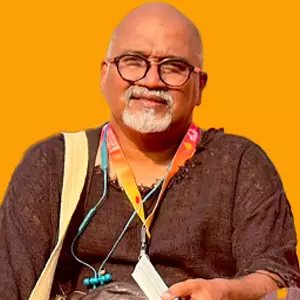
However, this emphasis has attracted criticism from sections of the medical fraternity. Former Indian Medical Association (IMA) national president Dr Ravi Wankhedkar described the budget’s health provisions as “disappointing and directionless”, arguing that they continue to prioritise pharmaceutical and AYUSH sectors, over investments in primary healthcare and public health infrastructure. According to Dr Wankhedkar, the absence of targeted measures to strengthen frontline healthcare services represents a missed opportunity, particularly at a time when disparities in access and quality of care remain significant.
Medical value tourism
The budget also proposes a scheme to support states in establishing five regional medical hubs in partnership with the private sector. Envisioned as integrated healthcare complexes, these hubs would combine medical services with education and research facilities, and include AYUSH centres, medical value tourism facilitation centres, and infrastructure for diagnostics, post-treatment care, and rehabilitation.
The government presents this initiative as a means to promote India as a destination for medical value tourism and to create employment opportunities for doctors and allied health professionals.
From the IMA’s perspective, however, the focus on medical tourism raises questions about public benefit. Dr Wankhedkar has argued that such initiatives primarily advantage large corporate hospital chains and have limited impact on improving healthcare access for the wider population.
This critique reflects a broader concern that policy attention is being directed towards revenue-generating healthcare segments rather than universal service delivery.
Workforce development
Healthcare workforce development forms another major component of the budget.
Also read: Budget 2026–27 gives a Yuva Shakti, AI driven push for India’s future
The government has announced plans to upgrade existing institutions for Allied Health Professionals (AHPs) and establish new ones in both the public and private sectors.
Training will span ten disciplines, including optometry, radiology, anesthesia, OT technology, and applied psychology, with a target of adding one lakh AHPs over the next five years. In addition, a structured care ecosystem for geriatric and allied services is proposed, supported by NSQF-aligned programmes to train multi-skilled caregivers. The budget commits to training 1.5 lakh caregivers in the coming year, combining core care skills with competencies such as wellness practices, yoga, and the operation of medical and assistive devices.
This aspect of the budget has been acknowledged by Dr Wankhedkar as a positive step. He noted that strengthening paramedical and allied health manpower could contribute meaningfully to healthcare delivery over the long term, particularly in addressing staffing shortages that constrain service provision in many parts of the country.
AYUSH sector
The AYUSH sector receives substantial attention in Budget 2026. Announcements include the establishment of three new All India Institutes of Ayurveda, upgradation of AYUSH pharmacies and drug testing laboratories to improve certification standards, and the strengthening of the WHO Global Traditional Medicine Centre in Jamnagar to support evidence-based research, training, and global awareness.
The government has positioned these measures as a response to growing international interest in traditional medicine and wellness systems.
Mental healthcare is addressed through proposals to establish NIMHANS-2 and to upgrade national mental health institutes in Ranchi and Tezpur as regional apex institutions. The budget also proposes strengthening emergency and trauma care by expanding capacity in district hospitals, including a 50 per cent increase in beds.
Neglect of public health
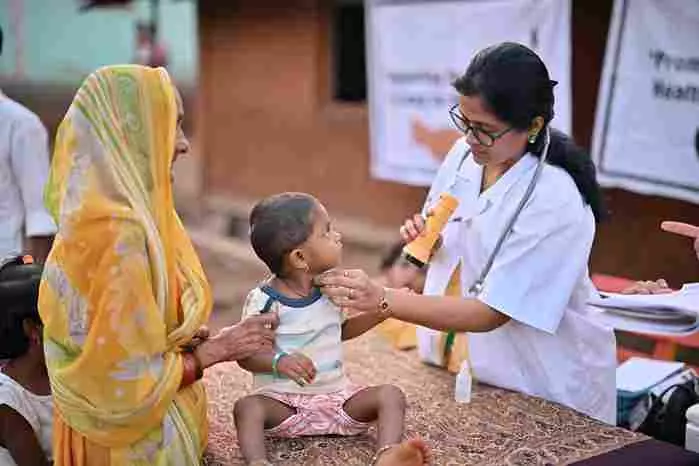
Despite the breadth of announcements, critics point to what the budget does not address. Dr Wankhedkar has emphasised that there is no real increase in health sector allocation in percentage terms, and that after accounting for inflation, effective spending may be lower. More significantly, the budget does not outline specific allocations or policy measures for strengthening primary health centres, community health centres, or preventive healthcare programmes.
Overall, Budget 2026 reflects a strategic choice to invest in specialised and high-value segments of healthcare, including advanced pharmaceuticals, medical tourism, and traditional medicine.
While these initiatives may enhance India’s global standing in selected health sectors, medical professionals argue that the continued neglect of primary healthcare and public health systems risks widening existing gaps in access and equity. As the budget moves towards implementation, this tension between specialised growth and universal healthcare needs is likely to remain at the centre of policy debate.