


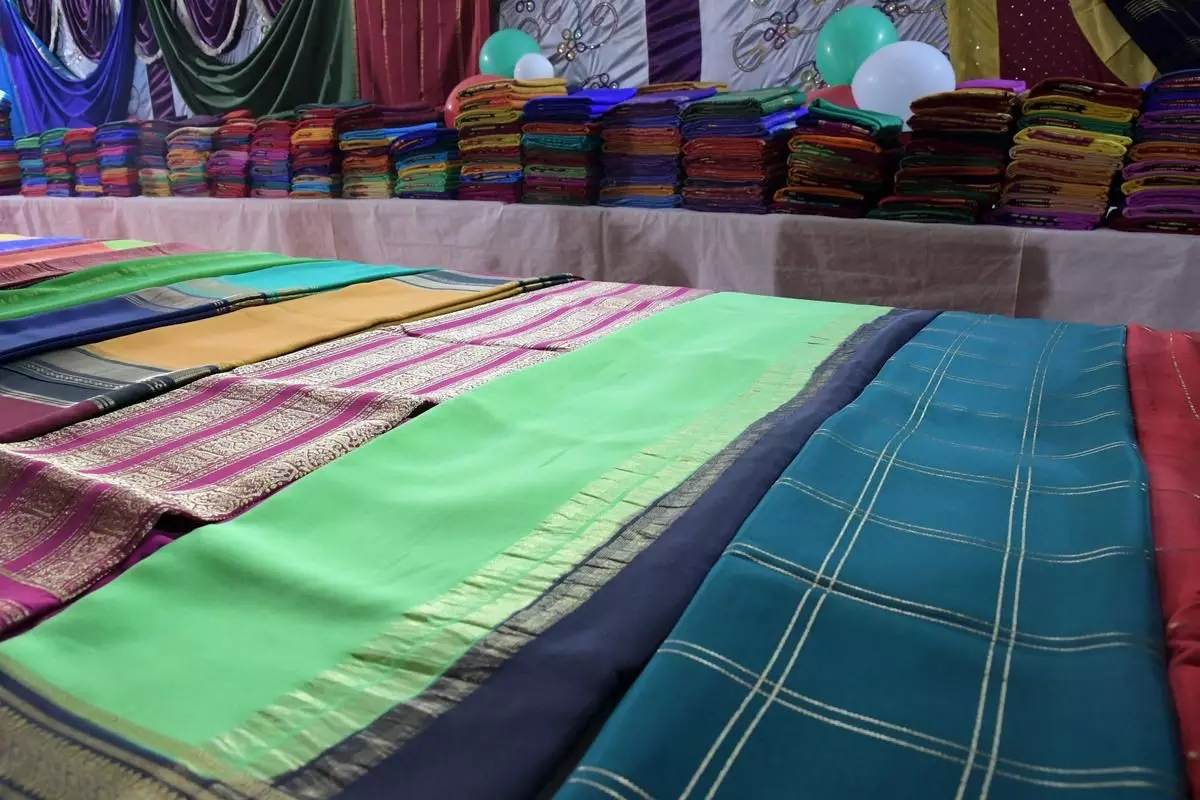
Early morning queues, limited tokens: Mysore silk frenzy once again grips Bengaluru
Early morning queues and strict entry rules with limited stock as Mysore silk demand surges, boosted by celebrity influence

Long before sunrise, the queue begins. By 4 am, eager buyers are already lined up outside a store in Jayanagar, a suburb in Bengaluru, hoping to secure a limited token that grants access to a coveted silk saree.
A Bengaluru woman recently shared her experience on social media after visiting the popular Karnataka Silk Industries Corporation (KSIC) showroom, known for its Mysore silk sarees.
Also read: A prized possession for generations, why Mysore silk sarees are failing to keep up with demand
Describing it as a “once and last time in my life” experience, she said her day began at 3:45 am, only to find that many had arrived as early as 9 pm the previous night. Some had even spent the night sleeping in their cars to secure a spot in line.
According to her, the process is strictly regulated. Customers must first obtain a token, a step that took her nearly six hours. Entry is then allowed in batches of just 10 people, each given only 10 minutes to complete their purchase.
Why is Mysore silk special?
Mysore silk sarees, which carry a Geographical Indication (GI) tag and are protected by government copyright, are woven using high-quality mulberry silk. Known for their smooth texture, natural sheen, and durability, these sarees are produced exclusively by KSIC in limited quantities to preserve authenticity.
Prices typically range from Rs 25,000 to Rs 1 lakh, with fresh stock released only twice a week - on Thursdays and Saturdays. Even then, the showroom offers a limited batch of around 100 sarees at a time.
The cost of these sarees is also influenced by fluctuations in gold prices, as they feature pure gold zari work.
Also read: Mysuru silk sarees: Women queue up at 4 am outside KSIC showroom
Originating from the Mysore royal family in 1912, these sarees are considered timeless investments and are often passed down as heirlooms. They are also valued for their elegance and ease of draping. Each piece comes with a unique code and hologram to ensure authenticity.
Given the labour-intensive and time-consuming production process, availability remains limited, and customers are allowed to purchase only one saree per visit.
The Rashmika effect
Demand has surged recently after actor Rashmika Mandanna wore a Mysore crepe silk saree for her wedding reception, styled by Ami Patel.
The spike in interest has been so significant that KSIC temporarily suspended online sales. Reports also suggest that the renewed demand has helped revive 16 state-run silk looms across the region.
Also read: How an upcoming stadium threatens the future of Karnataka's Mysore Silk brand
At the start of the year, Mysore silk production faced a setback as the Karnataka Silk Industries Corporation (KSIC)’s silk-filature unit in Mysuru district, which supplies yarn for the sarees, became embroiled in a dispute between development plans and environmental concerns.
The Karnataka government had proposed acquiring a portion of the factory’s land to build a taluk-level stadium.