



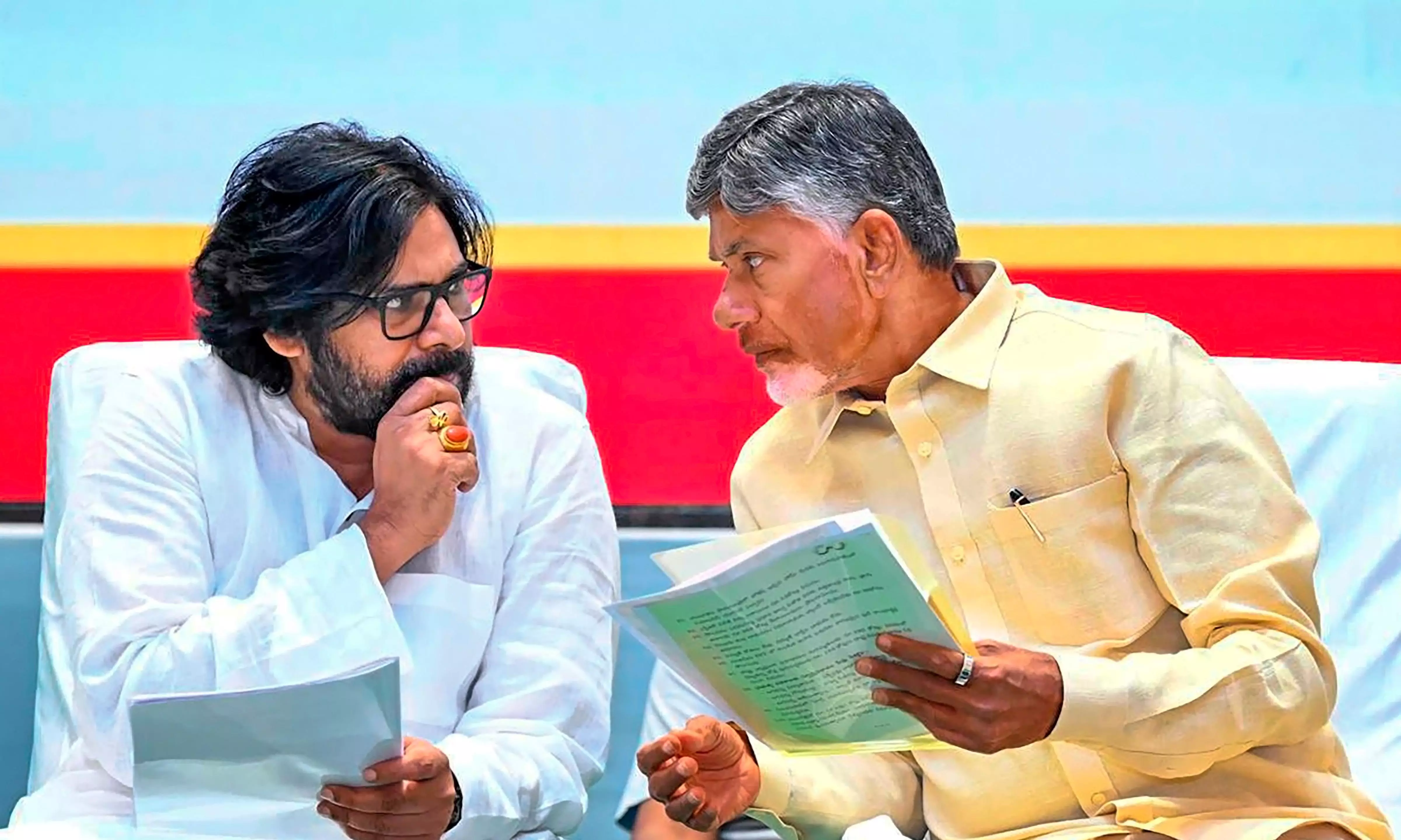
How laddu row sparked Kamma-Kapu rift in Andhra's ruling alliance
Jana Sena leaders flag discontent over alleged targeting of Kapu community and TDP dominance as Ambati Rambabu's arrest triggers political turmoil in NDA

The Tirupati laddu-adulteration controversy in Andhra Pradesh, which rocked the state over the last few years, seems to have exceeded the boundaries of a political crisis to prick raw caste nerves.
While the controversy moved beyond questions of “adulteration” and “corruption” in political circles to rising tensions between the state’s Kamma and Kappu social bases, thanks to clashes between the Telugu Desam Party (TDP) and the YSR Congress Party (YSRCP), the current leading ruling party and the Opposition outfit, respectively, the repercussions have now gone on to intrude into the state’s ruling National Democratic Alliance (NDA), with the Jana Sena Party (JSP) also emerging a major party to the ruckus.
Ambati Rambabu arrest
What has turned the matter into a major caste issue is the recent arrest of Ambati Rambabu, a former YSRCP minister of Andhra Pradesh and a prominent Kapu leader. The community has been left angered by the police action against him over allegations of making derogatory remarks against Chief Minister N Chandrababu Naidu in Guntur recently, according to political observers.
Also read: Tirupati laddu row: CBI seeks action against TTD officials over tender lapses
Kapu leaders are asking a pointed question: Why did the government act swiftly against Rambabu, while failing to respond to similar remarks allegedly made by TDP leaders against the YSRCP in the past?
There is also disappointment among supporters that Pawan Kalyan does not appear to be taking these issues seriously, possibly due to the political compulsion of keeping the alliance intact.
The question has given birth to a more precise caste-based suspicion: Is a particular community being targeted amid all these?
Kapu association leaders have raised this issue openly, holding press conferences, issuing statements and mounting a sustained campaign on social media questioning the approach of the government spearheaded by the TDP, which is a Kamma-dominated outfit.
JSP in,enters scene, but not as TDP ally
The problem has taken an even bigger twist with the JSP arriving at the scene and not on the side of the TDP, its ally in the NDA, which came to power in Andhra in 2024. While the party of Deputy Chief Minister Pawan Kalyan is a key partner of the TDP in the government, it is also a Kapu-based party, and the alleged targeting of that community has brought to the fore some of the NDA’s uneasy undercurrents.
Also read: What is the Rayalaseema Lift Irrigation Scheme and why it sparked a row
Recently, JSP spokesperson Rajini triggered political ripples by stating that the TDP was targeting a particular social group. The party leadership reportedly did not take it kindly, and she was allegedly warned to either stick to its line or step aside.
But Rajini’s questions had already reflected a simmering discontent within the JSP. If the Kapus were being really targeted, it would also affect the JSP’s support base.
Resignation of Bolisetti
Another major issue that has added fuel to the brewing storm, which could unsettle the state’s ruling alliance, is the resignation of the JSP’s general secretary (environment), Bolisetti Satyanarayana. Speaking to the media in Visakhapatnam, the veteran leader openly alleged that JSP workers were being treated unfairly within the alliance and denied basic recognition.
The statement made by the leader, who also quit other positions associated with that of the general secretary, received instant backing from party cadres across Andhra.
The allegations by Bolisetti have added strength to the growing perception within the JSP that long-time workers and supporters who stood by the party during its formative struggles are now being sidelined, while newcomers are being given prominence.
During movements such as the Tundurru land struggle, the Uddanam kidney patients’ agitation, protests for special status, and campaigns to protect capital region lands, many activists, writers and sympathisers stood firmly with the JSP.
Yet, even after becoming part of the government, party cadres complain that they are being ignored when it comes to posts, nominated positions and local-level recognition. It has been alleged that MLAs and MPs elected on the JSP tickets are leaders who migrated from other parties, and not the party’s own grassroots workers who did all the hard work to give the party a foundation.
Pawan Kalyan questioned
Political circles say a particular sentiment is gaining ground within the Kapu social base: that Pawan Kalyan, deputy chief minister of Andhra and the JSP supremo, is being extremely cautious towards the TDP and careful not to corner CM Naidu in any way.
Also read: Why VB-G RAM G raises fears over future of rural jobs in Andhra Pradesh
As an equal partner in the alliance, Kalyan is expected to ensure respect for his party’s leaders and workers. However, criticism within the party suggests that this is not happening. At various levels, the TDP is perceived to be asserting dominance and ignoring the JSP leadership. Many believe this was a key reason behind Bolisetti’s resignation.
How content will the Kapu base remain under a TDP-led government? Will the JSP emerge as an independent political force, or will it dissolve into an adjunct of the TDP? These questions are now being openly debated.
There is also disappointment among supporters that Kalyan does not appear to be taking these issues seriously, possibly due to the political compulsion of keeping the alliance intact. This has led to the feeling that he is unable — or unwilling — to fully articulate the dissatisfaction within his own base.
The perception that a leader who once said “JanaSena exists to question” is now marginalising those who raise questions is gaining prominence within party circles.
This brings a critical question to the fore: Is the alliance more important, or is political dignity for the Kapu base?
Caste fault lines
What initially looked like a governance issue has now become a trigger of caste-based politics in Andhra Pradesh.
Rambabu’s arrest, Kapu anger, visible dissatisfaction within the JanaSena, warnings issued to Rajini, and Bolisetti’s resignation all point in one direction—the return of caste alignments to the centre of state politics.
Also read: Why land disputes continue to plague Andhra Pradesh despite promises of reform
How content will the Kapu base remain under a TDP-led government? Will the JSP emerge as an independent political force, or will it dissolve into an adjunct of the TDP? These questions are now being openly debated.
While the controversy may not pose an immediate threat to the stability of the government, it clearly indicates rising pressure within the social and political equations of the ruling alliance.
(This article was first published in The Federal Andhra Pradesh)