Akhilesh focuses on Gurjar-Muslim formula to offset Jat deficit in western UP
To strengthen the Samajwadi Party’s presence in western UP, the party chief is banking on the new social formula to convert Muslim base into electoral gains

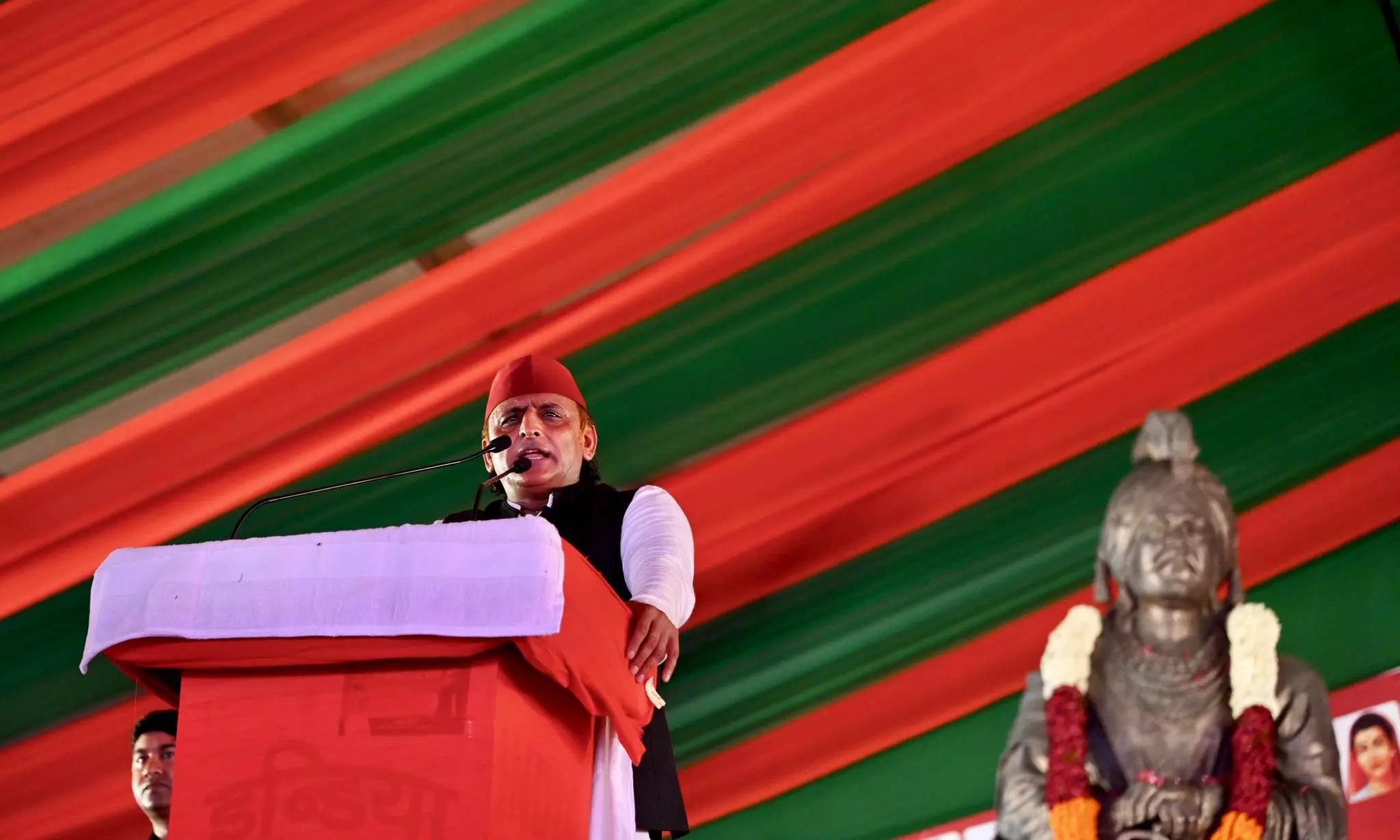
Akhilesh Yadav seems to be recalibrating his strategy in western Uttar Pradesh to counter the BJP-RLD alliance and rebuild lost social coalitions ahead of next year's assembly elections. The Samajwadi Party’s ‘Samanta Bhaichara Rally’ in Dadri on Sunday (March 29) signalled an attempt by the party president to regain the trust of the communities that drifted away from the party post-2013, and strengthen ties with Gurjars and Muslims.
The SP chief, who believes he has a strong hold in Purvanchal and central Uttar Pradesh, is now focused on strategizing for western Uttar Pradesh for 2027. In the 403-seat UP Assembly, the dynamics in the western region are not entirely in his favour. The Rashtriya Lok Dal (RLD)'s Jayant Chaudhary is no longer with him, and the RLD's influence on the Jat vote bank is believed to be strong. The SP has a strong Muslim vote bank, but it needs the support of another influential ethnic group to convert it into a victory.
Also read: Why rush to appropriate late Kanshi Ram in UP reflects broader lack of unifying Dalit face
With this in mind, the party has begun working on the Muslim-Gurjar equation. Small events, chaupals, and rallies are planned in more than 70 assembly seats across 18 districts in western Uttar Pradesh, especially in areas where Muslim and Gurjar voters are decisive.
Muslims, Jats, and Dalits are considered the three major vote banks in western UP politics. Furthermore, the Gurjar, Kashyap, Saini, Thakur, Tyagi, and Brahmin communities also play a significant role. The RLD is believed to have influence over the Jat vote, the BJP has a strong hold on the Thakur-Tyagi-Brahmin vote, the BSP has influence on the Dalit vote, and the SP has a strong hold on the Muslim vote.
Gujjar-Jat Muslim numbers
The Jat community constitutes about 3 to 4 per cent of the population in western Uttar Pradesh, while the Gurjar community comprises 5 to 6 per cent. Districts like Meerut, Ghaziabad, Gautam Buddha Nagar, Baghpat, Saharanpur, Muzaffarpur Nagar, Shamli and Bulandshahr have a high Gujjar population.
Bijnor has a Muslim population of 43 per cent and Saharanpur about 42 per cent. Meanwhile, Muzaffarnagar has a Muslim population of 41.30 per cent and Saharanpur has 41.95 per cent.
Also read: Eyeing 2027, Akhilesh bets on women voters to breach BJP’s ‘beneficiary’ bastion
Following the 2013 Muzaffarnagar riots, the Hindu-Muslim polarisation changed the political landscape. In 2019, RLD’s Chaudhary Ajit Singh attempted to bridge this divide, while in 2022, Jayant Chaudhary attempted to consolidate the Jat-Gurjar vote by allying with the Samajwadi Party. Despite this, the BJP prevailed in this region in the 2022 assembly elections.
However, the SP's improved performance in western UP in the 2024 general elections gave the party renewed hope. At the Dadri rally, Akhilesh prominently raised the issues of the Gurjar community and farmers. He promised that if voted to power, he would install a statue of Mihir Bhoj on Lucknow's Gomti Riverfront. Through this, he aimed to highlight the issues of identity and respect for the Gurjar community.
The crucial Dadri rally
Senior journalist Sunita Aron, who understands UP politics, says, "Look, the Samajwadi Party's core voters, the Yadavs, are small in western UP. Akhilesh Yadav faces the challenge of strengthening his social base by any means necessary. You may have noticed that his father, Mulayam Singh Yadav, created an alliance of "Majgars," meaning Muslims, Jats, Gurjars, and Rajputs, and it benefited not only him but also Akhilesh in the 2012 elections.
But after the Muzaffarnagar riots of 2013, the picture changed. Hindu voters shifted massively to the BJP. Even the RLD's calculations were disrupted. Now that Akhilesh Yadav has been out of power for the past 10 years, and his performance, especially in western UP, has been below expectations, the Samajwadi "Bhaichara Samanta Rally" in Dadri assumes significance."
Also read: Why did Uttar Pradesh's Yogi govt ban caste rallies? | Capital Beat
Sunita Aron continues, "There's no doubt that no matter how much any party in Uttar Pradesh talks about development or claims to implement it on the ground, social dynamics always remain crucial. The way people from the Gujjar, Muslim, Jat, Saini, and Kashyap communities turned out in Dadri clearly shows that the Samajwadi Party's "PDA" slogan is having an impact. But whatever community you talk about in politics, its participation should be visible in the party, organisation, and government."
She adds, "The way Akhilesh Yadav said at the Dadri rally that the Gurjar community or the Other Backward Classes are not just seen as a vote bank, but that their participation in the organisation and political struggle is also essential, it's clear that in the future, the Samajwadi Party will have to pay special attention to ticket distribution in Western UP. If the Gurjar community is ignored in the organisation or ticket distribution, this effort will be limited to mere statements."
Thus, Akhilesh Yadav is pursuing two strategies - first, compensating for the potential loss of the Jat vote, and second, giving greater representation to the youth. Through frequent meetings and events in western Uttar Pradesh, the SP is trying to convey the message that its electoral gains will begin here. If the party gains ground here, the 2027 elections could be more favourable for it.This article was originally published in The Federal Desh