



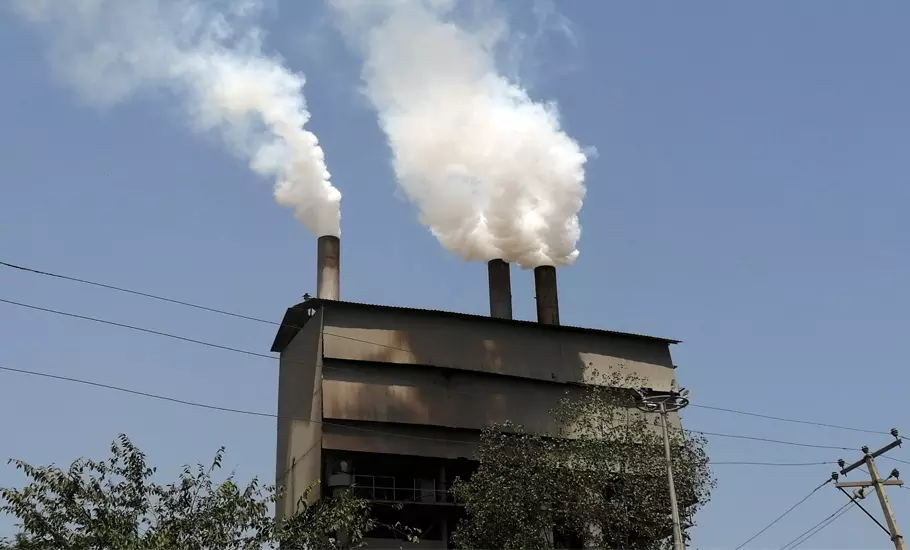
Byrnihat, world’s most polluted town, gets a real-time air-quality monitor
The industrial hub on the Meghalaya-Assam border aims to shed its tag as the world's most polluted town through enhanced data and cross-border cooperation

The industrial town of Byrnihat, which has been in news for two years for being the most polluted place in the world, is trying hard to shed its unenviable image.
Byrnihat, located on the border of Meghalaya and Assam, gained global attention after being ranked as the most polluted city in the world by Swiss air quality monitor IQAir in 2023 as well as 2024.
Last week, Meghalaya Chief Minister Conrad K Sangma inaugurated a Continuous Ambient Air Quality Monitoring System (CAAQMS) in Ri-Bhoi district to ramp up air-quality surveillance in Byrnihat.
The newly installed CAAQMS will provide real-time data on major air-quality indicators, helping authorities take timely corrective action and frame evidence-based policies.
Most polluted city in the world
Byrnihat, which lies about 14–20 km from Guwahati and 70–90 km from Shillong, ranked first globally in the 2024 World Air Quality Report with an average PM2.5 concentration of 128.2 µg/m³, over 25 times the WHO safety guidelines.
Also read: Delhi AQI 'severe' with heavy smog, 100 flights cancelled, 300 delayed
It also remained the most polluted city in India during the first half of 2025, surpassing major metropolitan areas like Delhi.
The industrial hub is home to about 80 factories, including iron and steel plants, cement factories, coke ovens, and distilleries. Located on NH40, it experiences heavy, constant traffic of old, diesel-based commercial vehicles. Its “bowl-like” or valley terrain traps pollutants, preventing natural dispersal by wind.
Residents have reported severe respiratory issues, skin rashes, and cardiovascular problems. Agricultural yields have declined as pollutants settle on crops. In response to the crisis, the governments of Assam and Meghalaya agreed in early 2025 to form a joint committee to coordinate pollution control measures across the border.
Indian small towns dominated the 2024 World Air Quality Report, with the country majorly contributing to the top 100 and 13 of the top 20
Closure of six industrial units
In January, the Central Pollution Control Board (CPCB) ordered the closure of six industrial units for environmental non-compliance, though initial data showed negligible immediate improvement in air quality.
Meghalaya Chief Minister Conrad Sangma has questioned some high pollution readings, suggesting that monitoring stations on the Assam side of the border may skew data for the entire area. In August 2025, authorities intensified border vigilance at Byrnihat, pushing back migrant workers without valid permits to Assam.
Also read: Congress says India cannot 'pollute its way to prosperity', seeks year-round action
Despite being in a region known for its forest cover and lower population density, Byrnihat recorded the highest PM2.5 average globally, surpassing even Delhi and other towns and cities in northern India, Pakistan, and China.
A structural problem that is expanding
The 2024 IQAir report was a stark reminder that India’s air pollution crisis is no longer seasonal or regional—often attributed to stubble burning in Punjab and Diwali celebrations in north India. The problem is structural and expanding.
Experts attribute this to unregulated industrial activity, vehicular emissions, and biomass burning, compounded by weak environmental oversight. Addressing it will require coordinated efforts across states, stronger enforcement, and greater public awareness.
Byrnihat’s ranking raised alarms about the emergence of new pollution hotspots in regions previously considered relatively clean. Besides, as the 2024 World Air Quality Report released by Swiss firm IQAir showed in March, the top Indian cities and towns on the list—the country majorly dominates the top 100 and contributes 13 of the top 20—are not the big metros but all from the hinterlands.
Also read: ‘Superstition thrives, reformers attacked’: Justice Oka flags Kumbh-like events
These peri-urban centres are registering dangerous air quality levels—often without adequate monitoring or regulation. Besides Byrnihat and Delhi, Faridabad, Loni (Uttar Pradesh), Ganganagar (Rajasthan), and Mullanpur (Punjab) were among other northern cities reporting hazardous annual PM2.5 levels.