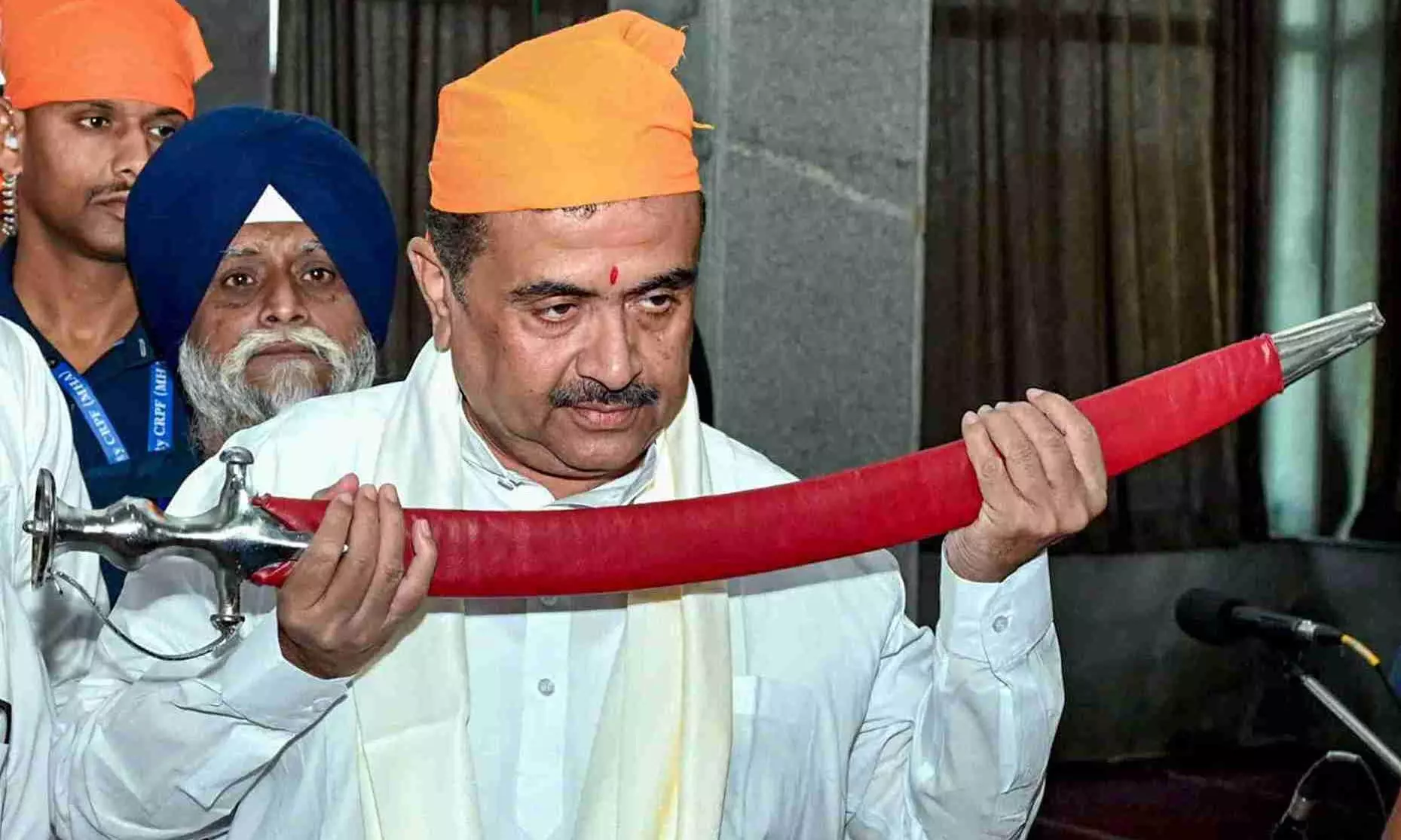
Six months in, Bengal BJP govt’s industry promise and Singur bet face credibility test
Suvendu Adhikari government claims a plan to revive Singur as an industry hub, but funding gaps, unmet promises and persistent syndicate culture fuel scepticism

Six months after the Bharatiya Janata Party (BJP) ended 15 years of Trinamool Congress (TMC) rule in West Bengal, Singur is once again being presented as a symbol of the state’s industrial future.
For residents who saw the Tata Nano project abandoned after the bitter land agitation of 2006-08, the prospect of fresh industrial investment has revived hopes of employment.
But the government is yet to spell out how its proposed land purchase and pooling policy will work in practice, even as complaints of syndicate and cut-money culture, which the BJP had pledged to stamp out, continue to surface across the state.
Industrialisation necessary, but…
Madhab Das, a farmer from Beraberi East Para in Singur who had opposed the original land acquisition, told The Federal that he would consider giving up his land if landowners received a fair price and jobs were provided, making a strong case for the need for industrialisation.
Another resident, Samresh Mukhopadhyay, was more cautious, saying that people wanted industry but were not convinced it would materialise simply because the BJP had come to power in the state.
“Industrialisation would require more than political announcements. The government needs to balance the interests of farmers and landowners with the need for industry, while also addressing the syndicate and cut-money culture,” he added.
Doubts over Singur plan
The state government is currently negotiating with farmers to purchase 997 acres in Singur through the West Bengal Industrial Development Corporation (WBIDC) for a proposed Ashok Leyland truck manufacturing plant.
The prospect received a significant boost on Tuesday (November 24), when Chief Minister Suvendu Adhikari confirmed that he had spoken to the company’s management about making land available for the project. “Ashok Leyland (of the Hinduja Group) called us this morning. His son is getting married. The first thing he asked was, ‘Is my land ready?’ I told him, yes, it is ready,” he told media.
The chief minister said the government was prepared to purchase land in Singur at an appropriate price and subsequently hand it over for industrial use.
Also read: 6 months in, Bengal BJP turns to cross-constituency audits to rein in unruly MLAs
The government’s Singur plan, however, is being viewed with a pinch of salt, considering the pattern set during the BJP’s first six months in power, when it made a series of promises on industrialisation, welfare schemes and legislative measures, many of which are yet to be fulfilled.
Unanswered questions
Its record suggests that despite the BJP government’s control over all tiers of governance and the advantage of a double-engine government, it is still struggling to deliver on several of the promises it made before coming to power.
The West Bengal Investment Promotion Policy 2026, announced on November 5, allows the government to purchase land directly from owners, build land banks, pool plots and take back industrial land that remains unused.
It sought to reassure investors that land would be made available without forcible acquisition, a sensitive issue in a state where the anti-land acquisition movements in Singur and Nandigram remain a reference point in any debate on industrialisation.
Also read: Bengal faces fresh electoral roll revision amid 21 lakh pending SIR deletion appeals
But the policy leaves several practical questions unanswered, including how landowners will be compensated, what safeguards will protect agricultural interests and how the government will fund the purchases and provide the infrastructure needed to attract industry.
Promises versus ground reality
Adhikari recently acknowledged that the state faces industrial incentive liabilities of nearly Rs 50,000 crore, raising questions about its capacity to finance fresh commitments while clearing earlier obligations.
The gap between the government’s promises and their actual fulfilment has also been visible over the past six months in several areas, including its employment commitments.
It had promised monthly assistance of Rs 3,000 to unemployed graduates and Rs 2,000 to other eligible unemployed youths. But on November 23, Adhikari announced that the scheme, renamed Bharosa, would begin in January, but beneficiaries would initially receive Rs 2,000 and Rs 1,500 respectively, with the promised amounts deferred until 2028-29.
Backtracking on assurances
Apologising for the shortfall, the chief minister sought 15 months to meet the original commitment, citing the state’s financial obligations.
The admission is significant because the financial constraints facing the state were also evident in its earlier submissions to the Supreme Court, in which the government sought more time to clear the Dearness Allowance (DA) arrears of its employees, citing uncertainty over revenue receipts, rise in committed expenditure and the impact of changes in GST collections and central transfers.
Also read: Christian groups challenge Bengal BJP chief to name schools behind conversion claims
DA arrears remain a contentious issue, even as the chief minister recently announced that the remaining Rs 4,000 crore will be paid by November 30. The Supreme Court is due to take up the matter again on January 29 next year, after the monitoring committee meets the parties on December 14.
Migrants called but where is the work?
The government also began reaching out to migrant workers who have left the state in search of employment, urging them to return to their villages and take up work under the VB-G RAM G rural employment scheme.
The Panchayat and Rural Development Department has started sending SMS messages to around 22.24 lakh workers identified by the Labour Department, promising up to 125 days of work a year and daily wages ranging from Rs 300 for unskilled workers to Rs 600 for skilled workers. The messages are to be sent every 15 days.
But the availability of work in the villages remains a concern. Data from the scheme’s management information system show that West Bengal had provided an average of just 10.5 days of employment per household as of November 10, against the scheme’s promised 125 days, raising questions about how the government will generate enough work to persuade migrants to return.
Focus on cultural and religious agenda
Alongside its employment and industrialisation promises, the government also sought to push its cultural and religious agenda during its first six months in power.
The Cabinet on Monday (November 23) approved a proposal to rename West Bengal as Paschim Banga in both English and Bengali, with the government planning to move a resolution to this effect in the state Assembly on December 9.
Also read: Paschim Banga, again: Why previous bids to rename West Bengal ran into a wall
Adhikari also announced a fresh legislative initiative against cow slaughter and promised monthly grants of up to Rs 1 lakh for eligible cow shelters, along with stricter enforcement of the existing West Bengal Animal Slaughter Control Act, 1950.
These moves underline the BJP’s cultural and religious agenda, even as concerns over attacks on religious minorities under the present regime remain.
Rise in communal hate, crimes
A people’s tribunal in Kolkata recently recorded 48 incidents of violence against Christians during the government’s first six months.
The Bangiya Christiya Pariseba has separately alleged at least 50 attacks between July and November, with FIRs registered in only 16 cases. These include disruptions of prayer meetings, intimidation of pastors and attacks on Christian families.
An RTI response obtained by former TMC MP Saket Gokhale showed 2,454 rape cases, 600 murders, 13,114 attempted murders and 32,341 cases of grievous hurt between May 1 and September 24.
The BJP, however, argued that some of these complaints relate to offences committed under the previous government but registered after the change of power.
The dates of the alleged offences and FIRs may be disputed, but there is no denying that the law-and-order situation has not improved, if not deteriorated, under the present government.
Spate of encounter deaths
The police also reported five fatal encounters since the BJP assumed office, raising questions about police accountability and the use of extrajudicial force.
This has happened even as the government’s attempt to bring in a stringent anti-goonda law has remained stalled.
Also read: Canada deal opens a door, but Darjeeling tea faces a compliance wall
The West Bengal Public Safety and Control of Anti-Social Activities Bill, passed by the Assembly in June, is still awaiting presidential assent.
The Bill, which provides for preventive action against people suspected of anti-social activities, has drawn objections from the Centre over a provision covering offences under the Narcotic Drugs and Psychotropic Substances Act, which it says could overlap with an existing central law.
Following in TMC’s footsteps
Another contentious area during the BJP’s first six months has been the party’s own handling of its expanding ranks and the persistence of practices it had accused the TMC of encouraging.
The induction of former TMC leaders has caused resentment among sections of the party’s old guard, while reports of clashes between rival groups have surfaced from different parts of the state.
Allegations that some BJP functionaries are demanding money in the name of the party have also led to internal bickering and clashes. Finance Minister Swapan Dasgupta has acknowledged that extortion continues to be a problem.
For a party that made the TMC’s syndicate and cut-money culture a major election issue, these allegations have raised questions about how far it has been able to change the political practices it once condemned.