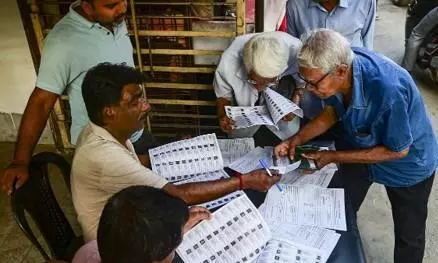
Bengal faces fresh electoral roll revision amid 21 lakh pending SIR deletion appeals
The Commission said the new exercise is intended to enroll newly-eligible voters, correct existing entries, and remove duplicate entries and the names of deceased or permanently-shifted electors

Barely months after completing the contentious Special Intensive Revision (SIR) in West Bengal, the Election Commission (EC) decided to start another electoral roll revision even as thousands of voters await decisions on their status and appeals against deletions remain pending, raising questions about its efficacy.
The draft electoral roll under the SSR is scheduled to be published on November 23, with the final list due on January 16 next year.
But the new exercise has been initiated even as more than 21.7 lakh appeals against deletions on grounds of logical discrepancies are still pending before appellate tribunals. Thousands of other voters whose cases never received a final decision from judicial officers remain caught in a separate administrative limbo, with no clear route to restoration.
Unresolved SIR cases
The Commission said the new exercise is intended to enroll newly-eligible voters, correct existing entries, and remove duplicate entries and the names of deceased or permanently-shifted electors, underscoring the need to address discrepancies in the rolls despite the recently-completed SIR. But it raises questions about how the fresh revision will address unresolved cases from the previous exercise.
The Civic Research Group’s analysis of the election commission’s data and tribunal records found that more than 27 lakh voters were deleted after adjudication of logical discrepancies during the SIR.
Also Read: Fourth judge quits Bengal SIR tribunal, deepening backlog concerns
Of the deleted voters who appealed, nearly 21 lakh voters were still awaiting decisions. Thousands of other voters remain marked as “under adjudication” because judicial officers have not issued final orders on their eligibility. With no final order on their cases, these voters could not appeal to the tribunals or establish their eligibility to vote. Their exact number remains unclear, though estimates based on different sets of records put it at around 30,000.
The West Bengal Chief Electoral Officer’s office, however, put the number of undecided cases at just 815 across the state, while another 5,004 decisions were awaiting electronic signatures.
It recently reactivated judicial officers’ login IDs on its ECINET portal to enable them to complete pending adjudications and electronically sign orders, commission sources said.
EC’s directions to officials
The Commission also directed election officials to identify voters whose names appeared in the pre-SIR rolls but are missing from the current electoral roll. Booth-level officers (BLOs) have been asked to visit these electors, verify their status, and help those eligible to apply through Form 6.
The Commission already clarified that people whose names are missing from the SIR draft roll can apply through Form 6 even if they were enrolled previously. Such an application would not, by itself, amount to a false declaration or invite prosecution under Section 31 of the Representation of the People Act, provided the applicant is not enrolled in another constituency and the other declarations are correct.
Also Read: EC dissent row: How Bengal’s SIR concerns went unheeded
However, it remains unclear how the new enrolment process will deal with voters whose appeals against deletion are pending before appellate tribunals.
The Commission introduced a facility in the BLO app to upload additional documents in tribunal cases, but ground-level officials have not received clear instructions on its use.
Swapan Mondal, general secretary of Votekarmi o BLO Aikyamancha, said that BLOs had not been informed that they were expected to use the facility to upload additional documents submitted by tribunal appellants. This raises questions about how effectively the commission's instructions are reaching the officials responsible for implementing the fresh revision.
BJP’s outreach programme
Even as the Commission has begun another revision, the BJP has decided to assess public reaction to the previous exercise through a statewide outreach programme.
The party is putting together a special team of around 200 leaders to visit all 294 assembly constituencies from November 26, according to party sources. Accompanied by local party workers, the teams will visit villages and remote areas, speak to residents, and record their views on the SIR.
The exercise is intended to give the state leadership a clearer picture of how the revision was received across the state, including in areas where it generated grievances among voters, said a senior BJP leader. The party asked the teams to pay particular attention to constituencies where it lost the assembly election.
Also Read: West Bengal SIR: Could an administrative route ease the tribunal backlog?
Their feedback will be compiled and submitted to the state leadership, which will forward a consolidated report to the central leadership, sources added. The exercise will serve both as an assessment of public opinion on the SIR and as an attempt to understand how the revision might affect the party's electoral prospects in different parts of the state.
The BJP had supported the SIR and defended the need to scrutinise electoral rolls, while the exercise drew criticism over deletions, unresolved adjudications, and the difficulties faced by voters seeking to establish their eligibility.
The party's decision to seek feedback from voters suggests that it is now trying to gauge the political consequences of the SIR, particularly in constituencies where it failed to win.