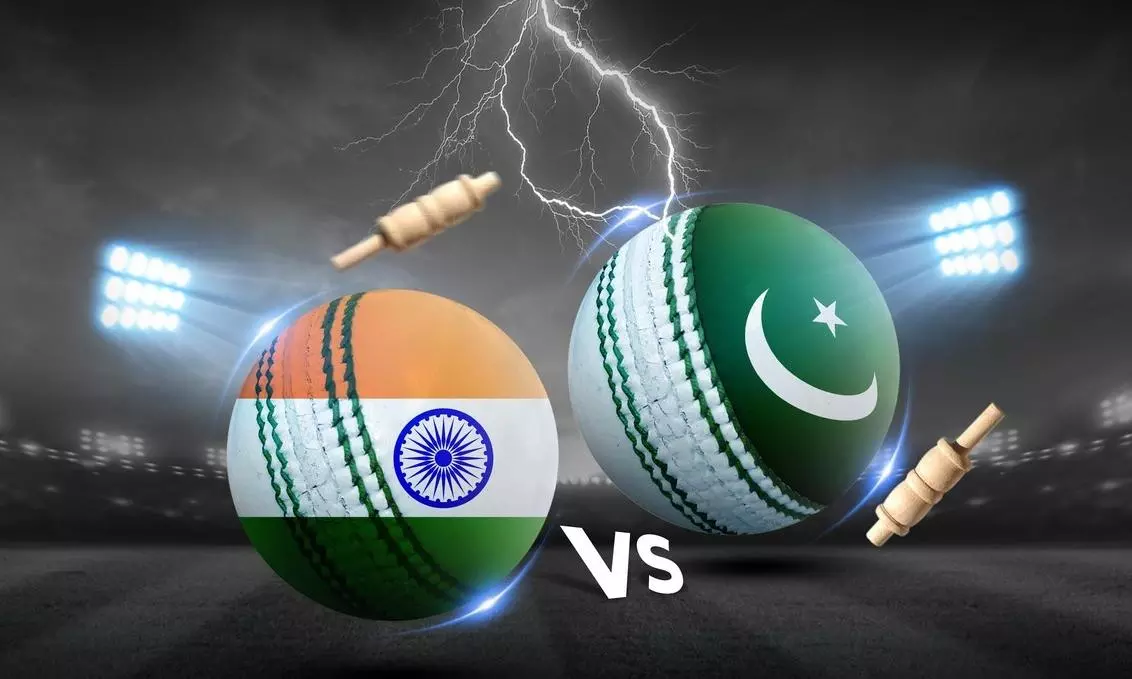
The uncertainty around an India-Pakistan World Cup fixture threatens $40 million in revenue and signals a shift toward stable franchise-led model
On the night of February 15, world cricket is supposed to stop. Broadcast schedules across continents have already been shaped around it. Advertising has been priced for it. Fans have booked flights and hotels for it. Editorial plans, studio shows and digital campaigns are bending towards one moment: India versus Pakistan at the ICC Men’s T20 World Cup.
The fact that this high-octane match is now in doubt, just days away,, tells a far bigger story than any eventual withdrawal ever could. For when one game can hold up the entire system, the system is already far more fragile than cricket likes to admit. On paper, World Cups are meant to be the sport’s safest spaces. Schedules are finalised years in advance. Security assessments are exhaustive. Commercial contracts are signed on the promise of certainty. All along, the idea is simple - that when a World Cup arrives, politics should recede and the game takes centre stage.
Finances at stake
That promise has already been punctured once this cycle. If Pakistan follows Bangladesh’searlier withdrawal, it will be punctured again. At that point, it no longer matters who withdrew or why. What matters is what the disruption reveals.
Also read: Explained: Politics behind Pakistan's boycott of India T20 WC game | AI With Sanket
An India-Pakistan World Cup fixture is the single most valuable commercial asset that global cricket possesses. Conservative industry estimates place the broadcast and advertising value of one India-Pakistan T20 World Cup match between USD 25-40 million. The wider economic footprint, sponsorships, hospitality and ticketing, run far higher.
World Cups are sold as cricket’s most protected events, insulated from the volatility that defines bilateral tours. A last-minute withdrawal or even the serious possibility of one, exposes how thin that insulation really is
Entire World Cup revenue models are built with this fixture as a load-bearing pillar. Remove it, and the structure caves inward. Broadcasters are left with gaps no other match can realistically fill. Advertisers renegotiate or walk away. The ICC’s revenue pool shrinks. And while the headline numbers attract attention, the sharpest impact is felt elsewhere by smaller boards whose survival depends on World Cup distributions to fund domestic competitions and grassroots cricket.
Fragile system
This is where the issue stops being bilateral and becomes global. Cricket is already sustained by a narrow financial base. India, England and Australia generate the overwhelming share of the sport’s revenue. Yet the shockwaves from uncertainty travel outward, punishing those with the least insulation. A system that presents itself as global reveals how unevenly its risks are actually shared.
Also read: T20 WC: ICC warns PCB of legal action by JioStar over India match boycott
World Cups are sold as cricket’s most protected events, insulated from the volatility that defines bilateral tours. A last-minute withdrawal or even the serious possibility of one, exposes how thin that insulation really is. The ICC can issue warnings, cite regulations and threaten sanctions, but its authority ultimately rests on cooperation. It is expected to deliver certainty, without actually having the power to fully enforce it.
This contradiction has existed for years. The current situation merely makes it visible. What is more damaging than any single lost match is repetition. Each disruption teaches broadcasters and sponsors the same lesson: even World Cups are unstable assets. Over time, that erosion of trust matters more than any immediate financial hit.
Real story
The conversation needs to move beyond blame. The real story is not the boycott itself, but what it accelerates. Across cricket, a quiet realignment is already underway. Franchise leagues offer what ICC tournaments increasingly struggle to guarantee: calendar control, commercial certainty and insulation from geopolitics. Owners know exactly when their competitions will be played. Broadcasters know precisely what they are buying. Players know where their income is coming from.
By comparison, ICC events are beginning to look like high-risk collective exercises. They depend on alignment between boards with unequal power, and external pressures they cannot always manage. When something breaks, everyone pays but not equally.
Also read: India-Pakistan Asia Cup final: When politics and business overshadowed cricket
This contrast raises an uncomfortable question, one cricket rarely asks out loud: do the most powerful boards actually want this instability resolved? India, Australia and England already sit at the sport’s economic centre. Their domestic leagues and bilateral arrangements deliver reliable revenue and guaranteed audiences. The less dependable collective tournaments become the more attractive tightly controlled ecosystems appear.
Beyond financial loss
The fallout is not only financial. It is also deeply human, and far less examined. World Cup fans plan months, sometimes years, in advance. Flights are booked at inflated prices. Hotels near venues sell out early. Tickets for marquee matches are the most expensive and hardest to secure. When a fixture disappears, supporters are left navigating through refunds and uncertainty, often with little clarity.
The very match capable of uniting world cricket, India versus Pakistan on the World Cup stage, has now become the clearest symbol of how precarious that unity truly is. The stress test is already underway
Media and production crews face similar disruption. Broadcast plans built around a tournament’s narrative spine are suddenly hollowed out. Momentum collapses and coverage fragments. The sense of occasion, the very thing a World Cup is meant to manufacture, begins to leak away before the first ball is bowled. These ground-level consequences matter because they speak to trust. And trust, once eroded, is slow to return.
Also read: T20 World Cup 2026: Full schedule, groups, venues, format after Bangladesh exit
As the power shifts inward, cricket risks becoming more local than global. The World Cup, once the unifying anchor of the sport, begins to resemble a pressure point, where financial dependence, political reality and governance limits collide.
The real Test
None of this means the World Cup is irrelevant. Emotionally and symbolically, it remains cricket’s highest stage. But structurally, its role is changing. It no longer represents any guaranteed stability. Rather, it represents risk. Seen this way, the boycott is not the problem but surely is a catalyst.
It forces cricket to confront the reality that perhaps the global game is slowly being replaced by a collection of safer, privately controlled alternatives. If instability becomes normalised, stakeholders will respond rationally. Money will follow certainty. And the collective centre of the sport will continue to drift away from the ICC framework towards leagues that promise control.
Also read: T20 World Cup: Pakistan reveal travel plan on WhatsApp, then delete it
(The Federal seeks to present views and opinions from all sides of the spectrum. The information, ideas or opinions in the articles are of the author and do not necessarily reflect the views of The Federal.)