With India under majoritarian attack, a Congress defeat in Kerala could hand the BJP exactly what it wants — the stakes go far beyond one assembly poll
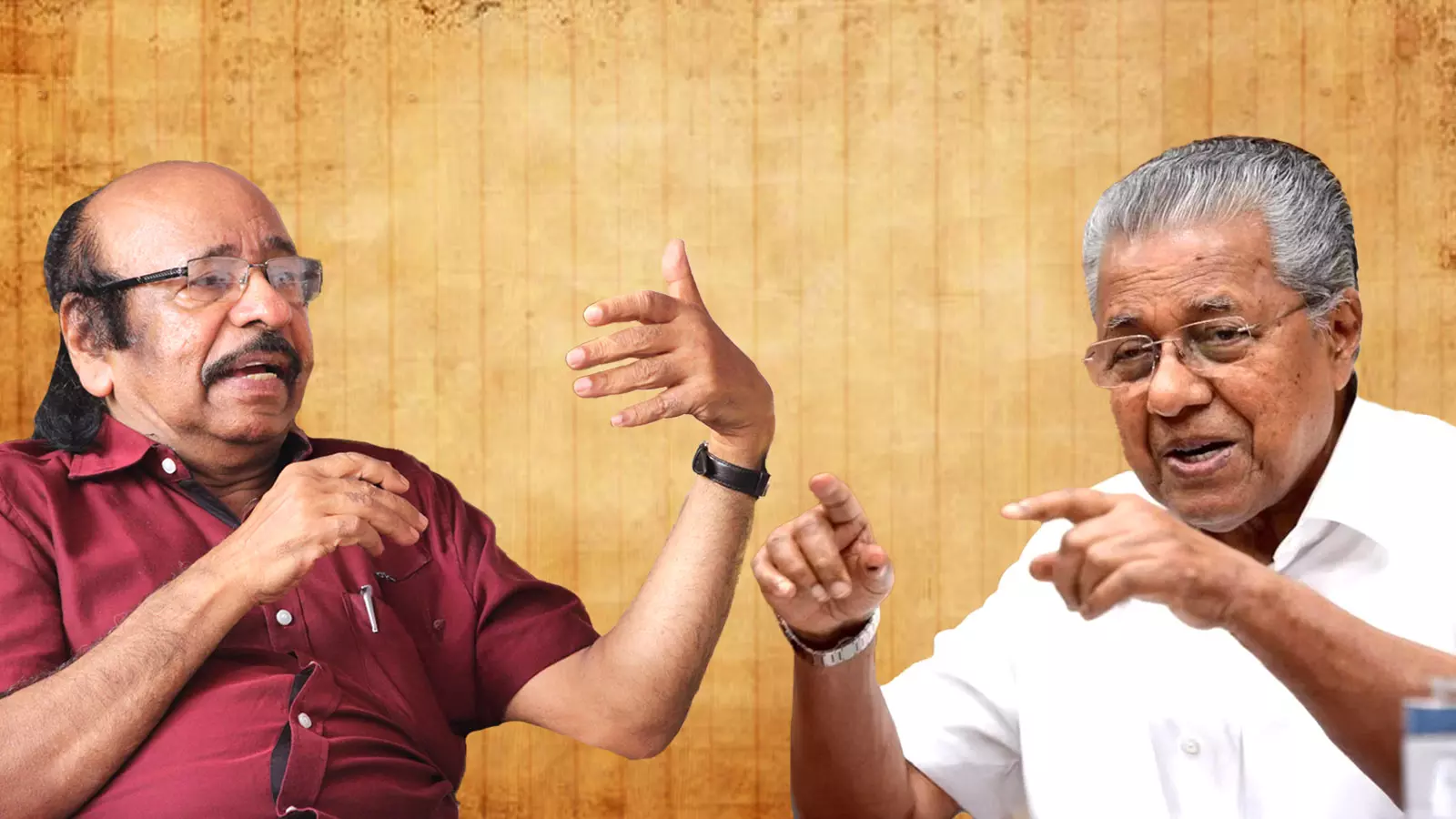
Noted poet and litterateur K Satchidanandan’s remarks about the long-term gains of power changing hands in a competitive electoral democracy have stirred a controversy in Kerala, where Left activists have chosen to see in the Sahitya Academy Chairman’s sudden discovery of the long durée a hunger for office under a new political dispensation in the state after the impending elections to the state assembly.
This is unsound, besides being unfair to this steadfast standard bearer of Kerala’s progressive values, and his body of work that articulates and amplifies those values, mobilising the language’s vast resources and informing and enriching the Malayali sensibility with his engagement with the wider world.
There are several reasons to support Satchidanandan’s view about the desirability of a regime change, beyond the corrupting effects of continuous office, as evidence for which he cited the experience of the Left Front in West Bengal. After being in office continuously for 34 years in West Bengal, the main Left Party, the CPI(M), now stands banned to the state’s political margins.
Flagbearer of democratic ethos
The principal reason why it would be better for the Left to lose in Kerala, come May, than retain power, is what the outcome would mean for national politics. Does anyone in the Left fail to see that democracy in India, such as it is, is under lethal attack? Or that, at the national level, the resistance to that attack is led, however ineffectually and clumsily, by the Congress? It is the only national alternative to the BJP, even as it has been on the backfoot since 2014.
The Congress will, at some point, remove the carbuncle that disfigures its forehead, spreads toxin throughout the body, and enfeebles its physique. Diseased and diminished as it is, the Congress still plays a vital role in defending India’s democracy.
Right now, the Congress has a chief minister in only three states: Karnataka, Telangana, and Himachal Pradesh. While Rahul Gandhi himself is an electoral asset for the BJP, the Congress remains the principal opponent to the Sangh Parivar project of converting India into a Hindu Rashtra, a majoritarian state, where non-Hindus would be second-class citizens, just as Hindus are in Pakistan or Bangladesh.
Also Read: Satheesan's 'vismayam' warning: Is Kerala's political tide turning towards UDF?
The Congress remains, for all its flaws, the nationwide champion of India’s defining civilisational ethos of multiculturalism, which recognises variety in conceptualising divinity not as blasphemous deviance but as so many explorations of different paths, all legitimate, to the self-same spiritual goal.
Majoritarian impulse
India is lucky to have a culture-shaping faith that is compatible with the imperative of democracy to safeguard minorities from the majoritarian impulse to impose a vision of collective well-being that delegitimises difference.
The new Central governmental order on the national song, Vande Mataram, to force everyone to pay homage to the nation represented as a Hindu goddess, articulates that majoritarian impulse.
In countries where monotheistic faiths are preponderant, democracy has a tougher job keeping state policy, informed by the majority faith, from intruding into the personal spaces of those who are not part of the majority. In some southern states of the US, the 10 commandments are now required to be displayed in schools.
Also Read: Shashi Tharoor lands crucial role in Congress’ Kerala election campaign
Minorities do not help their cause when they insist, in the name of religious sanctity, on continuing with medieval customs and practices incompatible with democracy. Democracy has no reason to indulge the urge of minority leaders to suppress democratic rights within their community while invoking democracy’s obligation to protect minority rights. Democratic rights are not to be used to selectively crush democratic rights.
Cushy 9 to 5 job
The Congress party’s current leadership sees politics as a cushy, 9-5 job with many perks that remain constant regardless of performance, regardless of continuous defeat in election after election. The job, further, is understood as little more than daily sniping at the government, while inventing excuses for itself for sustained electoral loss.
The BJP would, if it has any sense, be working overtime to ensure a Left victory in Kerala this year, to make headway in decimating its national opposition.
The party will, at some point, remove this carbuncle that disfigures its forehead, spreads toxin throughout the body, and enfeebles its physique. Diseased and diminished as it is, the Congress still plays a vital role in defending India’s democracy.
If the Congress fails to win Kerala this year, it would be a blow to the party not just in Kerala, but nationwide. The BJP would, if it has any sense, be working overtime to ensure a Left victory in Kerala this year, to make headway in decimating its national Opposition. Further emaciation of the national Opposition is not good for the Left either.
Left's biggest revolution
Forget that three out of the four MPs the CPI(M) has in the Lok Sabha have been elected with the support of the Congress and its allies. The Sangh Parivar sees the Left as alien and harmful to India as Christianity and Islam. Only surviving democracy prevents its forces from dealing with Communists in Kerala the way it has dealt with Maoists in central India.
Also Read: Why anti-incumbency, favourable surveys fail to cheer Congress in Kerala
Protecting and enlarging democracy in India is the biggest revolution the Left has accomplished in Kerala, by organising different sections of the populace, implementing land reforms, decentralising political power and its control over the bureaucracy to local governments, and, crucially, hegemonising other political formations in the state, including the Congress, to accept its democratic agenda as their own. It is the same revolution that the rest of India sorely needs.
Muslim League’s importance
A second consecutive Congress defeat holds the potential for another setback specific to Kerala: weakening of the Muslim League, to the advantage of radical Islamist groups vying for influence in the state.
Kerala’s Muslim League is a far cry from the separatist force that fought for Pakistan. It is one of the few instances in the world of a Muslim minority fashioning a political tool to share political power to coexist, in peace and dignity, with the majority, while broadly supporting the community’s social progress and resisting ever-present pressure to regress to medieval mores as demanded by literal interpretations of religious texts.
Also Read: 2026 elections: Why Congress believes returning to power in Kerala is possible | Discussion
The Muslim League is a long-term ally of the Congress in Kerala, and should the Congress-led front lose the elections once again, it would eat into the political relevance of the League and help radical groups waiting in the wings to broaden their support. That would be good neither for Kerala nor for India as a whole.
Apart from the tendency for power to corrupt, there are other reasons to support the thesis that a defeat for the Left in the forthcoming Kerala assembly elections would be one step backwards that would enable two forward steps in the future.
(The Federal seeks to present views and opinions from all sides of the spectrum. The information, ideas or opinions in the articles are of the author and do not necessarily reflect the views of The Federal.)