Jana Gana Mana is India; Vande Mataram cannot be our anthem: TM Krishna
Exclusive | Carnatic vocalist speaks on why India's national symbols are being weaponised, and why fraternity, not majoritarianism, holds the Constitution together

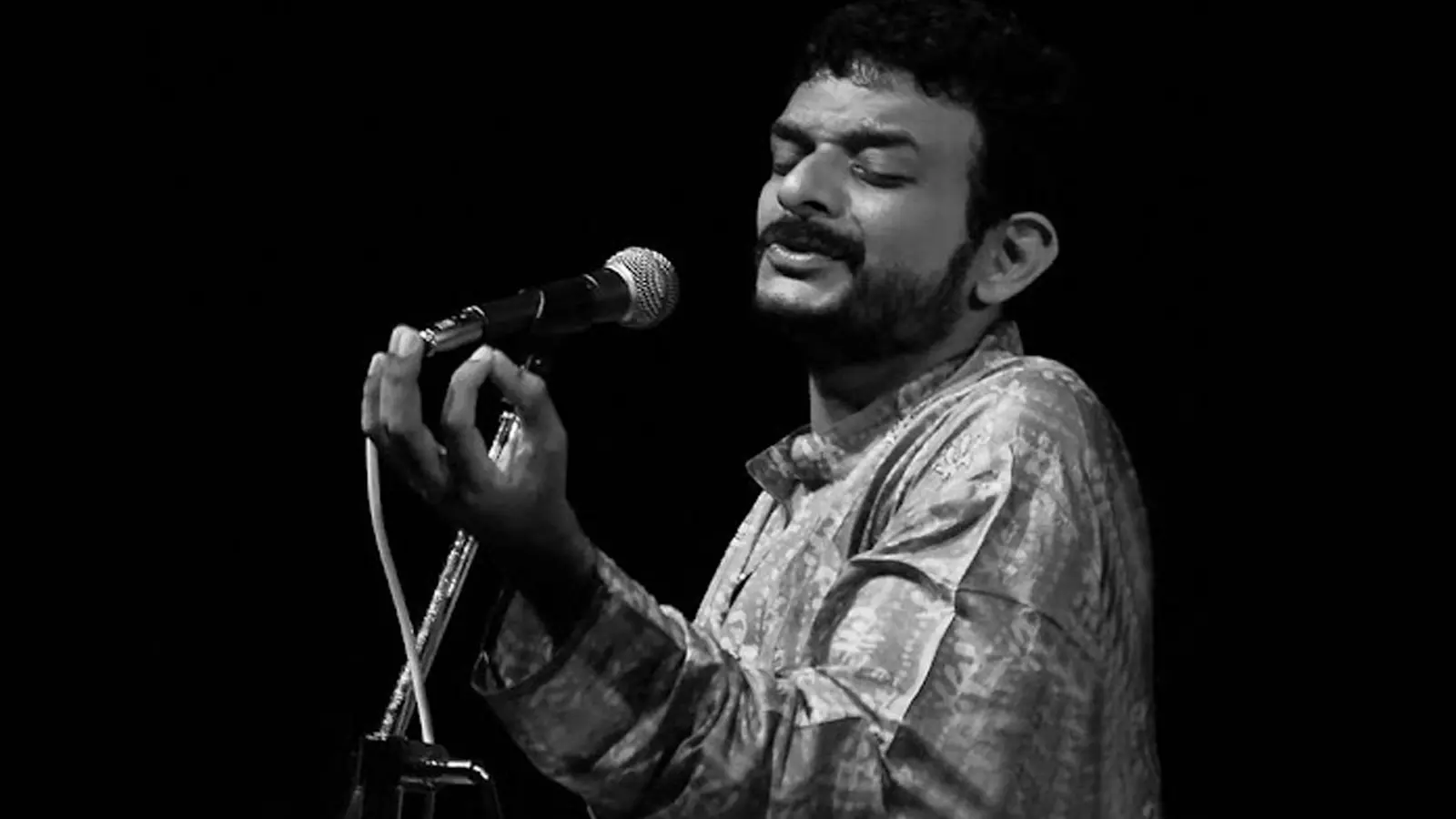
TM Krishna doesn't mince words. The Carnatic vocalist and public intellectual has been watching India's national symbols get pulled into political controversy — the Preamble quietly dropped from a Constitution Park inauguration, fresh government directives on the singing of Vande Mataram — and his verdict is unsparing: the country's founding values are being trivialised.
It's the animating concern behind his new book, We the People of India, in which Krishna takes five national symbols — the Preamble, the national flag, the Lion Capital, Satyameva Jayate, and Jana Gana Mana — and holds them up against the light of the present. The Federal sat down with him to find out what he sees. Edited excerpts from the interview:
What prompted you to write a book on India’s national symbols at this moment?
I think we all share a certain feeling — not just discomfort, but a feeling at the pit of our stomach many mornings — watching what I would call the degradation of simple humanity, humane values, social ethics, political morality and constitutional morality. It has been slipping away, sometimes in jumps and leaps. You see it in everyday events.
It’s not just the political class. They are the instigators, without doubt, with the RSS at the head of this entire octopus-like operation. But the poison of discrimination, marginalisation and lack of empathy — because of caste, class or religion — has permeated society at large. That should trouble us.
Also read | TM Krishna’s gimmicks overshadow an incredible musical talent
When we came together in 1947 and more profoundly in 1950, we set for ourselves an incredible dream. To see where we are today deeply bothers me.
I am a musician. I see — or rather hear — the world through sound. When I started singing the other verses of Jana Gana Mana, especially the line ‘Hindu, Buddhist, Sikh, Jain, Parsi, Muslim, Christian’, I would choke. I should be celebrating it, but I felt we had lost that capacity.
So why have the Preamble? Because it is an emotional text. It describes what we give ourselves. It states the non-negotiables in building this country.
This book came from a deep place of sadness. These symbols encapsulate what our founding members thought we could become. I didn’t write it as a historian but as someone reflecting on the past from today. The book is a dialogue between the present and the past.
Why do you describe the Preamble as a ‘clarifier’, an interpretive tool, even a lodestar?
The Preamble is one of the most profound texts you can read. In schools, we reduce it to something to memorise from a civics textbook. But think about it — the Preamble was almost the last thing the Constituent Assembly finalised, not the first.
Through all the debates, disagreements and compromises, they realised there were certain basic values they were not willing to give up. Those values are encapsulated in the Preamble.
It is not justiciable — you can’t go to court and demand justice because the Preamble says so. So why have it? Because it is an emotional text. It describes what we give ourselves. It states the non-negotiables in building this country.
Also read | For TM Krishna, a raga moves and breathes, and the singer participates in it
The argument that ‘secular’ and ‘socialist’ were not in the original Preamble is silly. Members repeatedly said we were giving ourselves a secular Constitution. There was even a vote on whether to include the word ‘God’ in the Preamble, and it was rejected.
The Constitution is secular. The fundamental rights are secular. They recognise cultural, linguistic, caste and religious marginalisation and prioritise those who are disadvantaged. The socialist spirit is embedded in the Constitution.
So, when those words were added later, even during a problematic time, they were reiterating what was already there. To say that without ‘secular’ we would be a religious or Hindu state is utterly false and deeply disturbing. It is a dangerous trick being played on us.
You emphasise the word ‘fraternity’ as the most arresting part of the Preamble. Why?
Fraternity was not in the original draft. Many scholars believe it was Ambedkar’s addition. He wrote to Rajendra Prasad about adding it.
Fraternity is vague — how do we live together? But it is actually a responsibility. It means we care for one another. Ambedkar uses the word ‘maitri’, a selfless, all-encompassing love.
Historically, Vande Mataram is a problematic song. If you read the novel, the sannyasis are attacking Muslim villages, and the language is Islamophobic. Historians and Rabindranath Tagore have pointed this out.
When we say we will live as a fraternity, we are saying those with more power will recognise that power and act to ensure equality and equity. Fraternity binds the entire Preamble together. It allows justice, equality, and secularism.
It is a philosophical addition. It tells every citizen: you are responsible for cultivating a nature that embraces society beyond your social, cultural and political limitations.”
There is renewed emphasis on singing Vande Mataram. What is your view of its history and suitability?
First, some clarifications. On January 24, 1950, Rajendra Prasad declared Jana Gana Mana the national anthem and said Vande Mataram would be honoured equally. He did not declare it the national song that day.
Earlier, in the Constituent Assembly (Legislative), Jawaharlal Nehru referred to it as the ‘national song par excellence’. That irony must be noted.
Also read | How a college in Andhra Pradesh’s Madanapalle became the first to sing Jana Gana Mana
Historically, Vande Mataram is a problematic song. Scholars agree the first two verses were written earlier and later incorporated into Anandamath by Bankim Chandra Chattopadhyay. If you read the novel, the sannyasis are attacking Muslim villages, and the language is Islamophobic. Historians and Rabindranath Tagore have pointed this out.
Even during the 1905 anti-Partition movement, when the song became popular, Muslims were uncomfortable. By 1937, the Muslim League objected to it alongside other issues like language and the Congress flag. To think Vande Mataram is a docile, harmless song is wrong.
Jana Gana Mana is India. It is descriptive — I can visualise the country. It carries the land and the people.
As a musician, I will also say this: if you sing all its verses, it does not hold as a song. The shifts in language, imagery and tone are jarring. The first verse is gorgeous. But by the third, the mother transforms into Durga with ten arms. There is no way Vande Mataram can be the anthem of India — certainly not of a secular India.
It is not just a song. It has become part of a cultural ethos promoting a Hindu majoritarian idea. The brilliance of our founders was to retain the acceptable part while recognising what was troublesome. That was an act of respect and accommodation.”
Why do you believe Jana Gana Mana is uniquely suited as the national anthem?
Jana Gana Mana is India. It is descriptive — I can visualise the country. It carries the land and the people. The first three words — ‘Jana Gana Mana’ — encapsulate fraternity: the individual, the collective, and the shared mind.
Watch/Read | Gita Press and RSS: Akshaya Mukul on how ideas shaped Hindu politics for a century
It is not a battleground song. It is a song of celebration. It sees the sun rising in the east — renewal. It doesn’t end with a screaming crescendo. It settles gently. That is dignity. You don’t need to shout to be confident as a nation.
Musically, it is not a simple tune. Tagore uses unexpected progressions. It ends on the ‘ma’, not a final full stop, but almost like a comma — suggesting continuity.
We have reduced it to something children memorise. We have not allowed them to enjoy it as a song. We need to create an emotional relationship with it.
Do we need new ways of engaging with our national symbols?
Yes. Even I asked myself: what is my relationship with these symbols? Why is the Lion Capital not something every child examines with wonder?
Take Satyameva Jayate. It is abstract. In today’s world, where corporates and politicians lie, it may sound cynical. But that is precisely why it matters — it is a moral aspiration.
These symbols are platforms for conversation. We should create an aesthetic relationship with them. I sing the Preamble in multiple languages. Why shouldn’t children sing it?
Patriotism should not be a vulgar display. It should celebrate the ethos we gave ourselves in 1950. Many students don’t even know we became a republic in 1950. They know 1947, but not what January 26, 1950 meant. These emblems allow us to have social and political conversations. And we must approach them aesthetically.”
The content above has been transcribed from video using a fine-tuned AI model. To ensure accuracy, quality, and editorial integrity, we employ a Human-In-The-Loop (HITL) process. While AI assists in creating the initial draft, our experienced editorial team carefully reviews, edits, and refines the content before publication. At The Federal, we combine the efficiency of AI with the expertise of human editors to deliver reliable and insightful journalism.