To defeat neofascism, growth in inequality must be reversed, and the democratic means of doing that is to introduce a set of economic rights in the Constitution
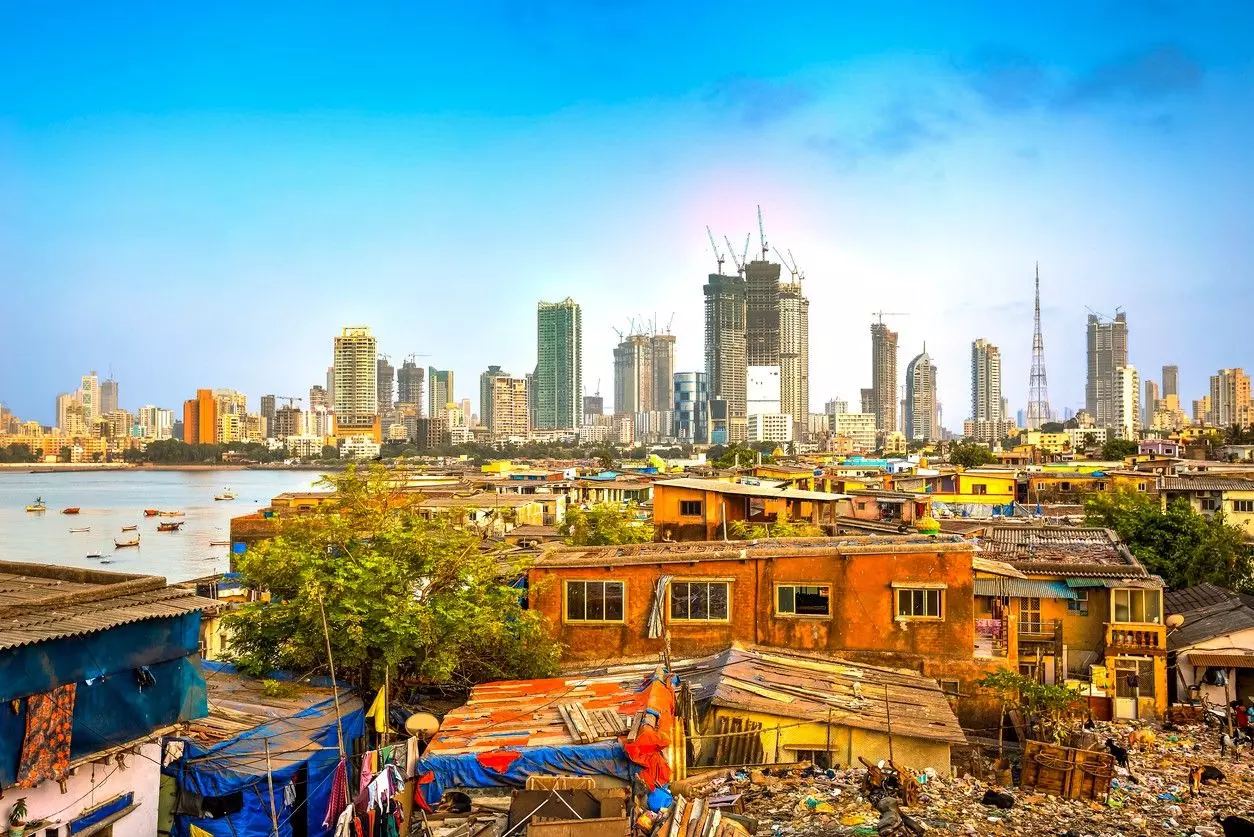
There has been an enormous increase in income and wealth inequality in India since the adoption of neoliberal economic policies. According to the Paris-based World Inequality Database, the share of the top one per cent of the population in the country’s national income, which had been around 12 per cent in 1951 and had declined to six per cent in 1982, increased to almost 23 per cent in 2022-23 — the highest level attained in the previous 100 years!
Also read: India's richest 1 pc increased wealth by 62 pc from 2000-2023: G20 report
The share of the top one per cent in the country’s wealth in 2022-23 is estimated to have been 40.1 per cent!
Income inequality, rise in poverty
In fact, this increase in income inequality has been accompanied by a rise in absolute poverty defined in nutritional terms, as it originally was done by the former Planning Commission: the proportion of rural population not having access to 2,200 calories per person per day, the benchmark set by the commission — which was 58 per cent in 1993-94 and increased to 68 per cent in 2011-12, and over 80 per cent in 2017-18.
This was so striking that the government withdrew the data from the public domain and changed the method of data collection (which makes comparison with the 2022-23 figures difficult). The corresponding figures for urban India, where the nutritional benchmark was fixed at 2,100 calories, were 57 per cent in 1993-94 and 65 per cent in 2011-12 (source: Exploring the Poverty Question by U Patnaik).
Global inequality under neoliberalism
Growing inequality is not a phenomenon confined to India alone; it is a global phenomenon under neoliberalism. This is because under neoliberalism, while capital becomes globally mobile, workers do not, and trade unions continue to be organised on a national basis. This asymmetry reduces their bargaining strength so that real wages everywhere fall behind labour productivity.
Also read: Rupee at 95, Sensex in a spiral: Is India bracing for 2008-kind meltdown?
Workers in advanced capitalist countries, in other words, are made to compete against their counterparts in developing countries who are located amidst vast labour reserves bequeathed from colonial times and hence earn a near-subsistence wage.
Since the magnitude of these labour reserves relative to the workforce in the third world does not diminish, but increases despite the global mobility of capital, income inequality grows over time.
Inequality and democracy
The fact that such massive increases in income inequality are inimical to democracy is now almost universally accepted, including even in speeches at the Davos summit, where the world’s rich are abundantly represented.
There is, however, a deeper link between growing inequality and the choking of democracy that is less recognised. Since the poor consume a much larger proportion of their incomes than the rich, any shift of income from the poor to the rich, such as what growing inequality represents, entails a reduction in aggregate demand in the world economy and also within countries.
This leads to a tendency towards stagnation and further accentuates unemployment, which not only makes the conditions of the working people worse, but also induces big capital to seek to preserve its hegemony by forming an alliance with neofascist forces.
It is not surprising that all over the world today there is an upsurge of neofascism with a number of common characteristics that are reminiscent of 1930s fascism. These are: the emergence of a repressive state; a combination of state repression with that of neofascist street vigilantes; a close nexus between neofascists and big business; a particularly close nexus between neofascists and a newer stratum within big business; the “othering” of some hapless minority and the fomenting of hatred against it; and the promotion of a cult of the “leader” whose persona is identified with the nation and whom the people are called upon to apotheosise.
Threat of neofascism
From Argentina to the US, Israel, Italy, Hungary, and Turkey, where neofascists are in power, these features manifest themselves in varying degrees; and neofascists constitute a powerful force knocking on the doors of power in France, Germany and the UK, among others. The corporate-Hindutva alliance that currently rules India is an expression of this phenomenon.
Also read: Welfare vs freebies: Political scientist Manivannan flags risks to TN’s growth
To defeat neofascism and preserve democracy, this growth in inequality must be reversed. So obvious is the need for ameliorating the distress of the working people that the institution of “cash handouts” has now become quite common among most political formations.
These, however, have obvious limitations: first, they are treated as a largesse, for which the recipients are supposed to be grateful, and hence are demeaning for the recipients’ dignity. Second, they are targeted and, as with all targeted schemes, they miss out several deserving segments. Third, they can be withdrawn at will depending on the fiscal situation.
Five key rights
The democratic means of reducing inequality is to introduce in the Constitution a set of universal and justiciable fundamental economic rights on a par with the civil and political rights it already provides. In fact, five such rights, namely, a right to food, a right to employment, a right to free healthcare through a national health service, a right to free education, and a right to a non-contributory living pension and disability benefits, can be financed in India by imposing just two taxes, and that too only on the top one per cent of the population: a two per cent wealth tax, and a 33⅓ per cent inheritance tax (source: P Patnaik and J Ghosh’s article in We the People: Establishing Rights and Deepening Democracies).
Also read: India's paradox: Rising economic indicators vs falling standard of living
Of course, imposing these taxes, not to mention bringing about changes in the real economy that can breathe meaning into these rights, would require going beyond the neoliberal regime, which would be opposed by Indian big business, the advanced capitalist world, and even an upper segment of the domestic professional class. This opposition can be overcome only if the working people unite to demand the institution of such rights and a reversal of the growing inequality.
(The Federal seeks to present views and opinions from all sides of the spectrum. The information, ideas or opinions in the articles are of the author and do not necessarily reflect the views of The Federal.)