



Two more ships, with 92,700 MT of LPG, headed for India; 22 vessels waiting: MEA
Several Indian ships on standby in Gulf, government coordinating with countries concerned to ensure their safe passage, says Randhir Jaiswal

Two Indian ships, each carrying in excess of 46,000 metric tons of LPG, with a cumulative of 92,700 metric tons, have crossed the Strait of Hormuz early on Saturday morning (March 14), raising the number of Indian vessels safely passing through the war-hit, narrow shipping lane to three.
The remaining 22 ships on the west side of the strait are on standby as the Indian government engages with governments in the region to ensure their safe passage.
LPG carriers Shivalik and Nanda Devi are now headed to Mundra and Kandla ports in Gujarat, Rajesh Kumar Sinha, Special Secretary in the Ministry of Shipping, told a media briefing.
The vessels are carrying 92,700 tonnes of LPG, he said, adding Shivalik is likely to reach Mundra on March 16, and Nanda Devi is likely to dock at Kandla the next day.
22 vessels remain stranded on west side
The two ships were among the 24 stranded on the west side of the strait since the war broke out in the region. Besides, four others were stranded on the east side. One of them, an India-flagged oil tanker, Jag Prakash, carrying gasoline from Oman to Africa, crossed the war-hit strait on Friday.
Also Read: LPG shortage forces Puducherry restaurants to look for other ways to keep kitchens running
Sinha said of the 22 remaining Indian-flagged vessels on the west side, six are LPG vessels, one is a liquefied natural gas (LNG) carrier, four are crude oil tankers, one is carrying chemical products, three are container ships, and two are bulk carriers. Of the remaining, one is a dredger, and another is empty, holding no cargo. Three others are on dry docks, meaning on routine maintenance.
Hundreds of ships had been stranded in the narrow sea lane between Iran and Oman since the US and Israel launched attacks on Iran, and Tehran targeted the region in retaliation.
India coordinating safe transit
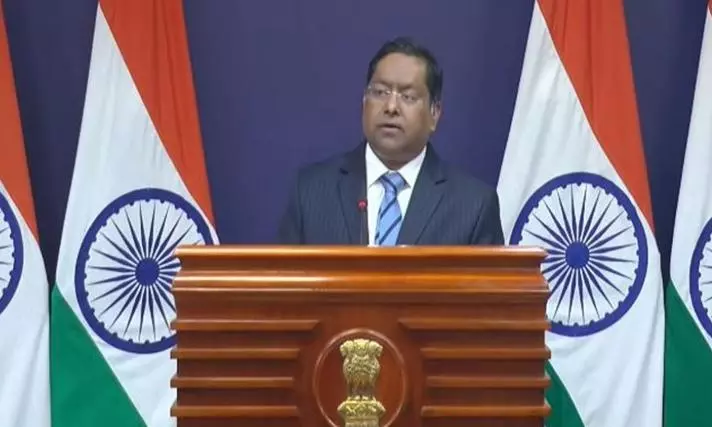
"Several of our ships remain on standby in the Gulf region. We propose to continue to remain in touch and coordinate with all the concerned countries to ensure a safe and unimpeded transit for them in our effort to ensure our energy security," MEA spokesperson Randhir Jaiswal said at the briefing.
Sinha said in all 28 Indian flags vessels were stuck - 24 on the west of the Strait of Hormuz and four on the east.
Also Read: Karnataka Minister says hotels may face commercial LPG supply gap for 7-10 days
Jag Prakash was loaded with gasoline from Sohar port in Oman and headed to Tanga in Tanzania. It is due to reach Tanga on March 21.
"The remaining 22 vessels (on the west side) have 611 seafarers," he said, adding Indian authorities, including DG Shipping, are closely monitoring the situation. Three vessels remain stuck on the east side with 76 seafarers on board. He said DG Shipping is coordinating with ship owners, RPSL agencies and Indian missions on the remaining vessels.
Ports prioritise LPG cargo
Sinha said port operations across India remain stable. SOPs have been issued for major ports and state maritime boards, according to priority berthing to vessels carrying LPG, a fuel that is running short in the country.
Also Read: LPG shortage hurting Kerala tourism sector, says state body
Six vessels arrived from different parts of the world at Indian ports and were given safe anchorage, he said, adding that the Ministry of Ports, Shipping and Waterways continues to closely monitor the maritime situation in the Persian Gulf.
Govt reassures on fertiliser stocks
Jaiswal said that India currently has sufficient fertiliser stocks, particularly for the upcoming Kharif 2026 season, amid concerns triggered by the ongoing conflict in West Asia and its potential impact on supply chains.
Elaborating further, he said the government had reviewed stock levels and production capacity and remained confident about availability in the months ahead.
“India has more than adequate stocks of fertilisers at this point in time, especially for Kharif 2026,” Jaiswal said, adding that reserves of key nutrients were stronger than last year.
Also Read: Centre says LPG production up 30 pc, urges calm as Opposition MPs protest
“Our stocks of urea are more than they were at this point last year. Our DAP stocks are double of what they were last year. Our NPK stock position is similarly much higher today in comparison to last year,” he said.
The MEA spokesperson further noted that domestic production levels were also expected to support availability as the current agricultural cycle draws to a close.
“Insofar as our domestic production of urea is concerned, our current production will be more than our nominal consumption, especially since the Rabi season is coming to an end,” Jaiswal said.
He added that steps had been taken in advance to ensure uninterrupted output from fertiliser plants.
Advance maintenance boosts fertiliser output
“We had taken care to advance the scheduled annual maintenance of some of our plants, which means that we are able to maximise production with available gas,” he said.
The government, he said, had also initiated procurement measures ahead of time to secure supplies from global markets.
Also Read: How West Asia conflict has left India's coastal economy with empty nets
“The Department of Fertilisers had also put out global tenders well in advance in time in anticipation of the current situation. These have received a very good response, and we expect to receive the bulk of the quantities ordered from a variety of sources by the end of March,” Jaiswal said.
According to him, additional procurement steps were also underway to ensure sufficient inputs for fertiliser production.
The Department of Fertilisers, he said, was closely monitoring both global developments and domestic demand patterns.
(With agency inputs)