



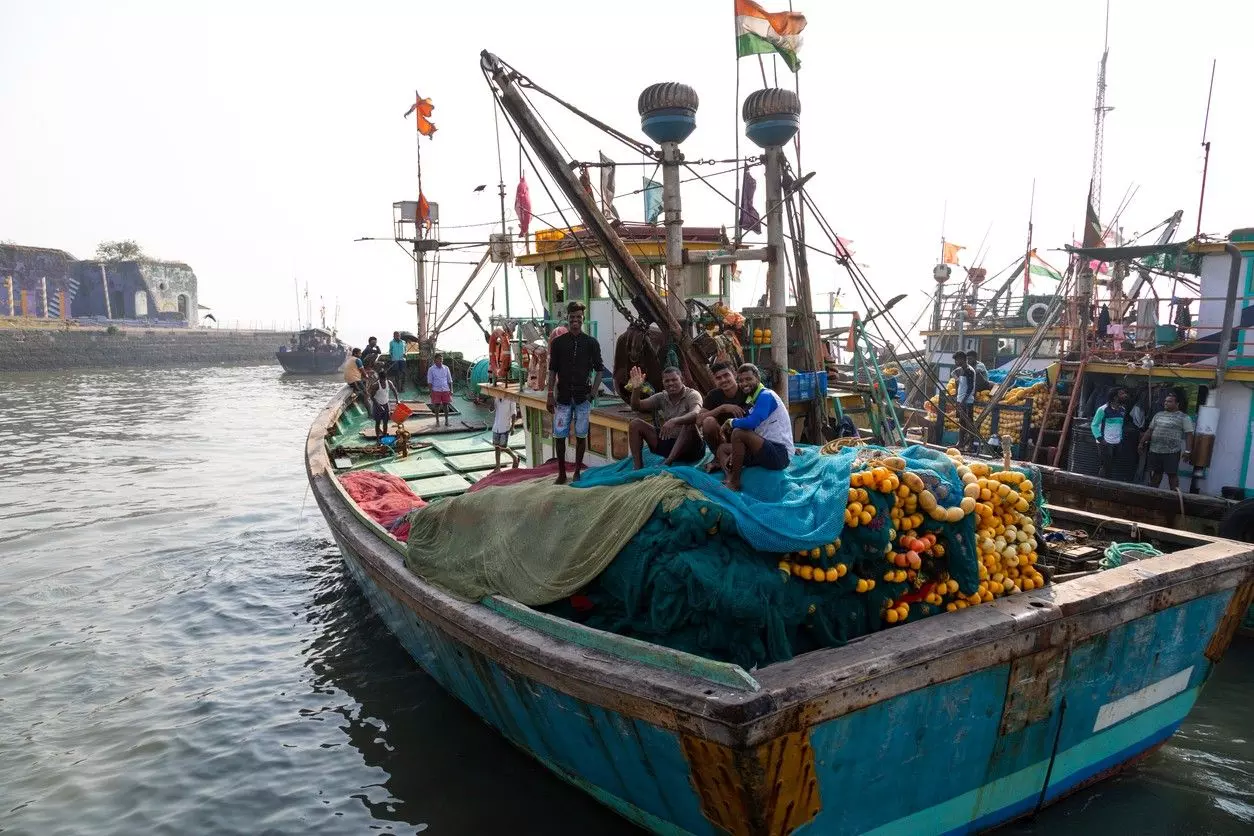
A fishing boat off a coast in India, ready to haul in a fresh catch. Photo: iStock
How West Asia conflict has left India's coastal economy with empty nets
From LPG shortages hitting fishing trawlers in Bengal and Goa to seafood export slumps in Odisha, the maritime crisis is destabilising the fishing industry

The continuing conflict in West Asia has left a crippling effect on the energy sector, which in turn has jeopardised several key economic activities in India.
One of them is fishing.
In West Bengal, for instance, fishermen are facing hurdles in venturing out due to the shortage of commercial cooking gas cylinders, which serve the crew while they remain at sea for a long time. This, in turn, has posed a threat to their business, which in turn could lead to a shortage of seafood and an increase in their prices in the domestic market.
Also read: West Asia conflict paralyses south India’s granite exports
According to a report by Bengali daily Anandabazar Patrika, one local fisherman in the coastal state’s Sunderbans region, where fishing remains a major occupation, said they are not able to go out for work because there are not enough LPG cylinders. The situation has also given rise to fears of destruction of the ecologically key mangrove forests for fuel for cooking on the vessels, reverting to old days, the report added.
Challenges for Goa fishermen
In Goa, too, fishermen were facing similar challenges. The Hindustan Times cited Harshad Dhond, president of the All Goa Purse Seine Boat Owners Association, as saying that the fishing vessels bank on commercial LPG cylinders to prepare food for the staff members, and their scarcity has hampered the boats from embarking on fishing trips.
Also read: From weddings to exports: How West Asia crisis has shaken Karnataka economy
He told reporters that each fishing trawler generally has a crew of around 30-40 members and each fishing trip usually goes on for two weeks. Around four to five gas cylinders are used during each trip. The business has taken a hit since they ran out of stock. This would affect the availability of fish in the market, he added.
Odisha seafood business faces threat
Odisha, which exports around 92,169 tonnes of seafood annually, has seen a 30 per cent slump in seafood exports along certain Gulf trade routes, compelling local suppliers to consider diversification strategies to lessen their reliance on the impacted markets, the New Indian Express reported.
In light of the impending crisis, the Seafood Exporters’ Association of India (SEAI), Odisha Chapter, has also requested financial aid and policy relief, as well as support for infrastructure and value addition from the government through various schemes to manage this uncertainty and avert losses.
Also read: Telangana’s pharma giants prepare for massive hit amid West Asia crisis
“In several sectors, shipments are being delayed or temporarily halted because vessels are avoiding the affected sea routes and taking longer alternatives. Some exporters have even reported buyers asking to hold shipments or postpone deliveries until the situation stabilises, while in some cases, especially where goods are time-sensitive, orders have been cancelled midway or shipments remain stuck at ports,” Sangram Das, president of SEAI’s Odisha chapter, was quoted as saying by the daily.
Centre on evacuating TN fishermen from Gulf
Meanwhile, the Centre told the Madras High Court earlier this week that the evacuation of hundreds of fishermen who have remained stranded in Iran and its neighbouring countries was not possible at the moment as Tehran shut all ports and airports.
Also read: Beyond oil and LPG: How Iran conflict is wrecking multiple sectors
The government’s submission came while responding to a couple of petitions seeking directions to rescue two individuals who are reportedly stuck in the West Asian nation.
According to the Tamil Nadu Fisheries Department, nearly 600 fishermen from the state are currently employed in Iran and neighbouring nations, a news agency reported.