



‘Reduced to State-mediated entitlement’: HC flags concern over transgender Bill
What was recognised by Supreme Court as an ‘inviolable aspect of personhood now risks being reduced to a contingent, State-mediated entitlement’, says Bench

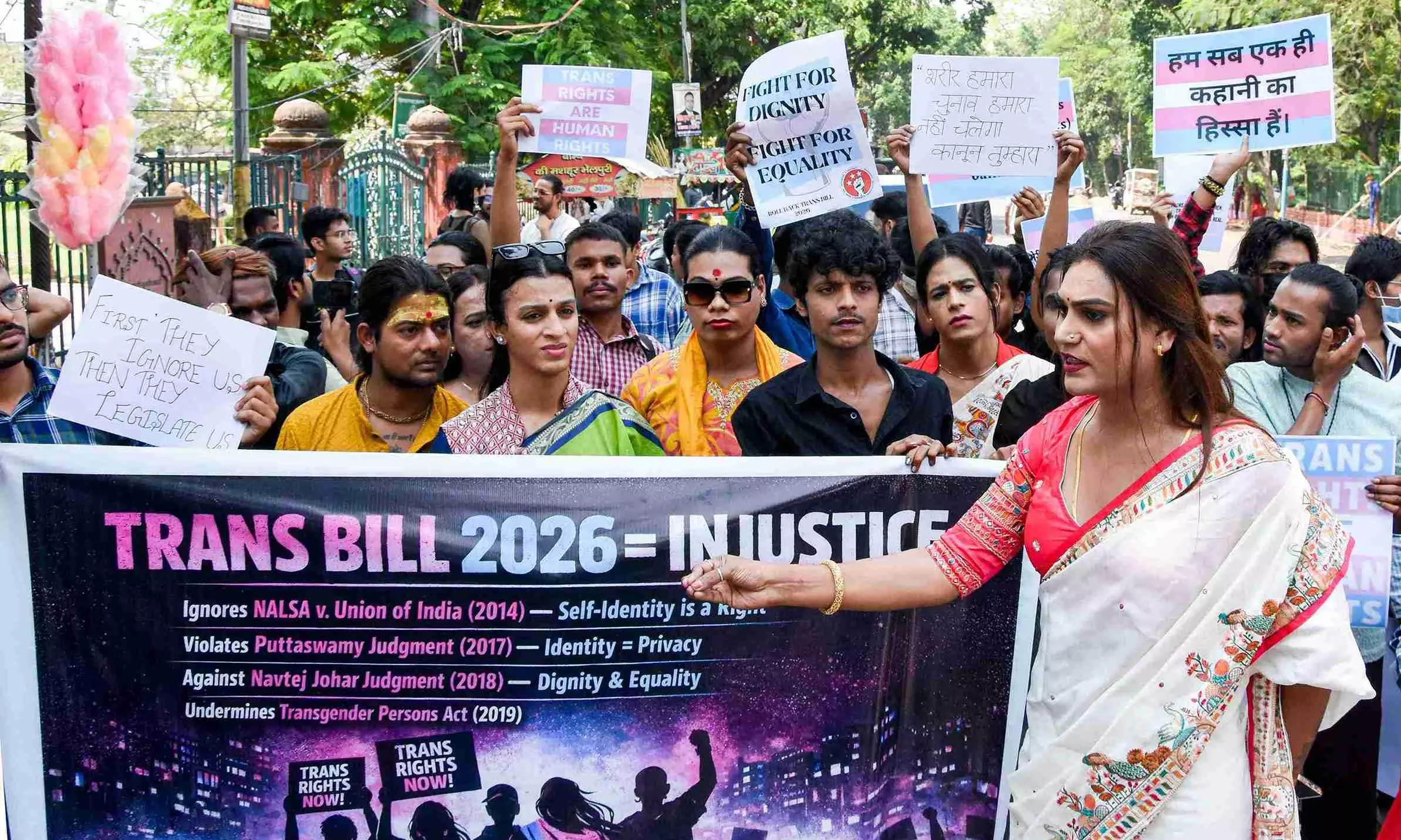
The Rajasthan High Court on Monday (March 30) expressed concern over the definition of a “transgender person” and the new criteria for legal recognition under the Transgender Persons (Protection of Rights) Amendment Bill, 2026. The Bill, passed in Parliament and awaiting the President’s assent, has raised questions about individuals’ right to gender identity.
Also read: Why amendment to law for protection of transgender rights has the community worried
The court noted that the Bill effectively removes the right of transgender persons to self-identify their gender. A Bench of Justices Arun Monga and Yogendra Kumar Purohit observed that it makes gender recognition dependent on certification and official approval, which runs contrary to the principle that gender identity is a personal and fundamental right.
Need for administrative approval
“It is now proposed that legal recognition of gender identity shall be conditioned upon certification, scrutiny, or other forms of administrative endorsement. What was recognised by the Supreme Court as an inviolable aspect of personhood now risks being reduced to a contingent, State-mediated entitlement,” the Bench said.
Also read: Why has Transgender Persons Amendment Bill drawn widespread flak?
Under the proposed amendment, an individual must obtain a recommendation from a Medical Board headed by a Chief Medical Officer (CMO) to secure a certificate of identity, which would then be issued by the District Magistrate.
At the outset, the court observed that despite their importance in Indian religious texts, transgender persons are often denied basic humane treatment.
The observations came while the High Court was hearing a plea seeking reservation for transgender persons in education and government jobs. The court relied on the Supreme Court’s landmark ruling in NALSA vs Union of India, which recognised the right to self-identify one’s gender as part of dignity and personal liberty under the Constitution.
Right to self-identity
The Bench reiterated that the NALSA judgment is based on the understanding that gender is not binary and that transgender persons have a right to self-determination.
“The State, as a constitutional actor, is expected to adopt an approach that harmonises statutory compliance with constitutional congruity, ensuring that the rights of transgender persons are not rendered illusory by procedural constraints,” it added.
Also read: Trans identities will be erased: Lawyer Raghavi Shukla on amendment Bill
Justice Monga, in his concluding remarks, said that selfhood is a matter of right and cannot be made dependent on administrative approval.
The Bill, passed in the Lok Sabha on March 25, has drawn criticism from several quarters, with critics arguing that it undermines constitutional rights to dignity and privacy by “re-medicalising” identity. The government, however, has defended the move, saying it aims to prevent misuse of benefits and provide a clearer definition for targeted welfare delivery.